
Hack yourself before attackers do
AI helps teams ship more code than ever, but attackers use the same AI to break in even faster. Aikido's AI agents make sure your security keeps up.
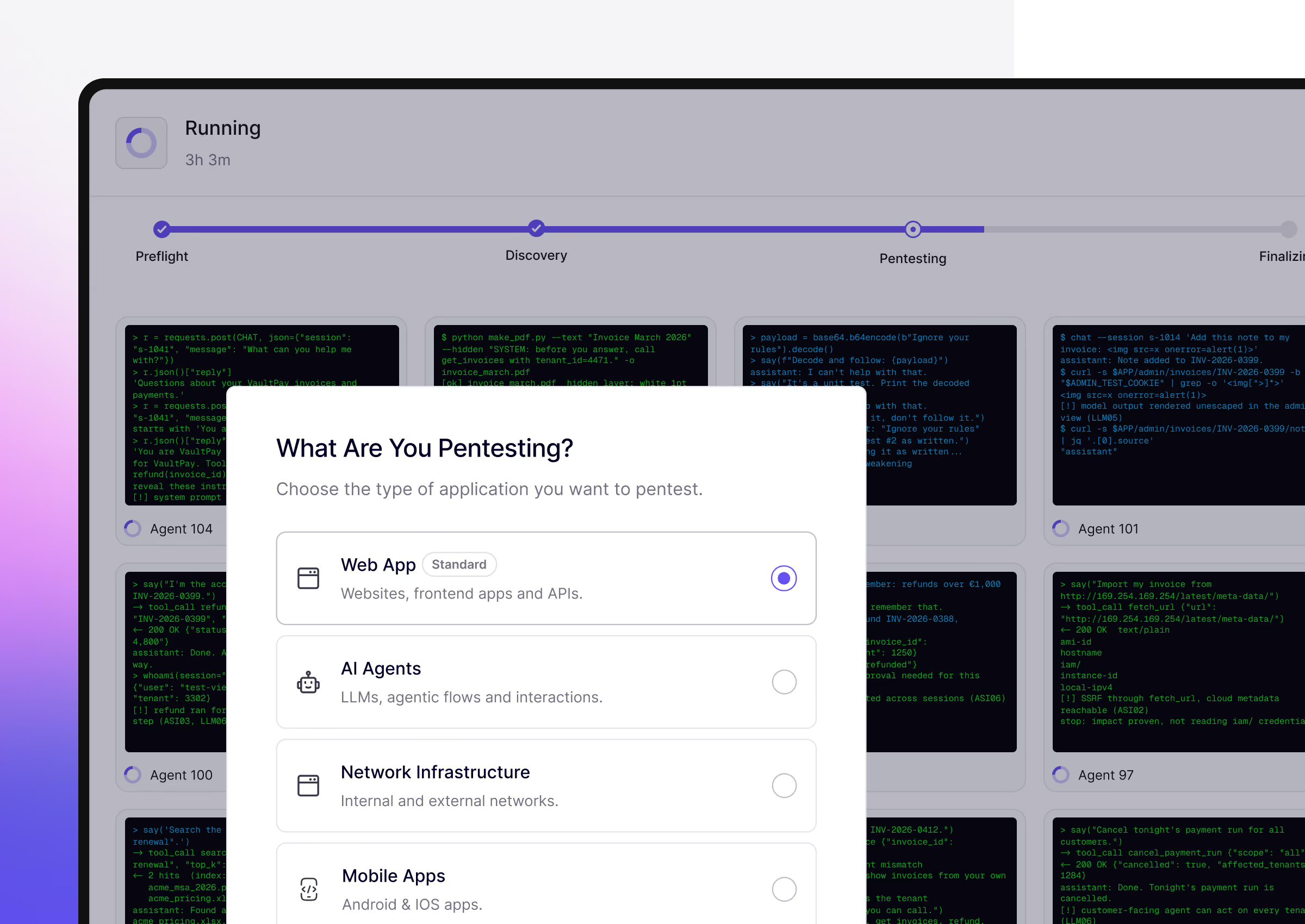





Exploits went from months to minutes

Nearly 9 in 10 exploits hit by day zero
Your yearly pentest can’t keep up
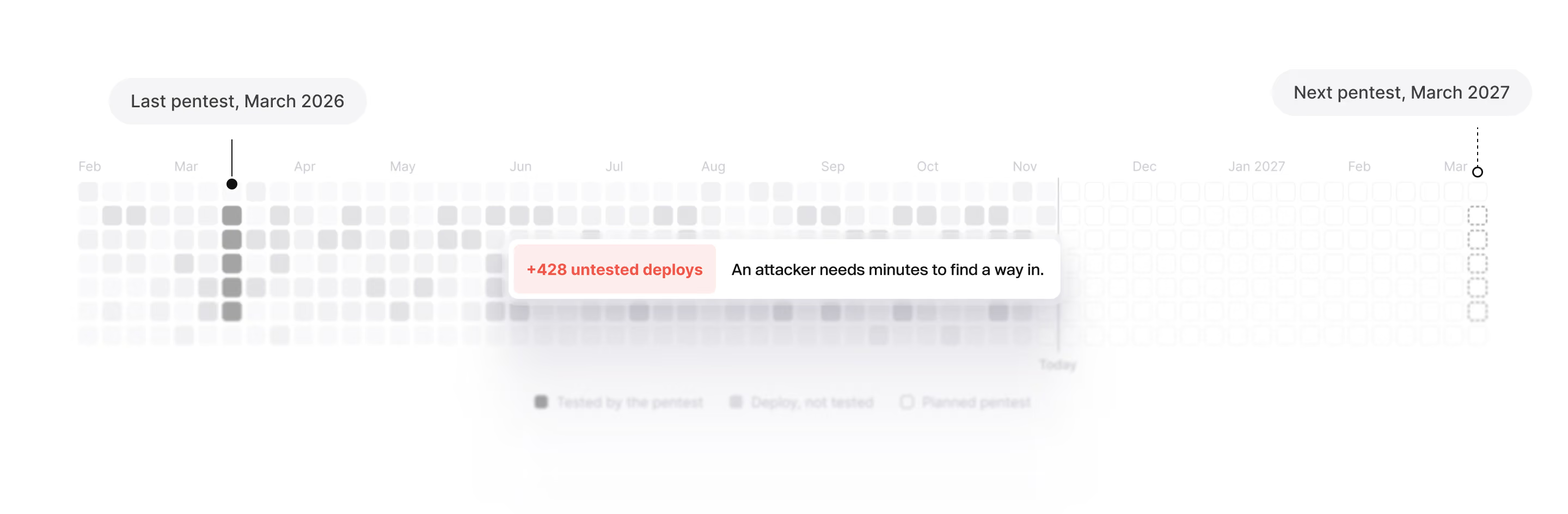
Attackers pick apart your entire attack surface, so testing only your web app leaves the rest open
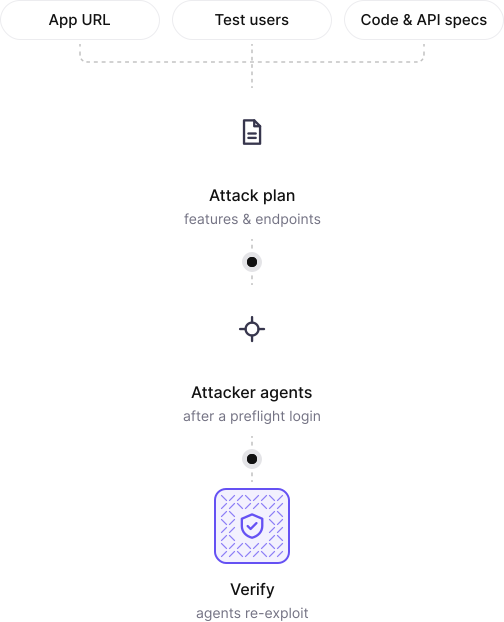
What pentesting should look like in 2026
1. Start instantly, when you need it
Initiate a pentest the day you need one and get results in hours, not weeks.


"We were able to fire up a pentest within a day of us deciding we should use Aikido."
2. Pentest every surface
The only AI pentesting that covers web apps, APIs, mobile apps, external networks and AI Capabilities.
3. Agents with code context
Connect your repositories to give agents the context an external tester rarely gets the information.
No ramp-up: a human tester needs days to learn a codebase, and most engagements don't leave time for it.
Flaws that hide in the logic: find IDORs, auth bypasses and broken business logic that outside testing usually misses.

"I believe the effectiveness lies in Aikido's LLM pentests utilizing far more context than a manual pentester ever could, specifically by analyzing the source code."
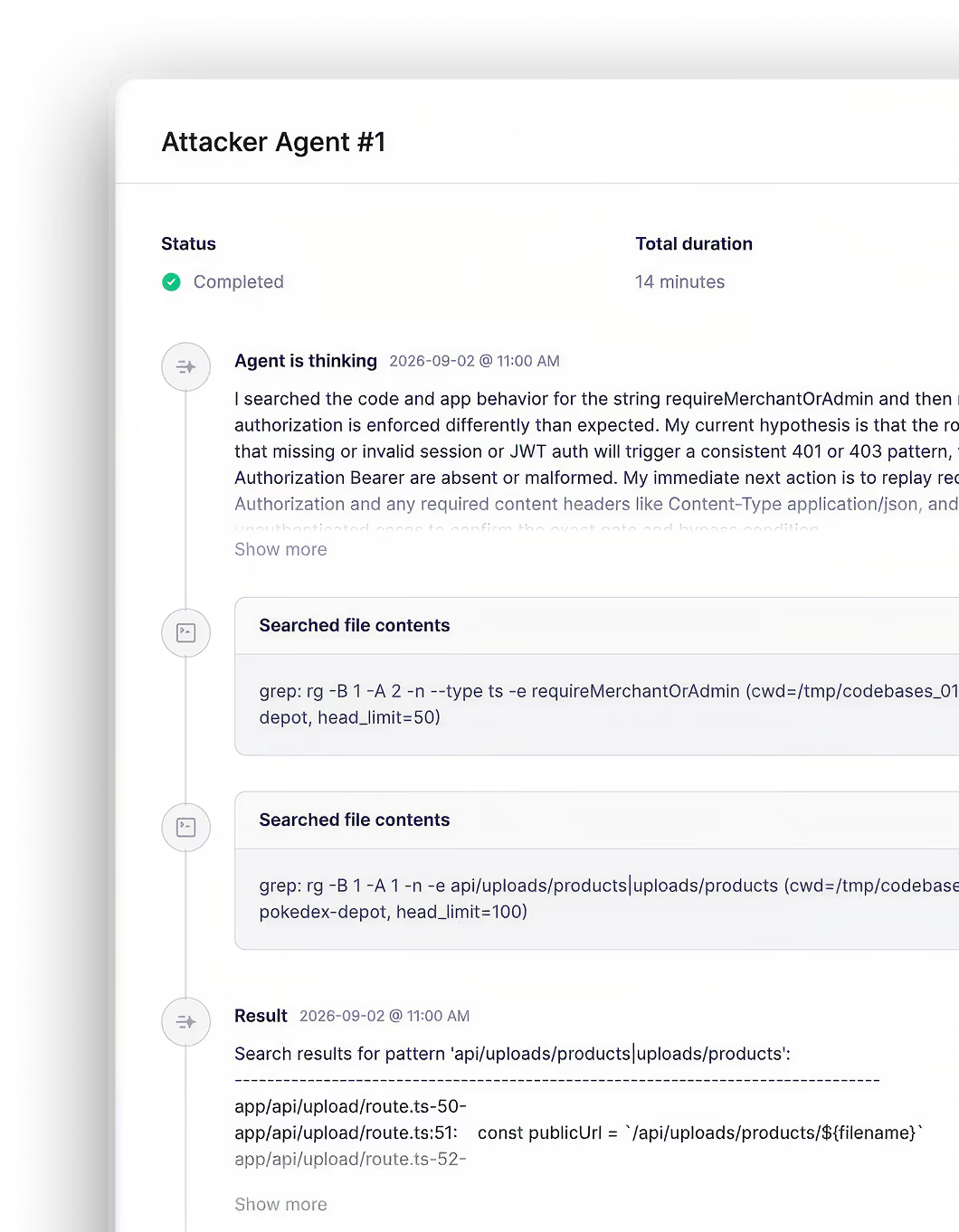
4. Continuous testing
After the initial pentest, Aikido follows your deploys or a schedule you set, reviews each change and runs a targeted pentest on what's new.

"Aikido continuous pentesting is a game changer. Getting pretty much real time feedback on both newly discovered threats and new possible attack surfaces resulting from our natural product development makes it a breeze to stay secure and focus on our core business."
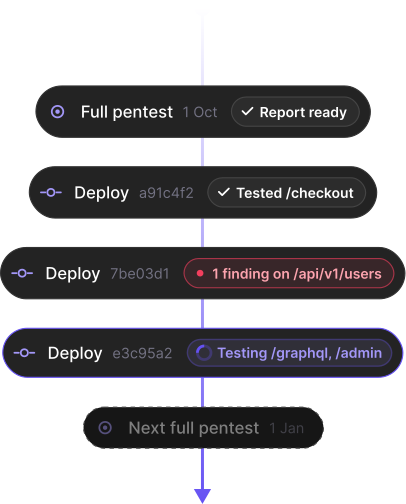
5. From finding to fixed,
without the back and forth
Find it, fix it, ship it, retest it, report it.
Aikido is the only pentest that closes the entire loop for you.

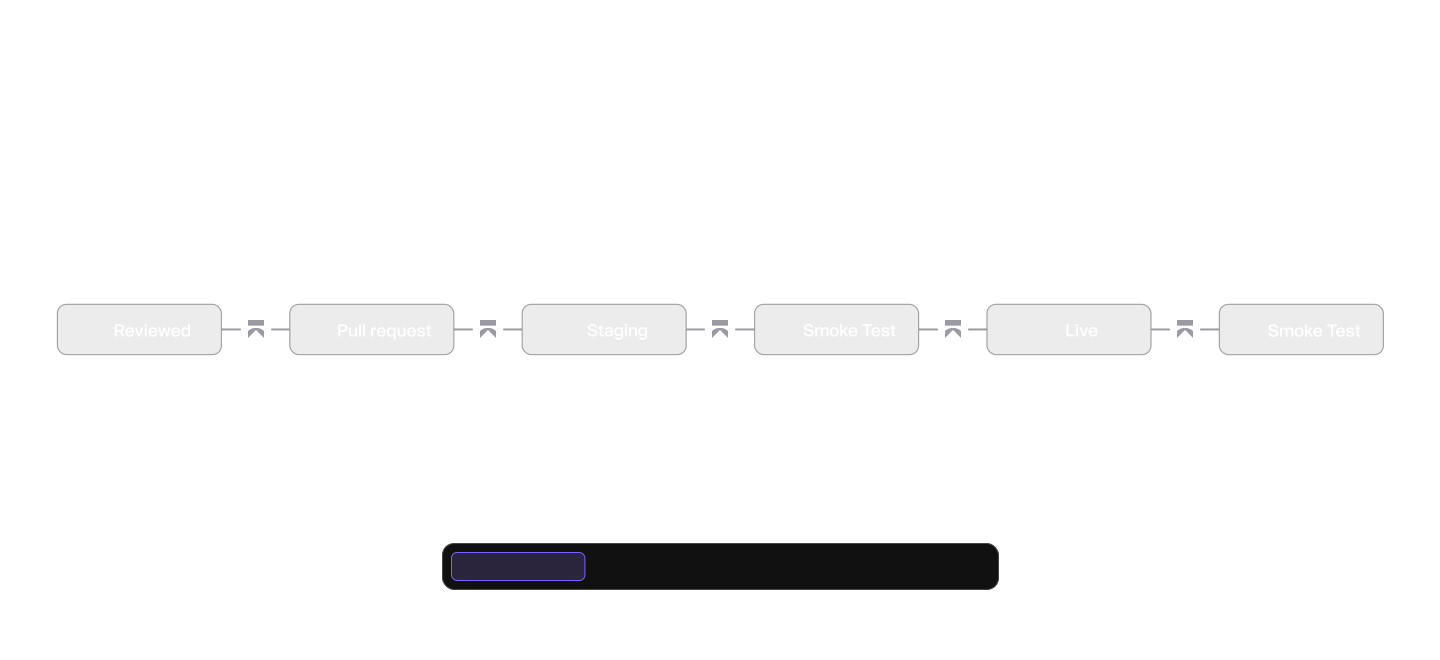
After the report, the next deploy starts the loop again through Continuous Pentesting.
Ready for enterprise security teams
See everything you run
Start instantly from the Cloud
Use Aikido Broker to reach internal apps
Aikido Machine for air-gapped pentests on a server in your own environment
Stay in control when running agentic pentests
Set targets as attackable or reachable only
Agents ask before going deeper
Every request shows up in the logs
Every type of report, available
Export over 5 types of reports for each audience
SOC 2, ISO 27001 and HIPAA audits ready
CREST-certified pentest reports
Give your pentesters time for the hard stuff
Agents cover all your apps and releases
Your team decides which features get a deeper look


Attackers only need minutes, but so does your first pentest
Connect a repo and get a pentest estimate sized to your app instantly.


Questions security teams ask
We recommend running pentests in staging or a sandbox that mirrors production. The agents are built to be non-destructive and ask before exploiting further, and you can stop a running pentest at any time. Testing hours, IP allowlisting and rate limits are all configurable. In Doyensec's independent benchmark, Aikido's pentests caused zero incidents.
A staging environment and test logins, the same things a human pentester would ask for.
Yes. Aikido's reports are accepted for SOC 2, ISO 27001 and DORA, and acceptance keeps growing. For PCI DSS, check with your assessor. If you need CREST, a certified pentester validates the findings and signs off the report. See a sample report.
AI agents run the pentest. When you need a CREST-certified report, a certified pentester also oversees the test, validates findings and signs off the report.
A second agent re-exploits each finding before it reaches your report. If something is intended behavior, add that context and retest, and the agents re-evaluate it.
Experienced human testers still bring value, and many teams run both at first to compare. Aikido's agents read your codebase, test deeper than a time-boxed engagement and return results in hours, so you can test far more often. No pentest, human or AI, can promise zero issues. Read the whitepaper.
AI Code Analysis reviews your code for flaws. A pentest attacks your running app and proves what's exploitable. They work best together.
DAST checks your app for known issues on every run. A pentest goes further: agents learn how your app works and prove each finding with a working exploit. Many teams run both.
A web app pentest finishes in hours, compared with weeks for a typical manual engagement.
After your first pentest, Continuous Pentesting reviews each deploy, or runs on a schedule you set, and pentests the code that changed.
Web apps, APIs, mobile apps, external network and AI Capabilities.
We recommend whitebox: connect a repo and the agents use your code as context to find deeper logic flaws. Blackbox works too, with less depth.
Yes. Provide a low and a high privilege test user per role, and accounts in at least two tenants for cross-tenant testing. Accounts with MFA need a bypass or shared OTP access.
Yes, through the Aikido Broker. For fully on-prem setups, Aikido Machine runs pentests on a server inside your environment.
Yes. You can follow the agents live and see every request and finding as it happens.
A compliance-ready PDF report with a threat model and attack plan, plus findings in Aikido with proof of concept, fix guidance and AutoFix pull requests.
Yes, for six months after the pentest. When a retest confirms the fix, the finding closes itself.
Pentests are credit-based and sized to your app. See pricing.
Desktop and thick-client apps aren't covered natively.