

Code reviews that fix your code, not just comment on it.
Catch bugs, security issues, and unintended side effects before merge. Swarms of agents review every pull request with full context of your codebase.
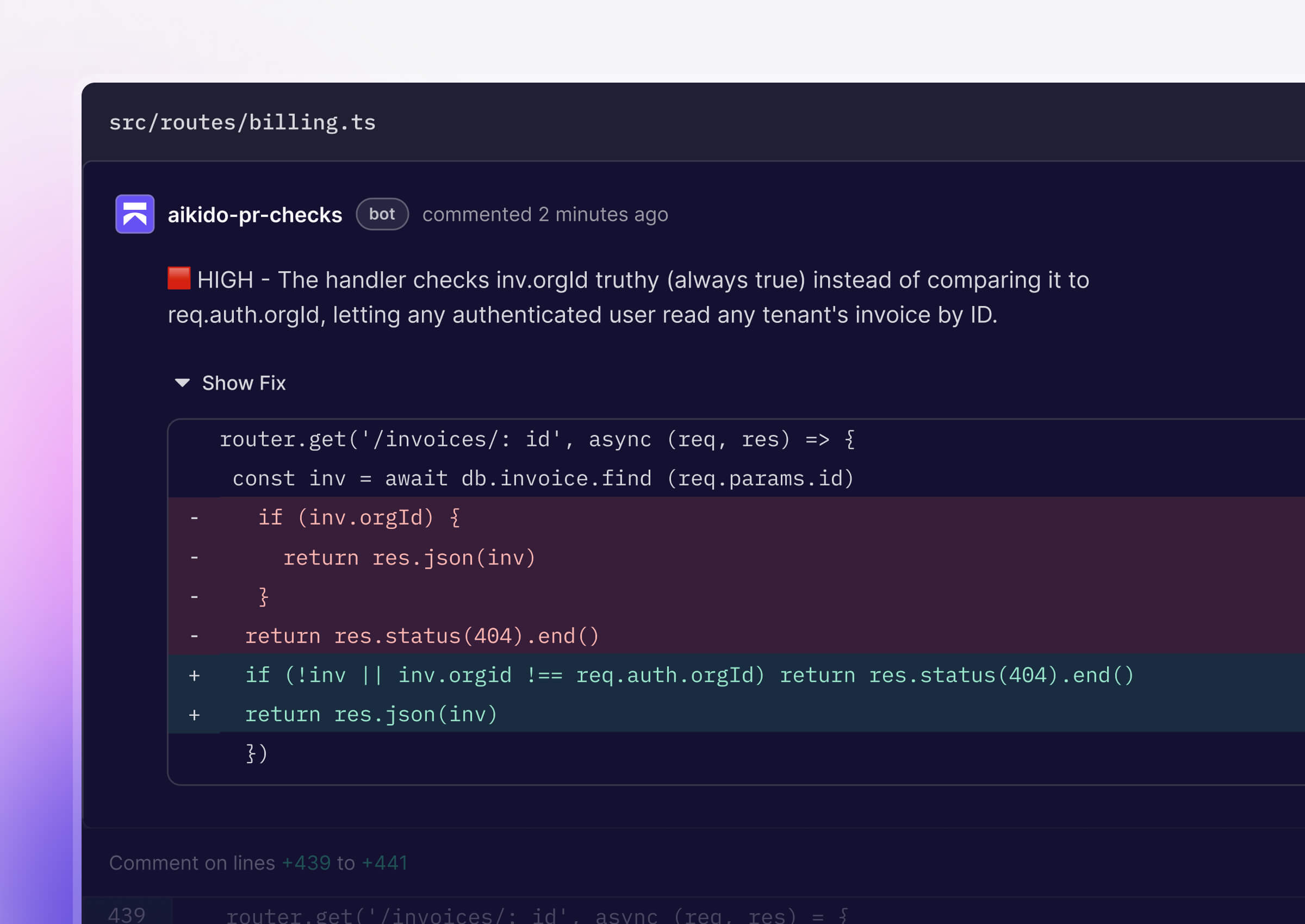


PR review wasn't built for AI-generated code
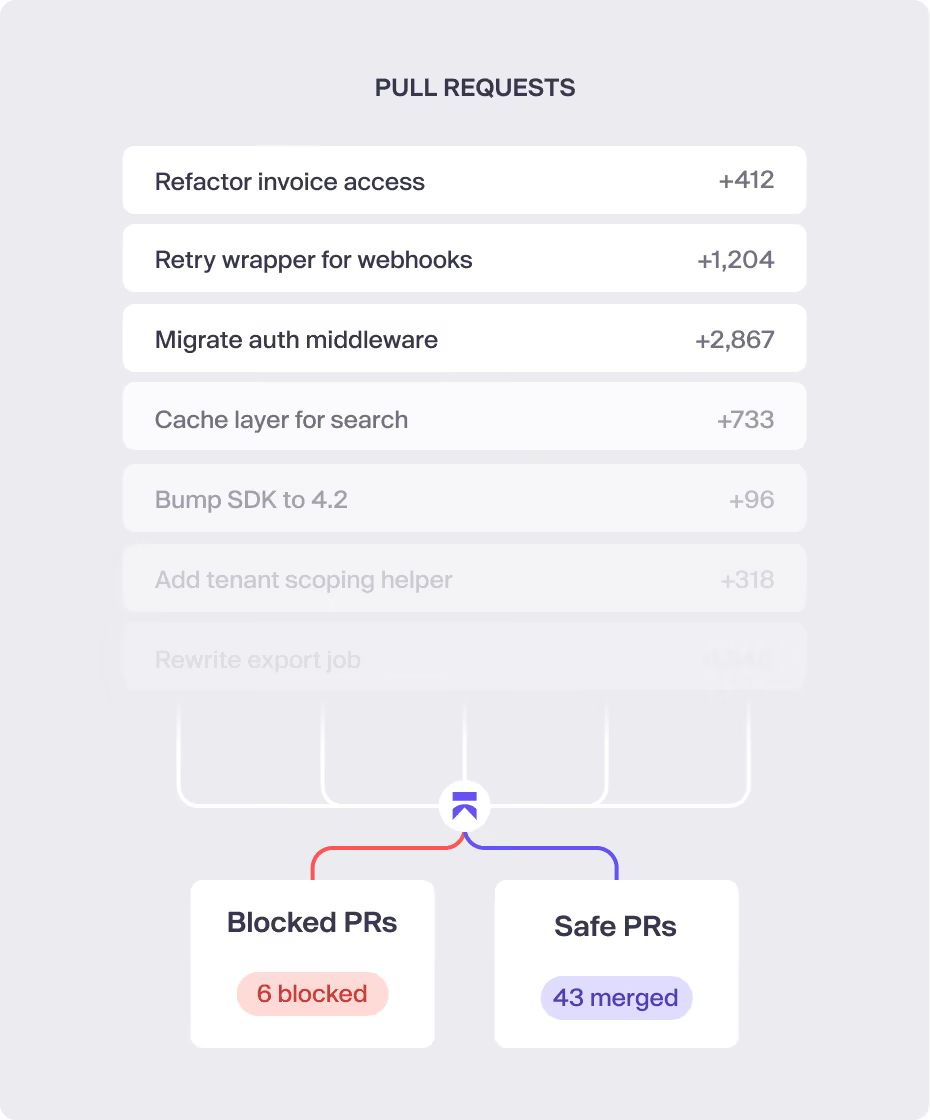
Coding agents create more changes than teams can review. Aikido is the independent review layer that analyses every change before it gets merged,
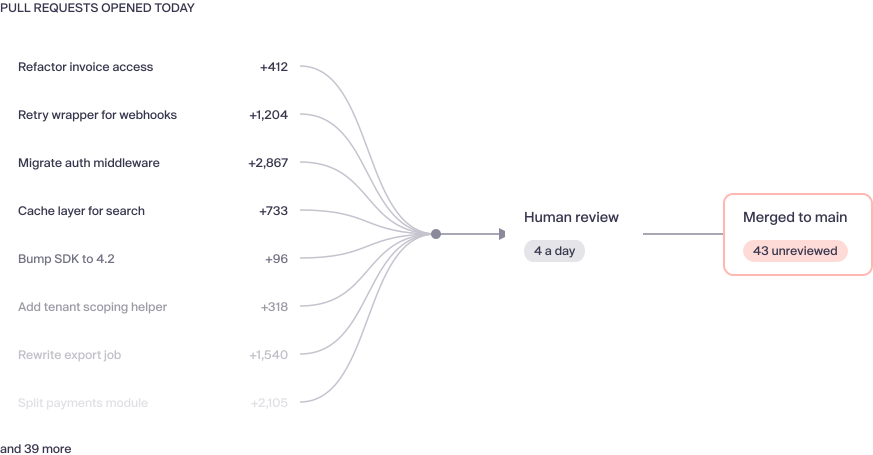
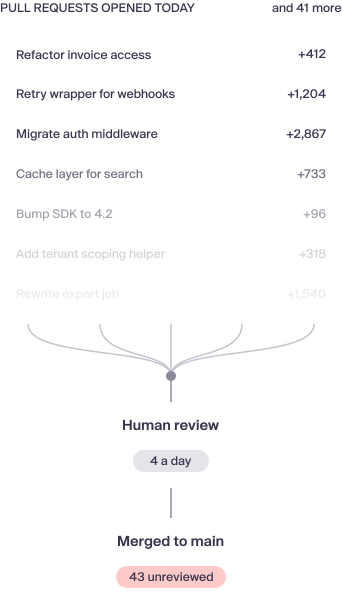
AI code review for every pull request
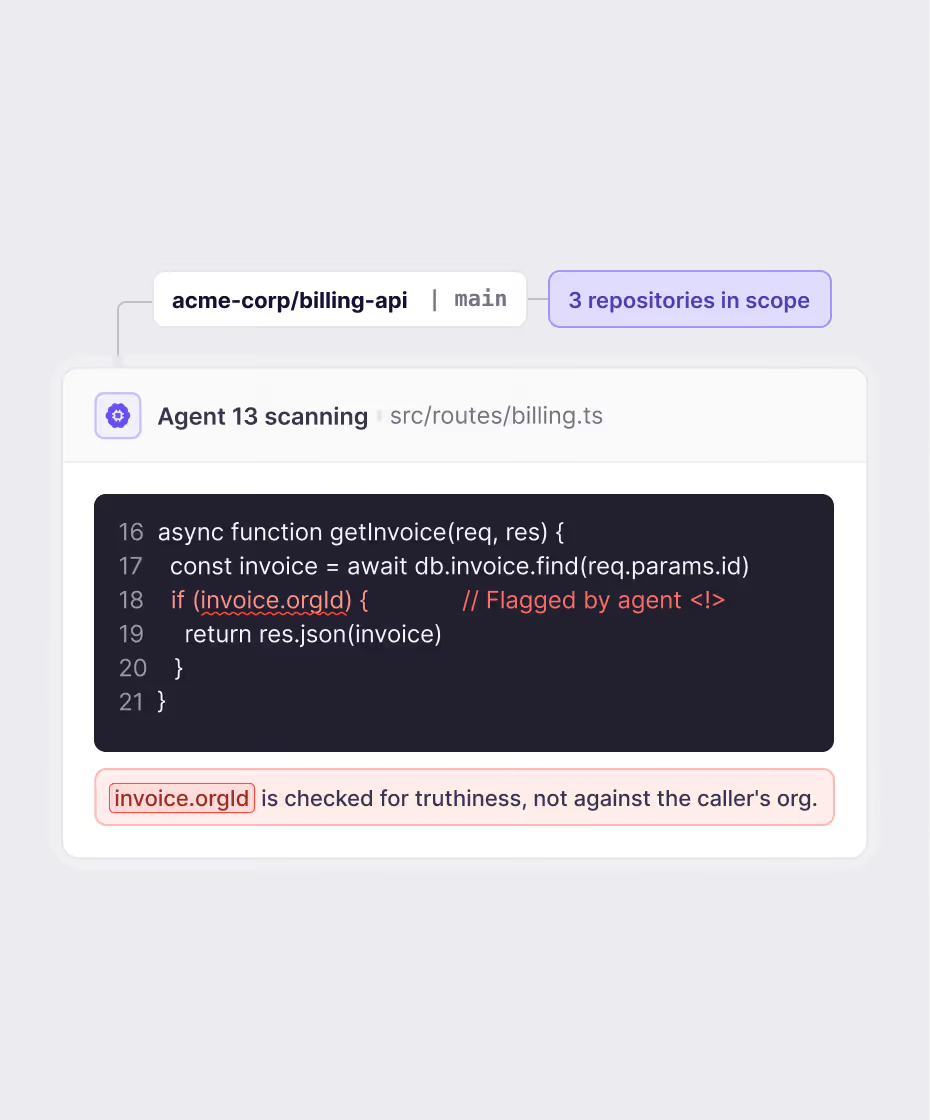
Only finds bugs that are relevant
Every pull request now gets reviewed the way a senior engineer with unlimited time would review it
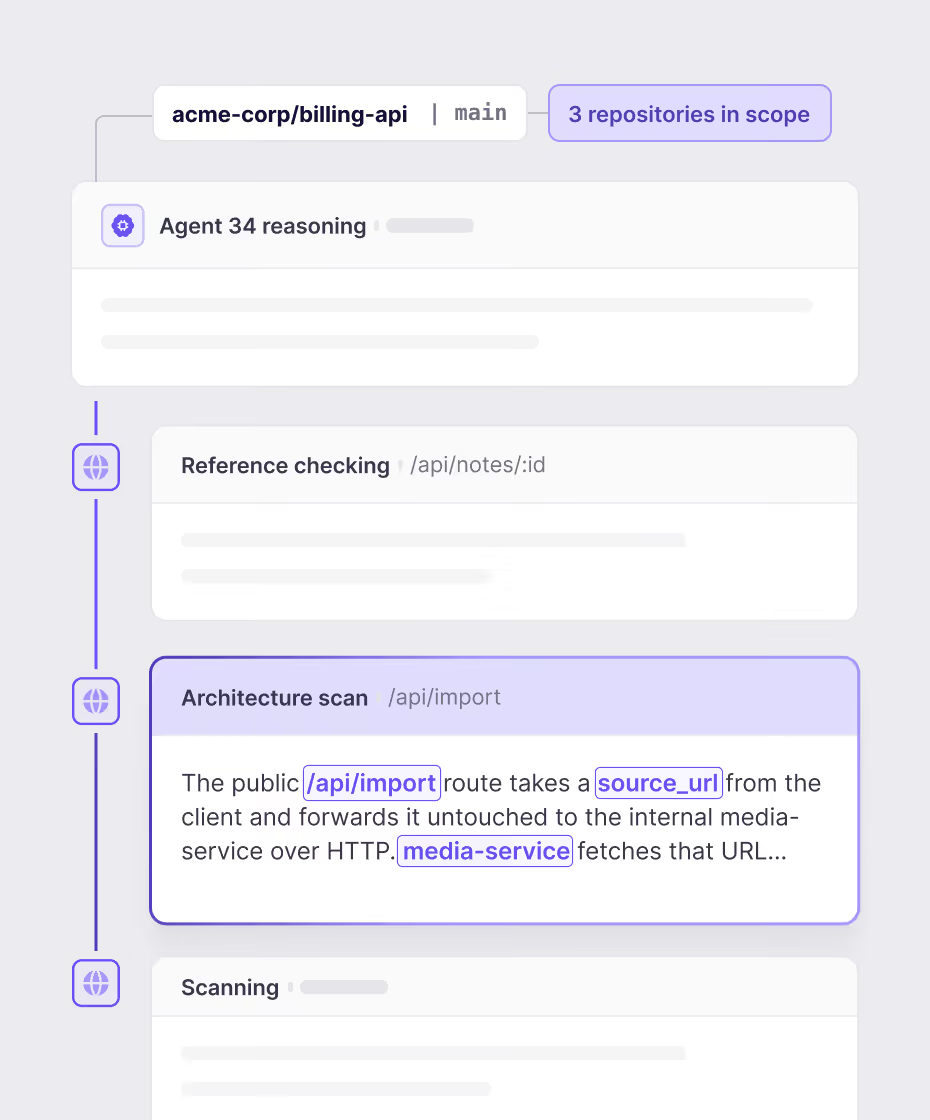
Adapts to your codebase context
The agents assess your entire codebase structure, relevant repositories, static results and even PR comments.

The AI code reviewer. Every PR. Full codebase context.

Deep PR Review explained in under 4 minutes
Connect a repo to discover what the reasoning agents find in your codebase.
Or run it alongside your current SAST and see what you’re what's missing.
See Aikido in action
Enter your work email to view the video
Focus on building, not chasing vulnerabilities
Reduce your security backlog
Every PR gets reviewed automatically, so vulnerabilities never make it into production.
Take the load off engineering
Automated triage and one-click fixes mean less manual security work, without adding headcount.
Catch issues before they hurt
Vulnerabilities get fixed pre-merge, when they're fastest and cheapest to resolve.
Cut audit prep time
Continuously analysed code means less time answering security questionnaires.
Your AI code reviewer. On every PR. Full codebase context.
Connect a repo to discover what the reasoning agents find in your codebase.
Or run it alongside your current SAST and see what you’re what's missing.
FAQs about Deep PR Review

Deep Review reads your entire repository, not just the PR diff. It uses AI to find business logic flaws and context-dependent vulnerabilities that deterministic SAST and SCA tools miss, because those tools check code in isolation.
Standard PR gating checks the diff only. It's deterministic, and it blocks on critical severity. Deep Review reads the full repo plus any connected repos, reasons across that context with AI, and writes comments directly on the PR. It catches logic-level issues gating never sees.
Deep Review runs on credits: one credit per pull request reviewed. Standard PR gating doesn't use credits. You can set a monthly credit cap, and some plans include a set allotment.
Yes. Feedback appears inline on the pull request. Standard PR gating only blocks or passes; it doesn't comment.
Yes. Deep Review toggles per repo, so you can roll it out selectively instead of turning it on everywhere at once.
AI Pentests require a live environment to target, like your staging environment. Deep Review and Code Security Audit both run against your static codebase. Code Security Audit analyzes your entire codebase, while Deep Review runs at the PR-level, focused on changes and downstream effects from your code changes. All three use a similar harness.
Privilege escalation paths, business logic flaws, and vulnerabilities that only exist in the context of the full application. Line-by-line SAST can't catch these; it never sees the full picture.