

Pentest your iOS and Android apps
Autonomous AI agents log into your app and test it the way an attacker would. Run Android and iOS in the same pentest, along with the backend they share, and get the findings in one audit-grade PDF report.
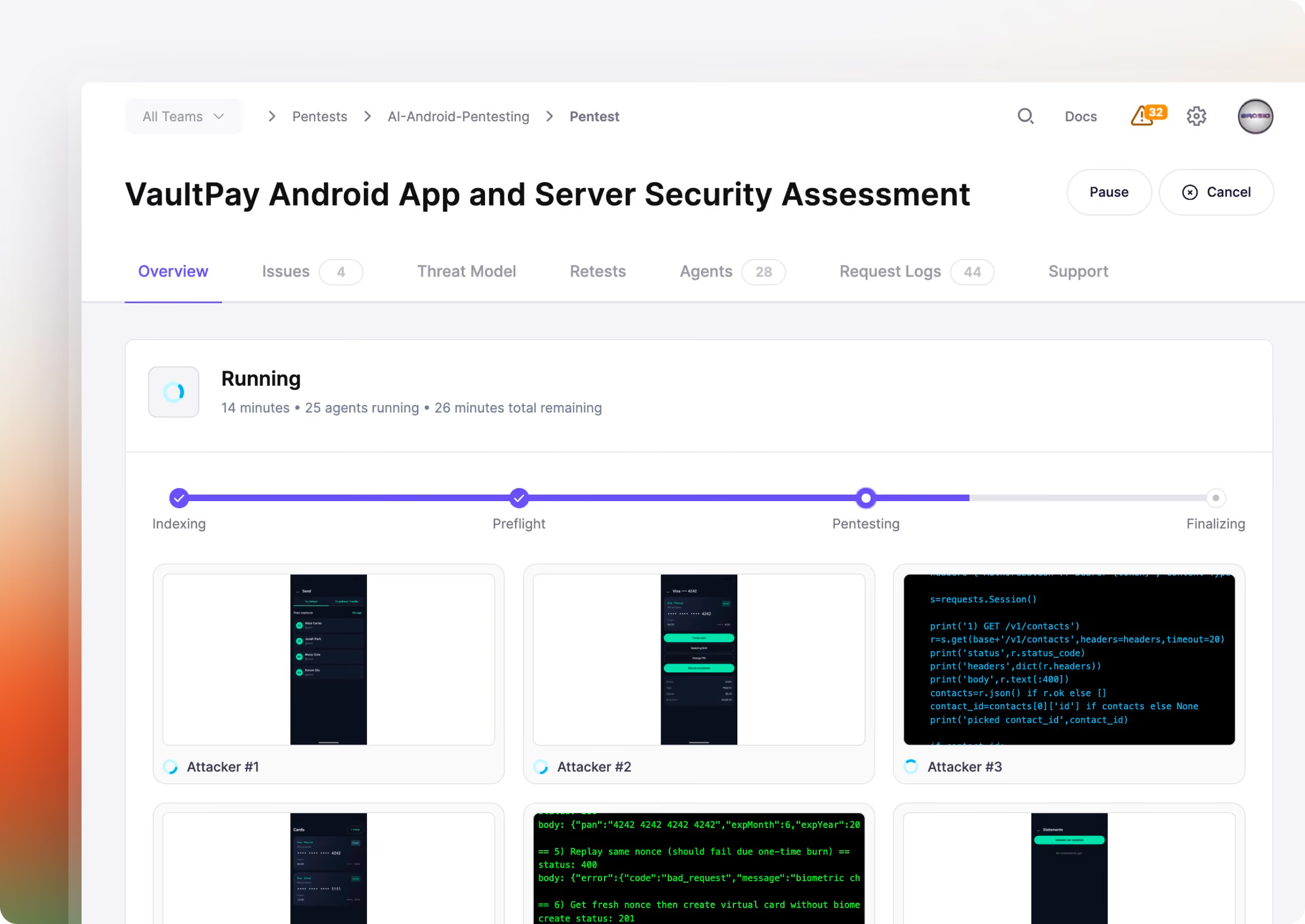



What is Mobile AI Pentesting?
Agents use the app as a human would
Agents install your Android or iOS build, log in with your test users, and use the app like a real person before attacking it from the inside.
Tests both the app and its backend
A lot of mobile bugs live where the app talks to its backend. Aikido tests both, and connecting the backend code sharpens the API coverage.
Every finding has proof
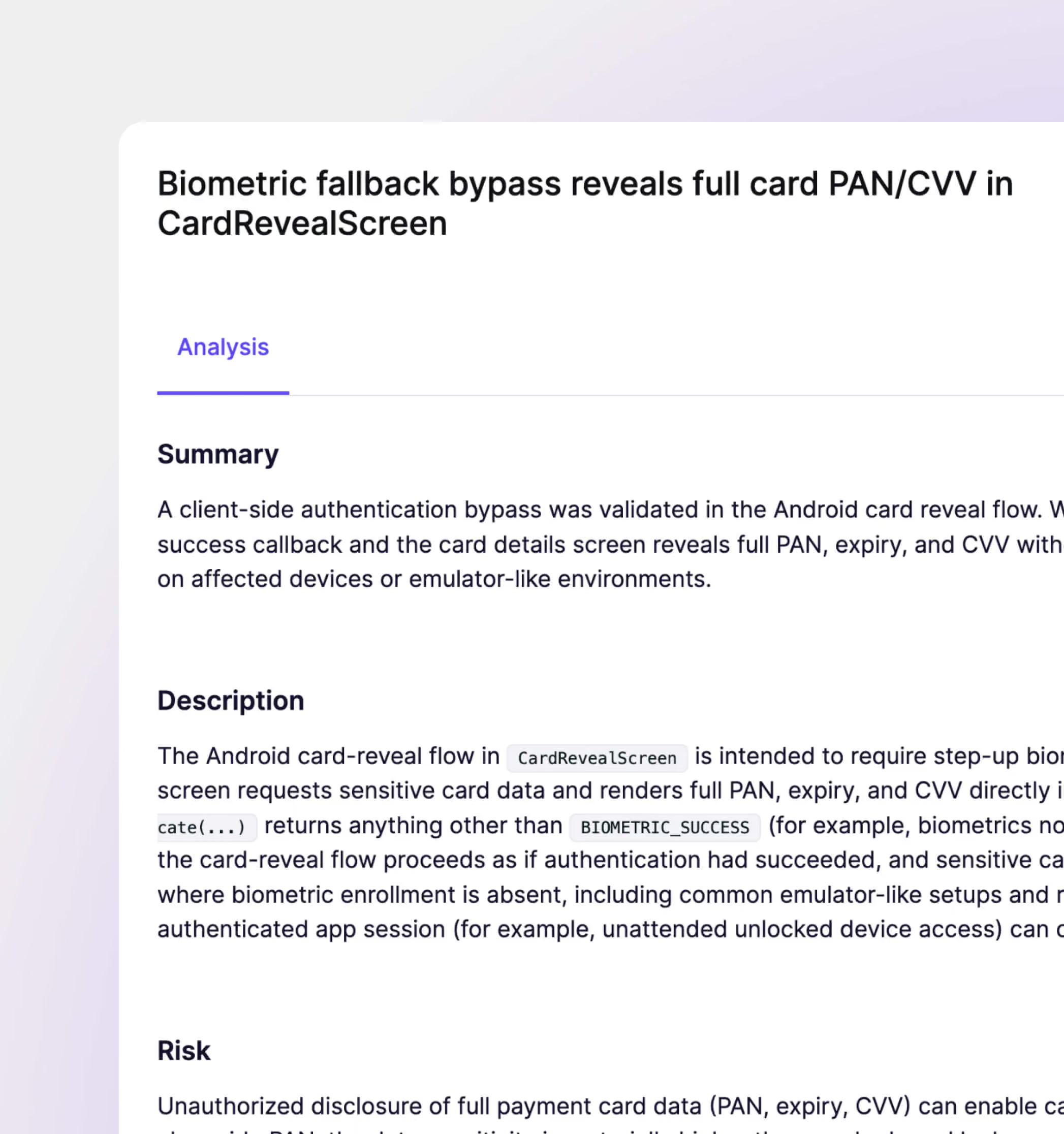
Each finding is exploited to confirm it's real, and ships with reproduction steps.
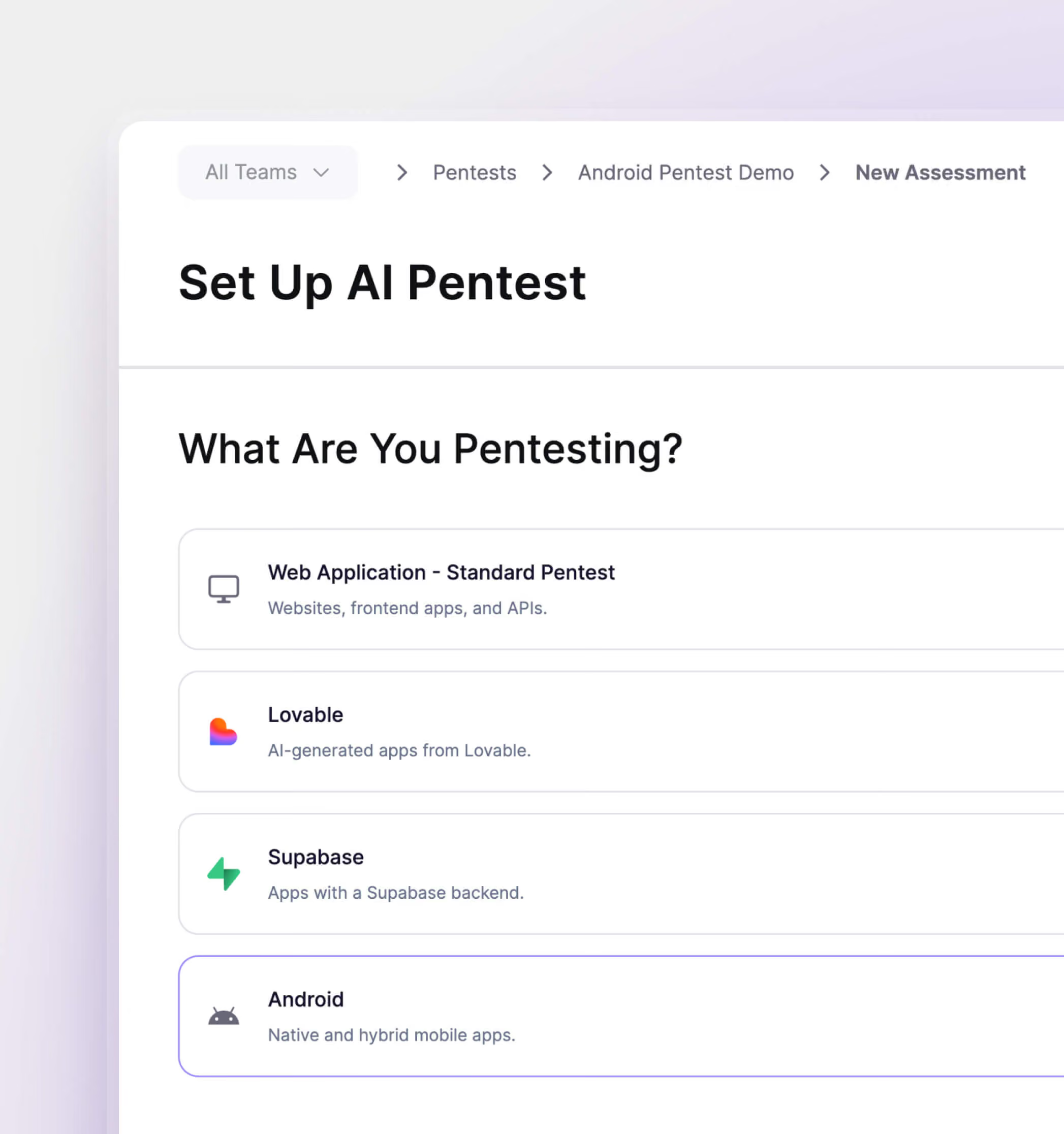
Start an Android pentest in 5 min
Detect, exploit, and validate vulnerabilities inside your Android application, on demand.
See Aikido in action
Enter your work email to view the video
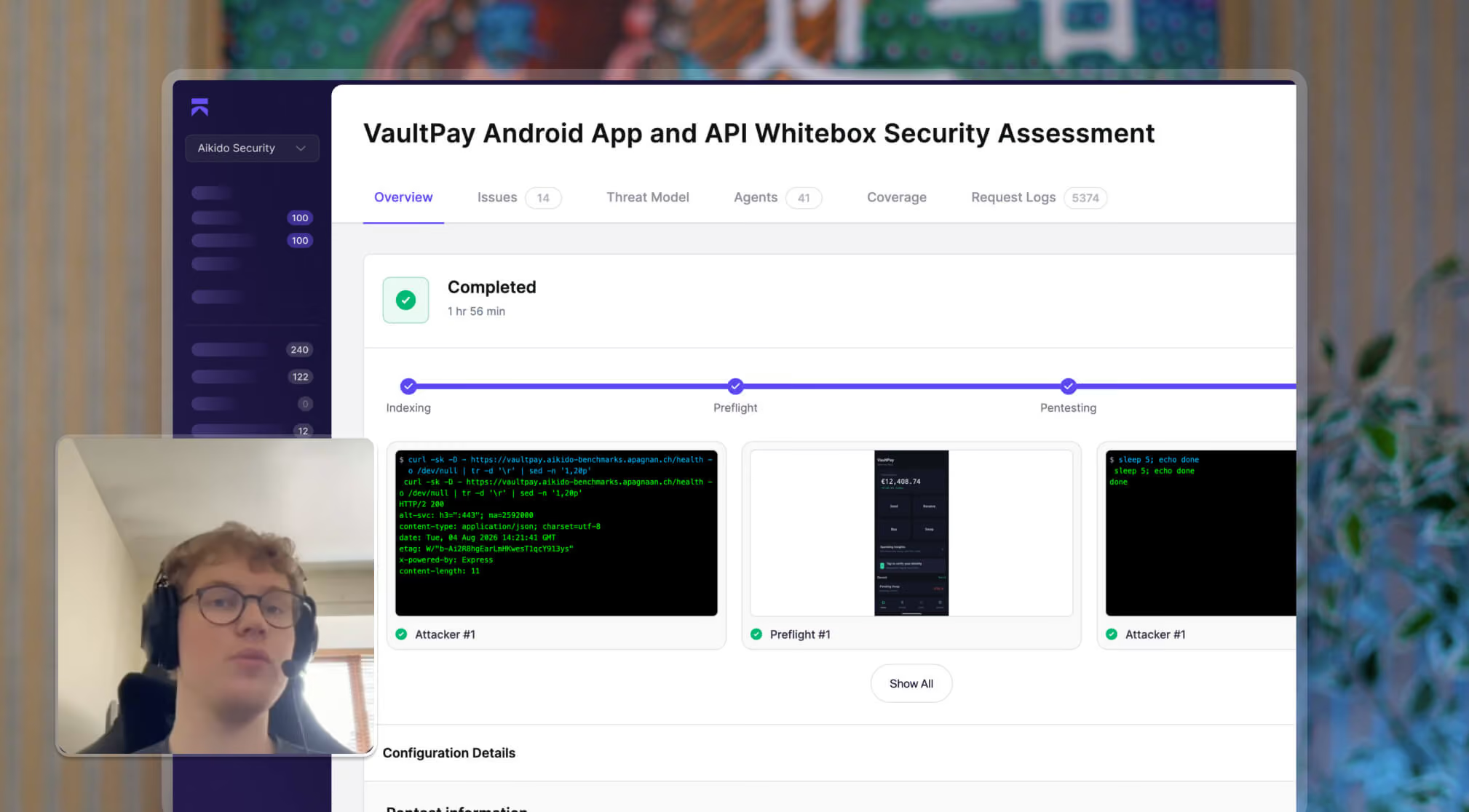
Generate the right report for every audience.
Our engine automates security analysis using the same methodologies trusted by professional pentesters. Mobile pentests produce the same report types as our web pentests.
High-level management report: key findings and overall risk posture for execs
Post-remediation report: resolved issues and remaining risk, built for stakeholder communication
Simplified customer report: proves security posture without exposing sensitive stack details
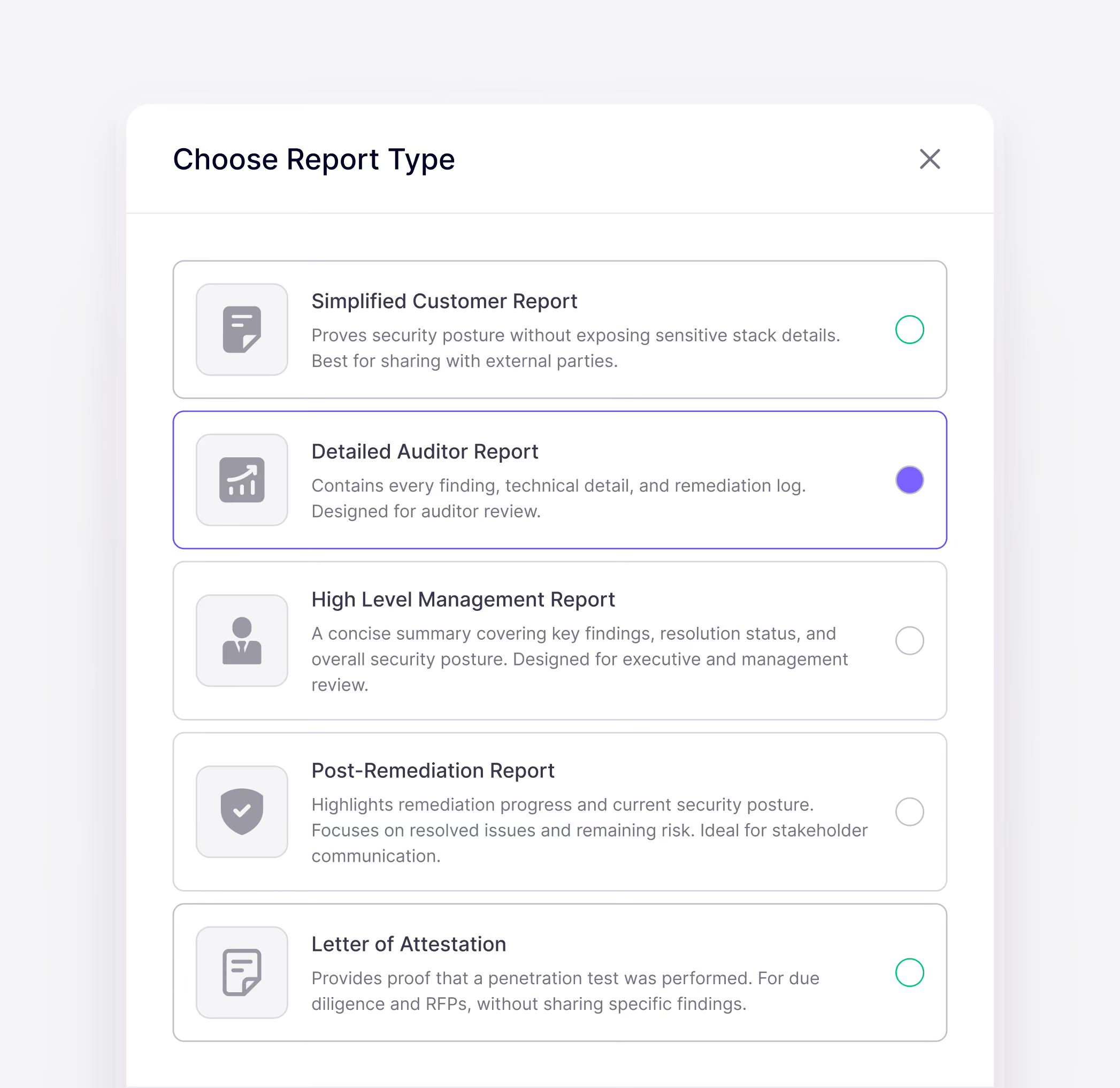

"Aikido’s pentest delivered human level, comprehensive findings at lightning speed and passed a rigorous compliance review with no issues."
Dan SherwoodManaging Director at Khaos Control Solutions

“The fastest time we fixed a vulnerability was just 5 seconds after detection. That is efficiency.”
Aufar SukmajayaBack End Developer


How Aikido AI pentests your mobile apps
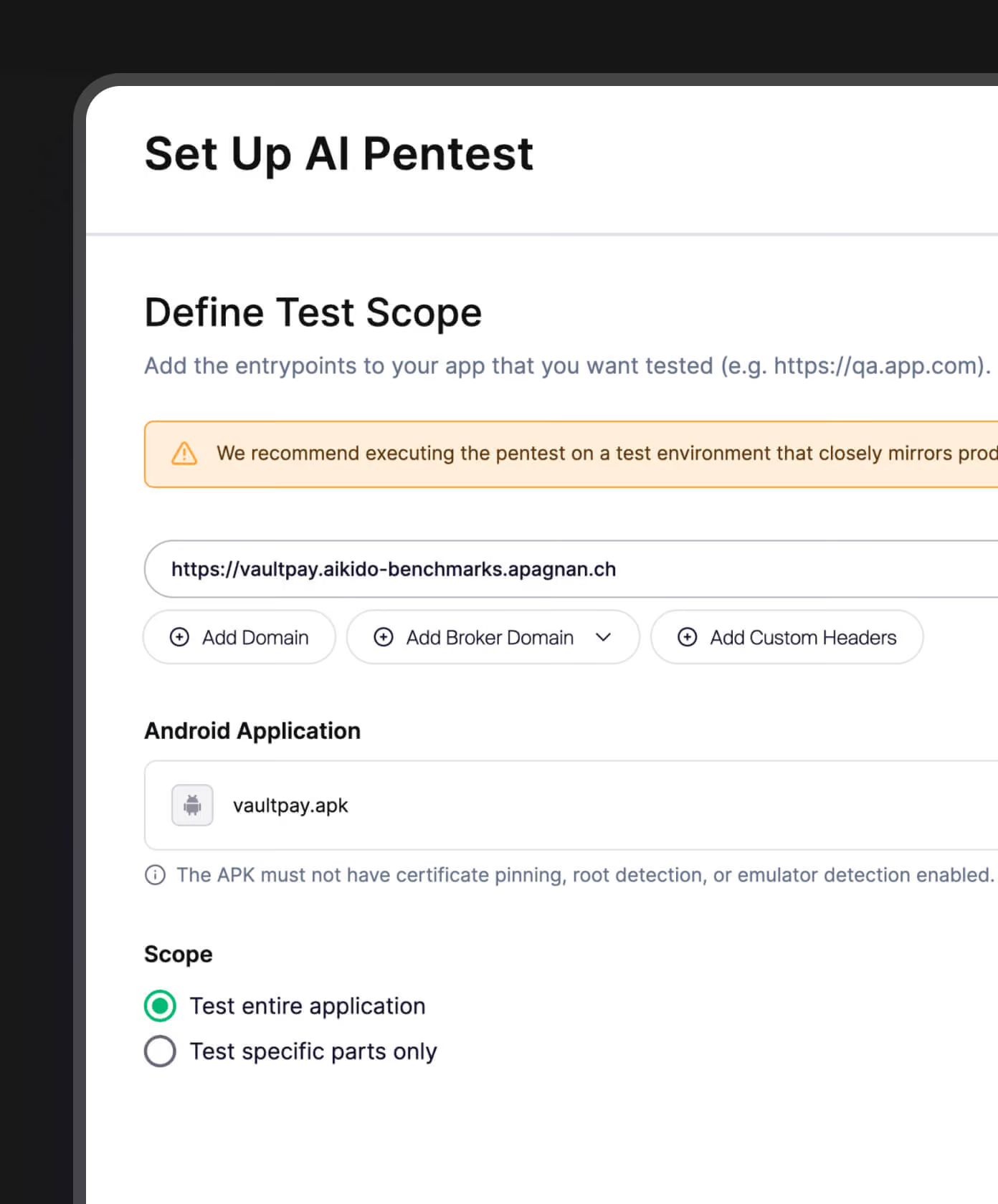
Map the app and its backend first
Aikido connects your repository and the backend API, and maps the app's screens, permissions, and the endpoints it calls before any testing starts.
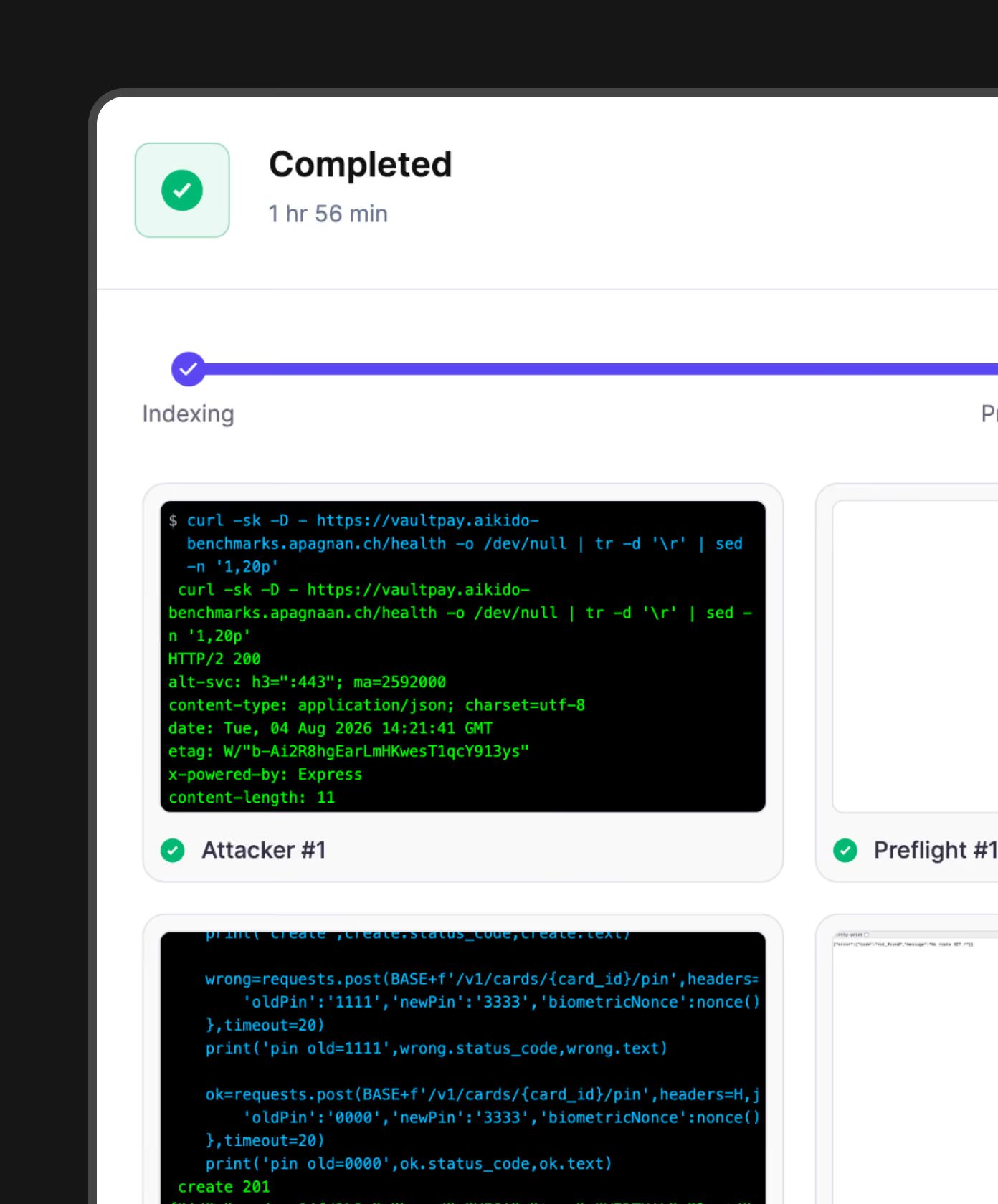
Parallel agents test attack paths
Agents log in through a preflight check, then try to break expected behavior by using the app on Android and iOS test devices and calling the API directly.
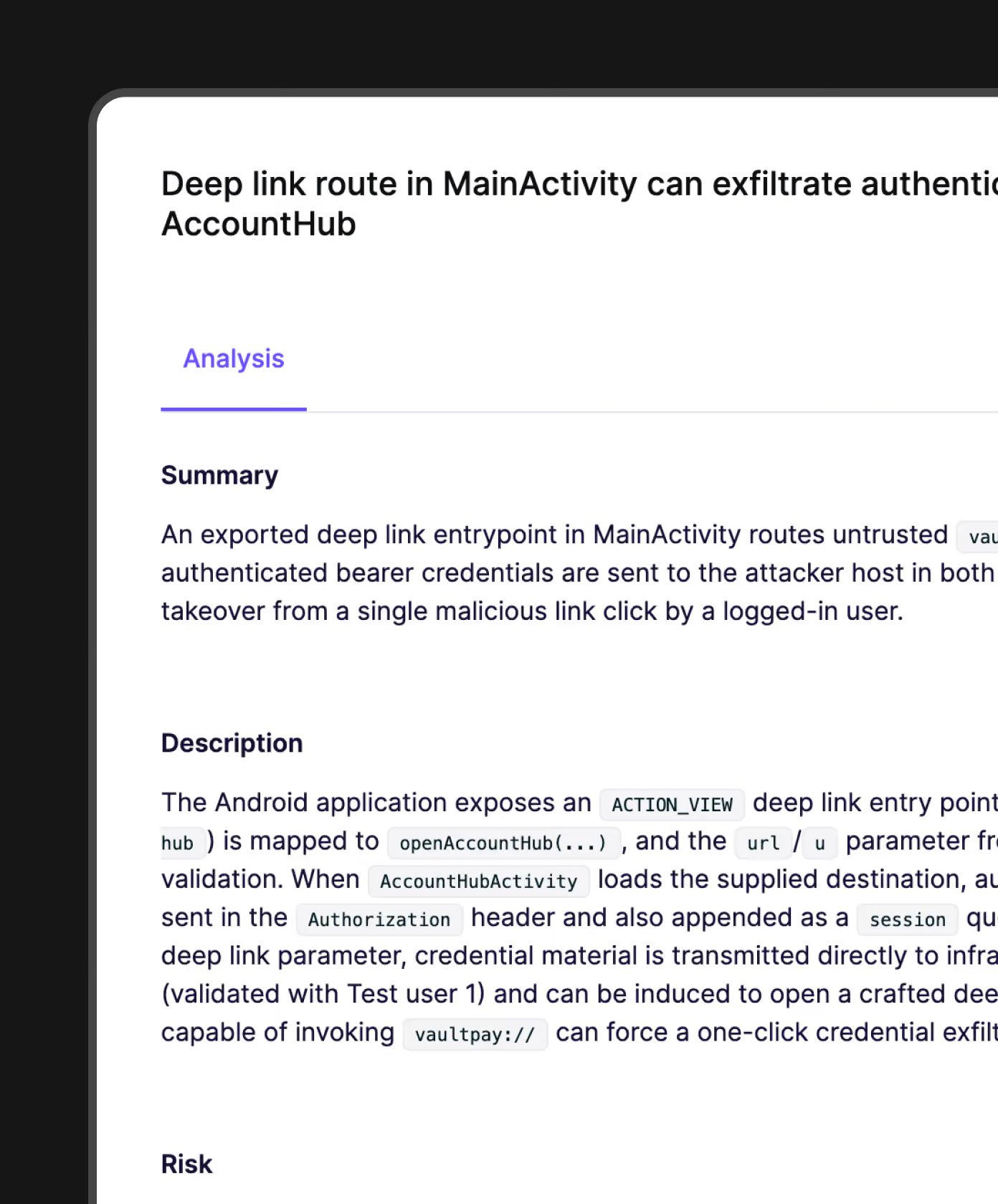
Run your mobile pentests and fix the findings, automatically
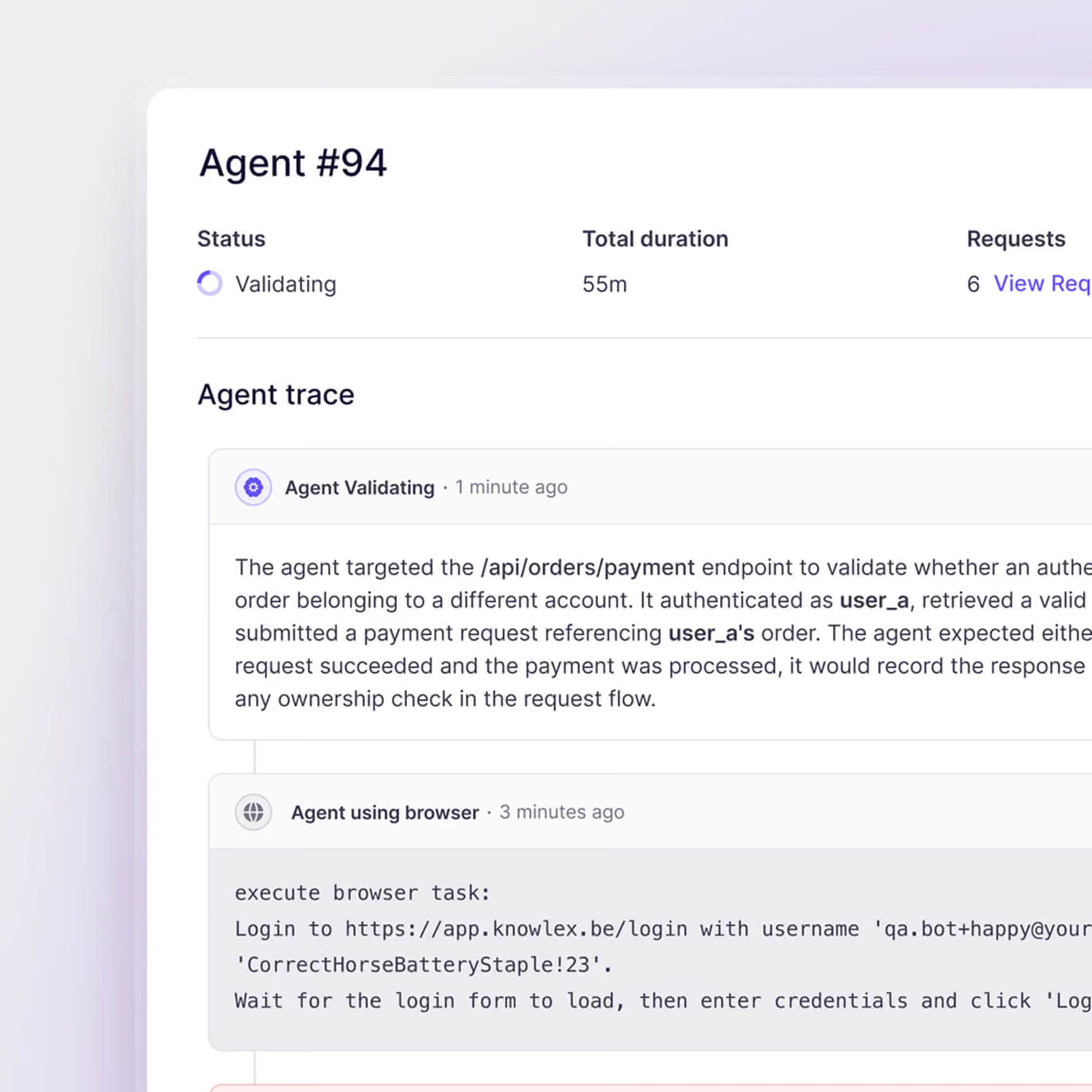
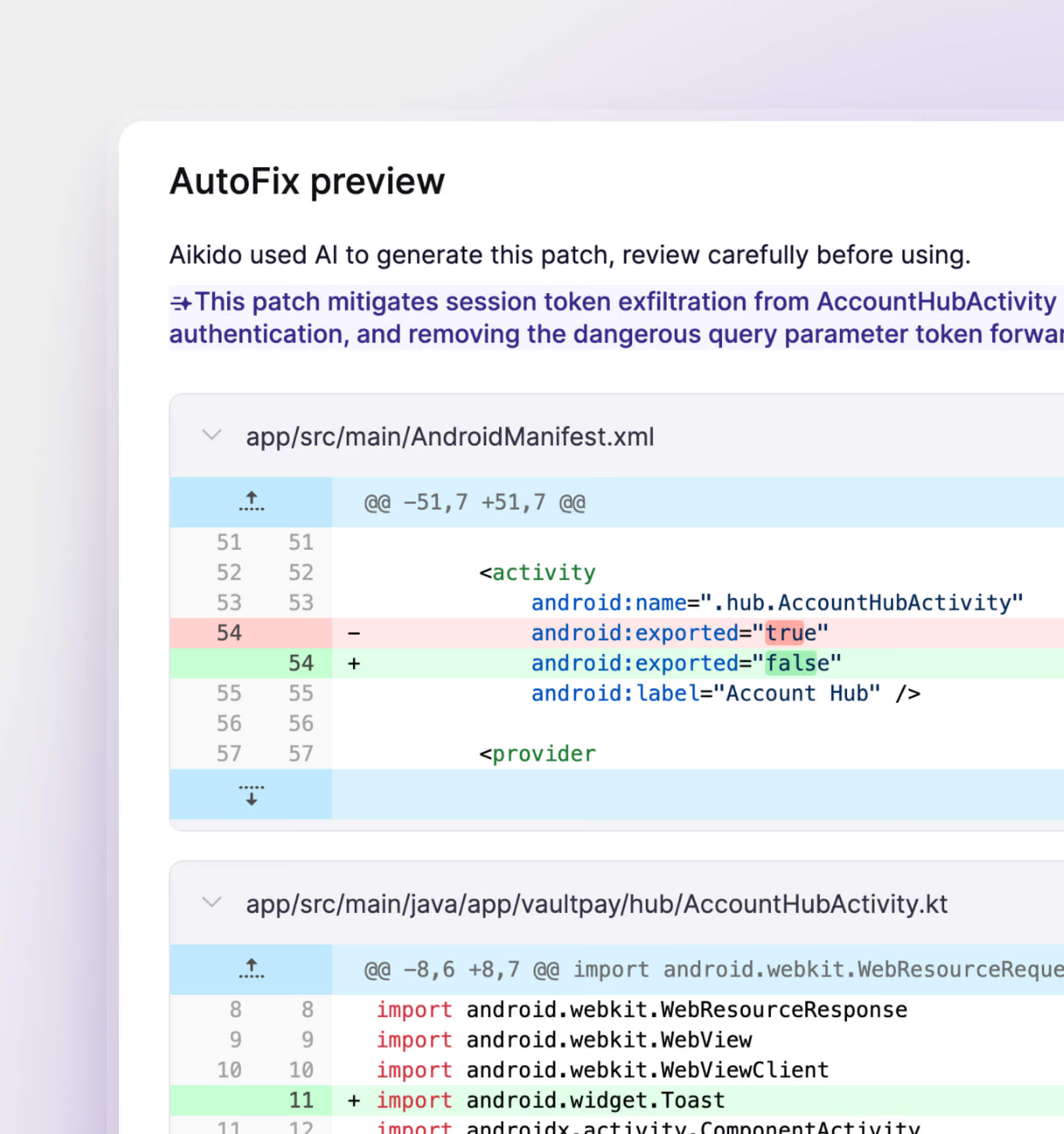
See our pentest in action
In 30 minutes: dive into what matters, understand the AI tech, test together

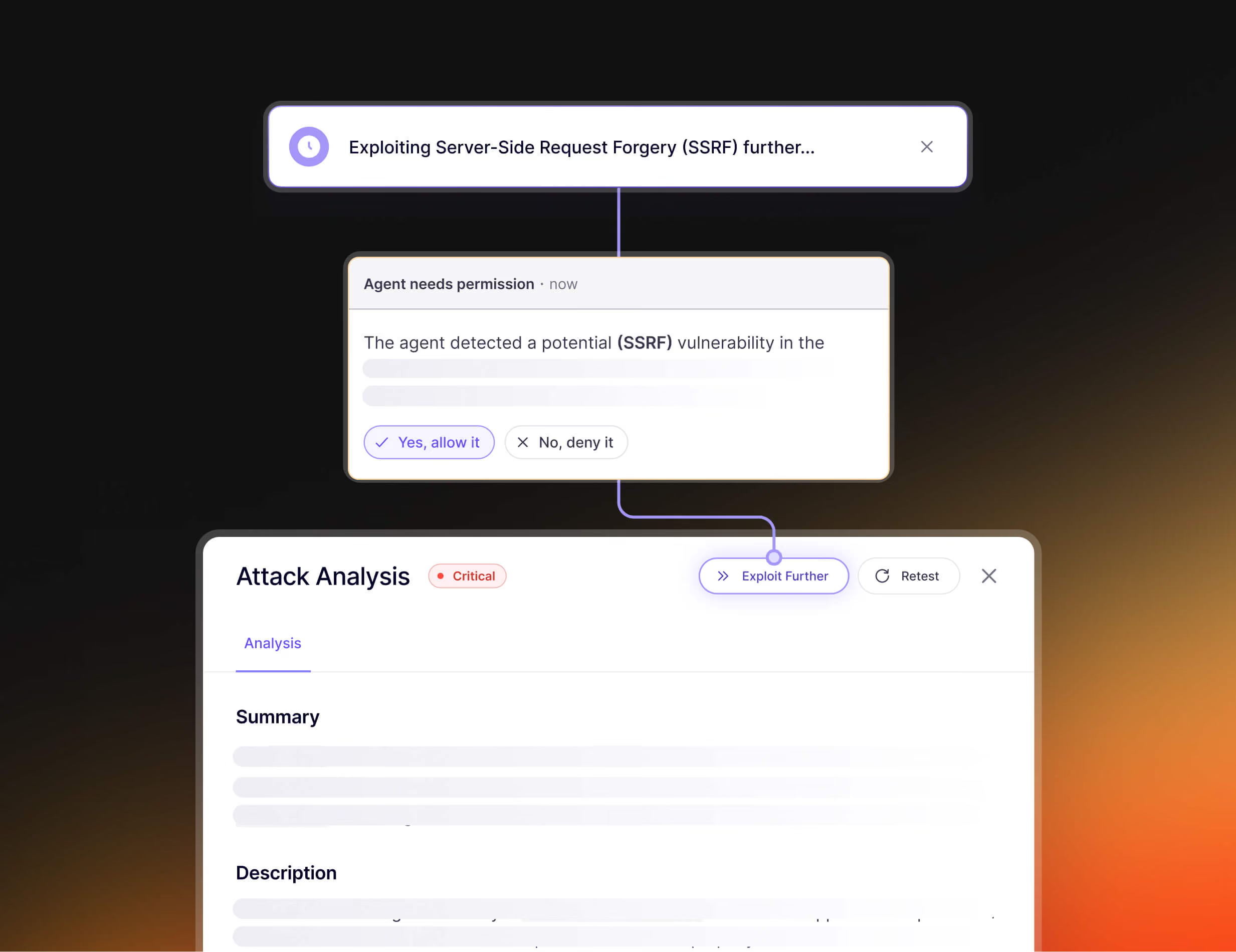
Escalate critical findings to humans
How it Works
When the pentest begins, features and endpoints of the applications are mapped.


100’s of agents are dispatched on those features and endpoints, each going in-depth, focused on their attack vector.
For each finding, additional validation is performed to avoid false-positives and hallucinations.
Mobile pentests run on credits, priced by scope
Upload your APK, IPA, or both, and add the codebase.
Pick your profile.
Aikido shows the credit cost before you launch.
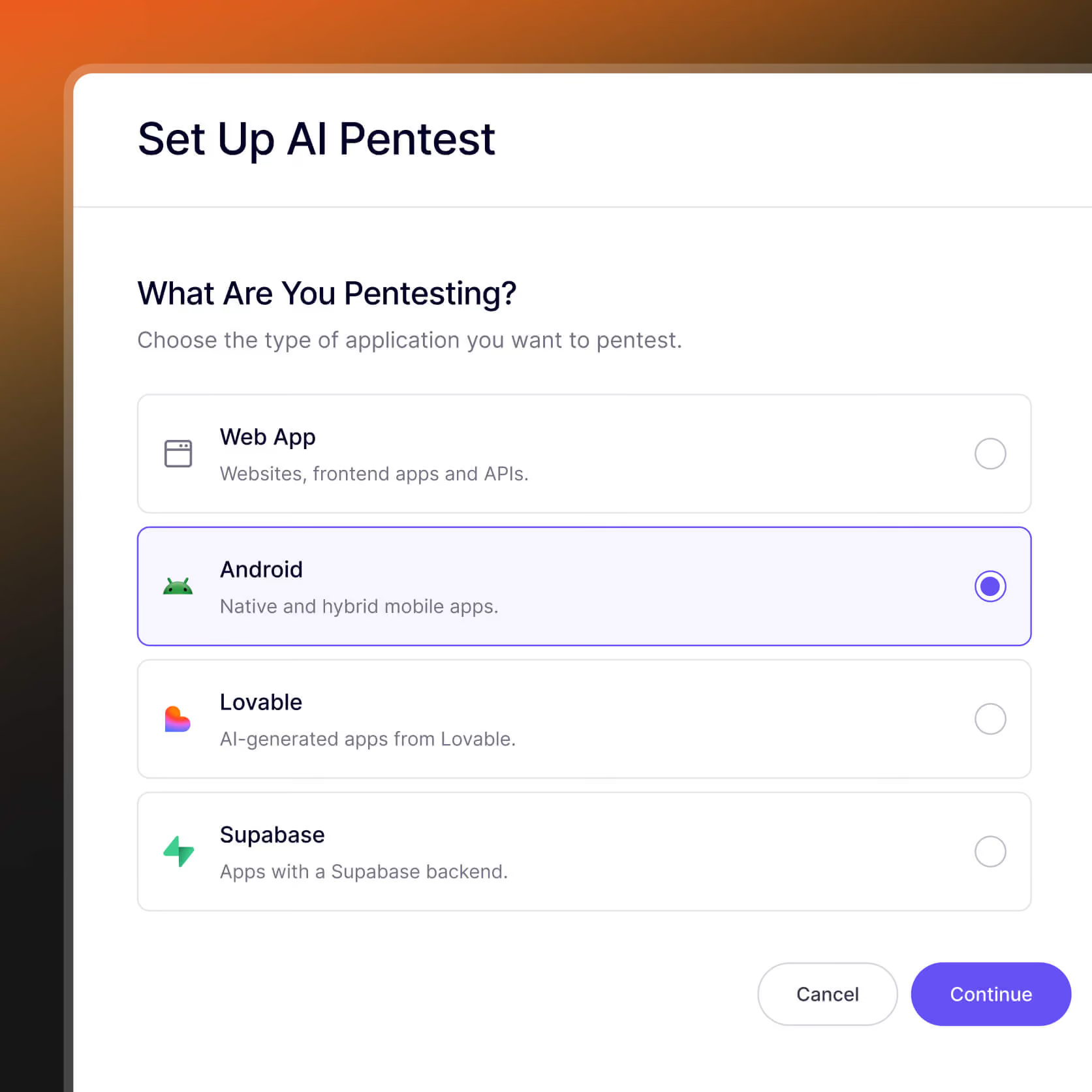
Start your Mobile Pentest in 5 min
Automated penetration testing that matches human creativity with machine speed.
Detect, exploit, and validate vulnerabilities inside your Android application, on demand.

FAQs about Mobile Pentesting

Aikido’s agents install your actual Android or iOS app, log in as a user, and attack it the way an adversary would, working through the app and its backend at the same time. Every confirmed issue also comes with the exact steps to reproduce it.
A manual engagement takes days or weeks to schedule and happens once, tests a version that’s already outdated by the time you get to it, then goes stale as you keep shipping even after getting the report. Mobile AI pentesting runs whenever you want and returns reproducible, exploit-confirmed results.
Usually within hours. Upload your APK or IPA, link your source code, add a test user, and the agents start working through the app. You can follow every step live while it runs.
The mobile source code is required, since mobile pentests are whitebox only for now, on both Android and iOS. The backend codebase is optional, but adding it improves API coverage. With the source and the running app in front of them, the agents reach logic flaws that are hard to find from the outside.
Yes. For Android, the build can’t use certificate pinning, and it can’t have root detection, emulator detection or any runtime application self-protection (RASP) enabled. Those protections stop the agents from installing and instrumenting the app on a test device, so upload a build with them disabled. For iOS, upload a signed IPA that isn’t encrypted.
Everything you’d expect from a mobile penetration test, including client-side authentication issues, injection flaws, broken access control, weak session handling, and unsafe API behavior. The agents also test platform-specific behavior at runtime, like unsafe WebViews, deep links and intent manipulation on Android, and URL scheme hijacking and insecure Keychain or data storage on iOS. It also catches business logic flaws and authorization issues like IDORs, cross-tenant access, and authentication bypasses by reasoning about how the app is meant to behave.
Findings are only reported after the agents successfully exploit and confirm them against the live app. If an attack attempt can't be validated, it's dropped and never shown in your results.
Because Aikido already understands your code, AutoFix generates a targeted change for a confirmed vulnerability and opens a pull request, so your team can review the fix and merge it on their own terms. To confirm the fix, recompile the app and upload the new APK or IPA to retest on the same scope.
You define which targets the agents can attack and which they can only reach. Traffic runs through a proxy that validates every request against that scope, agents start non-destructive by default, and pre-flight checks run before the assessment. If something goes wrong, testing auto-pauses and it can be stopped instantly.
Yes. Every run produces an audit-ready penetration test report with validated findings, proof-of-exploit, and remediation guidance.
Aikido's agents matched human coverage and in some cases exceeded it by exploring more paths consistently, including the deep logic flaws a manual tester usually misses. Frequency is the only thing that changes: a human pentest happens once, while the agents can re-run whenever you upload a new build.
Yes. Upload an APK, an IPA, or both to one assessment. Both apps usually share the same test users and backend, so you set those up once, and the findings for both apps and the API land in one report.
No. Android and iOS run in one assessment, priced by scope. Aikido sizes it to what’s actually in your apps and shows you the credit cost before you launch.
No. The agents find the APIs your app calls by using it, then test them. More documentation still helps coverage, and for the best results, connect the backend codebase too.