A private registry with malware protection built in

Host your npm, PyPI, and Maven packages in one AIkido-managed registry. Public dependencies are checked for malware before install.
Your data won't be shared · No CC required
Trusted by 150k+ orgs
|
Loved by 300k+ devs
|
4.7/5
Lovable
Pendo
Revolut
Soundcloud
Niantic
n8n
Deel
Visma
Handshake
Joe & the juice
Runway
Too Good To Go
NiCE
Belfius
Lovable
Pendo
Revolut
Soundcloud
Niantic
n8n
Deel
Visma
Handshake
Joe & the juice
Runway
Too Good To Go
NiCE
Belfius
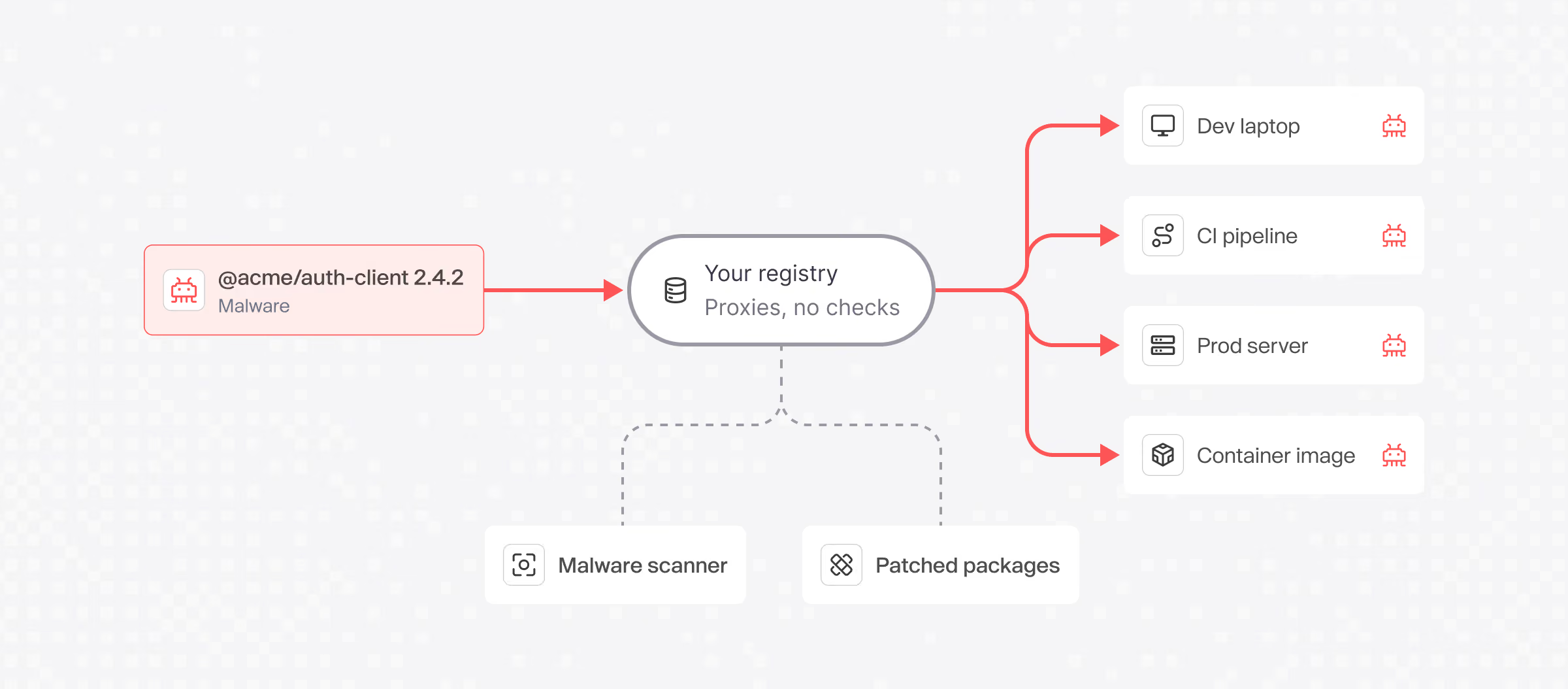
THE PROBLEM

Your private registry serves whatever upstream publishes

Most registries proxy public packages without checking for malware. Teams add on malware protection and CVE-patched packages as separate products, build their own, or go unprotected.
AIKIDO Artifacts

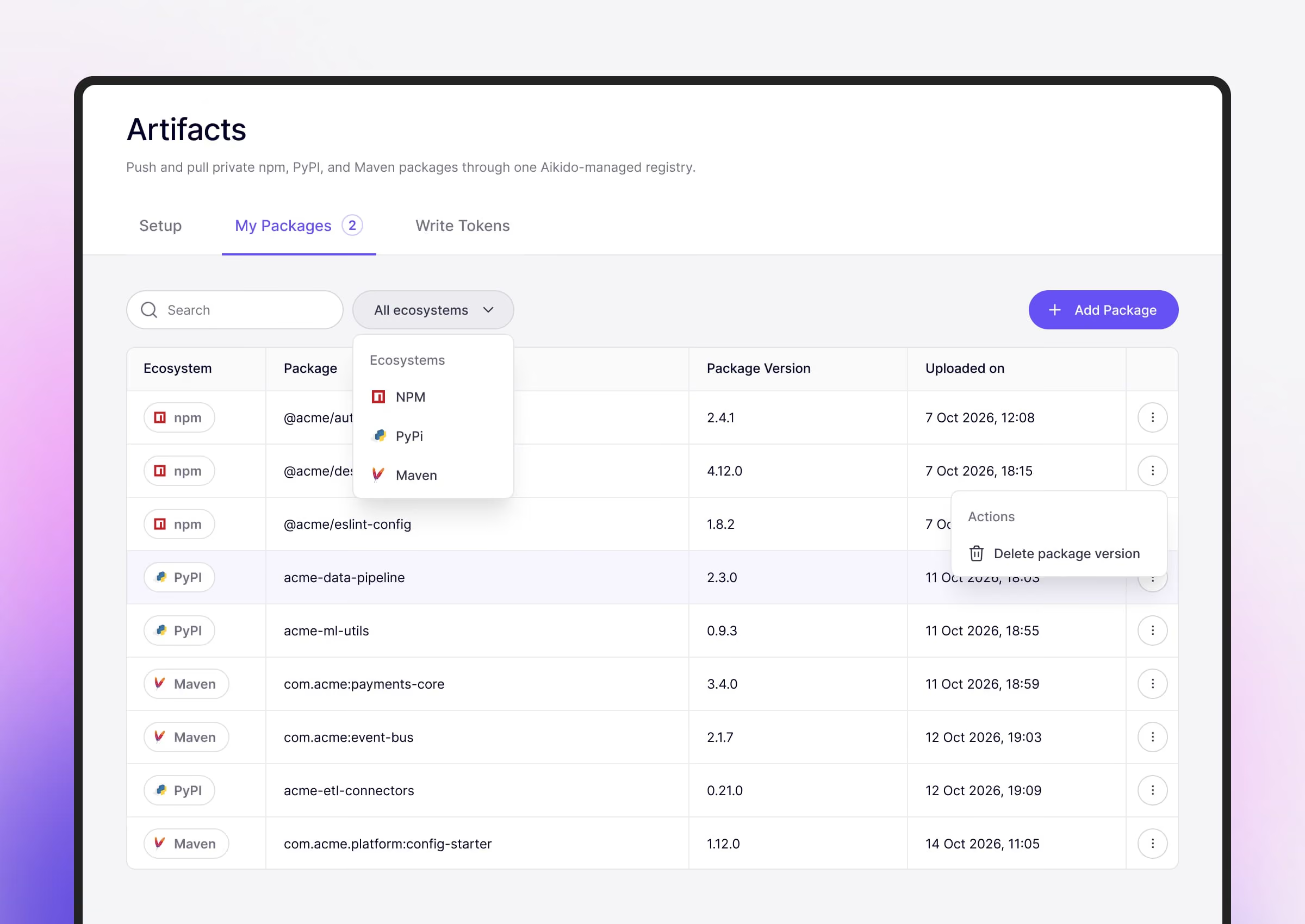
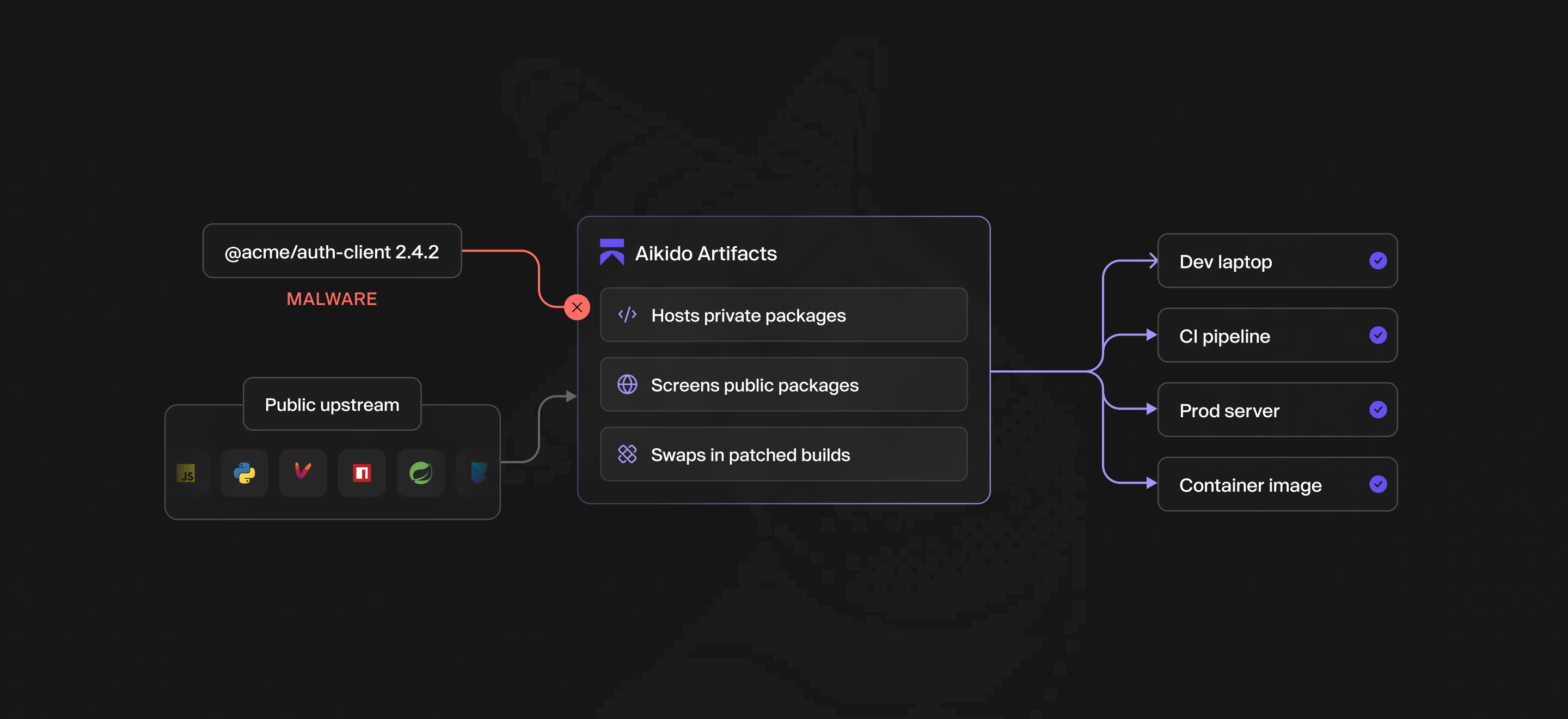
One registry URL for private and public packages

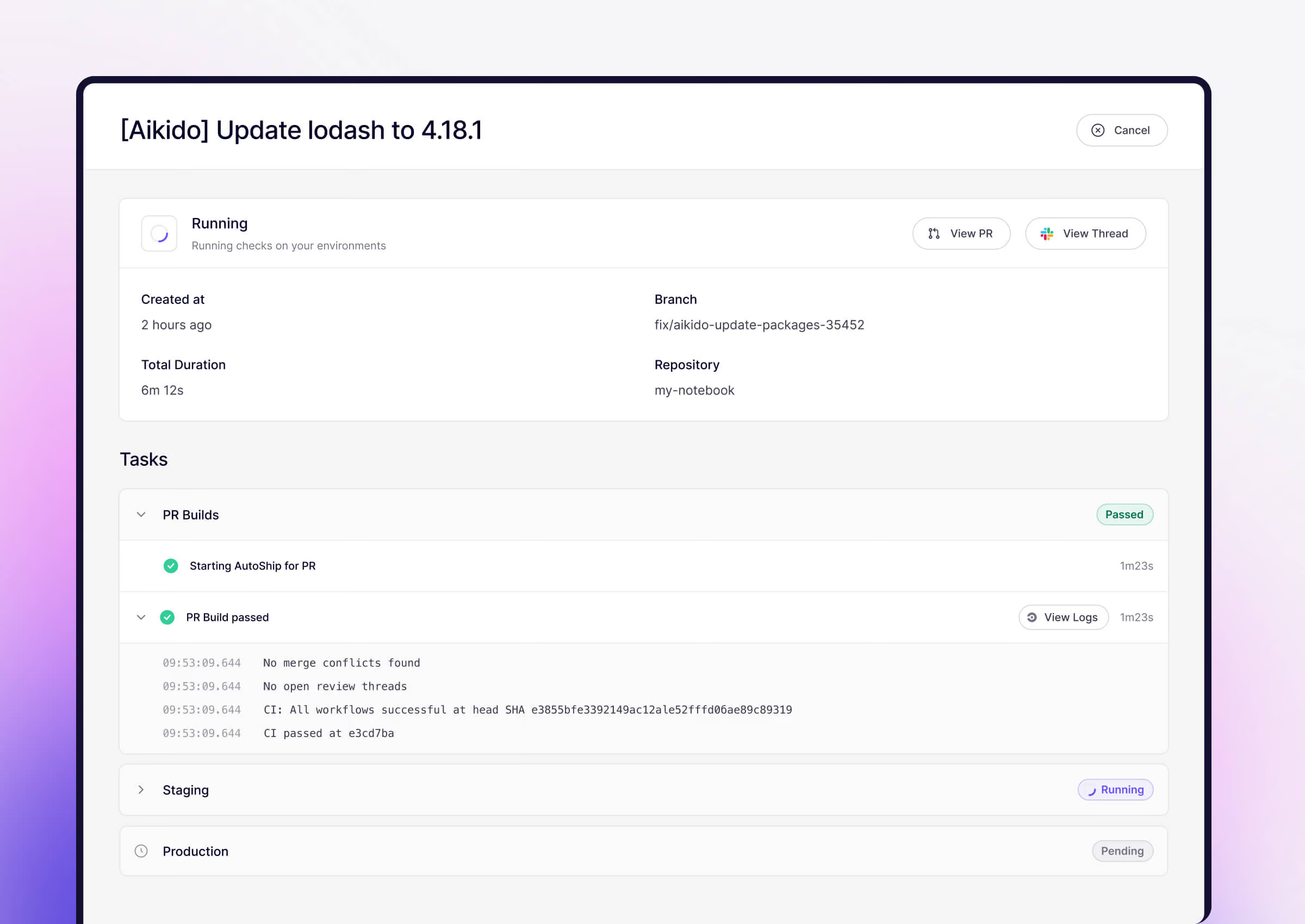
Aikido Artifacts hosts your private packages and screens public ones against Aikido Intel before install. Aikido also serves patched package versions with backported CVE fixes without breaking changes.
Host private packages

Publish and install internal packages from the same registry. Public dependencies are screened at install.

Govern public packages

Screen public packages for malware. Hold back fresh releases with cooldown periods.

Secure existing package versions

CVE patches backported to your existing version, without breaking changes.

Malware detection within minutes

5 min
median time to detection
100k+
daily packages analyzed
167k+
malicious packages identified
POWERED BY Aikido INTEL

Aikido Intel is our real-time threat intelligence feed for malware and silently patched vulnerabilities across 20+ ecosystems. It powers the Artifacts registry proxy and is available via a commercial API.

Discover Aikido Intel

Why teams use Aikido Artifacts

Protect against supply chain attacks

A malicious package blocked at the registry can’t reach any laptop or CI runner that installs through it.

Nothing to host or maintain

Aikido runs the registry, the proxy and the threat intel behind it. Point npm, pip or Maven at a new URL and keep working.

A common intel source

The same Aikido Intel feed blocks malware on laptops through Device Protection and in CI through the registry proxy.

Start securing your private packages

Govern your public packages and secure package versions.

No credit card required | Scan results in 32 seconds.
Trusted by 150k+ orgs
Faq

FAQs about Aikido Artifacts

We already use our Git host's package registry. What's missing?

A check before a version gets in, whether it's a public dependency or a publish from one of your own teams. Dependency alerts flag a malicious package once it's in your manifest, and by then it has usually been installed on a laptop or a CI runner. Switching is a registry URL change, and publishing works the same way.

How does Artifacts compare to JFrog Artifactory or Sonatype Nexus?

Both sell malware blocking as a separately licensed add-on to the registry, and patched versions of vulnerable packages are another purchase, if they’re available at all. Artifacts includes malware screening and every existing Aikido Libraries patch, and Aikido runs the registry for you. At launch, Artifacts covers npm, PyPI and Maven. If you need containers or other formats today, check the roadmap with us.

Are our private packages scanned for malware?

Not at publish. Private packages are your own code, so they’re best secured where they’re written, with Aikido SAST and Deep PR Review. When someone installs a private package, its public dependencies resolve through the registry proxy and get screened there, so malware pulled in through a dependency still stops before install.

Does it host container images?

Not at launch. The registry covers npm, PyPI and Maven packages.

Where does the malware data come from?

Aikido Intel. Every package published to npm, PyPI and other public registries is analyzed with static analysis and behavioral rules. Aikido's in-house malware research team reviews suspicious packages, and confirmed threats are blocked across every connected registry. The live feed is public at intel.aikido.dev.

How is this different from Device Protection or Safe Chain?

Those enforce on the developer's machine at install time, which also covers things a registry never sees, such as IDE extensions and browser plugins. The registry enforces on the server, so it covers every client that resolves through it, including CI runners and build agents, with nothing installed on them.

What does a patched package look like in my lockfile?

Same package name, same base version, plus a suffix. starlette 0.27.0 becomes starlette 0.27.0+aikido.1. npm uses a hyphen: 2.5.0-aikido.1. Each patch contains only the CVE fix, is human-verified, and is inspectable as a diff.