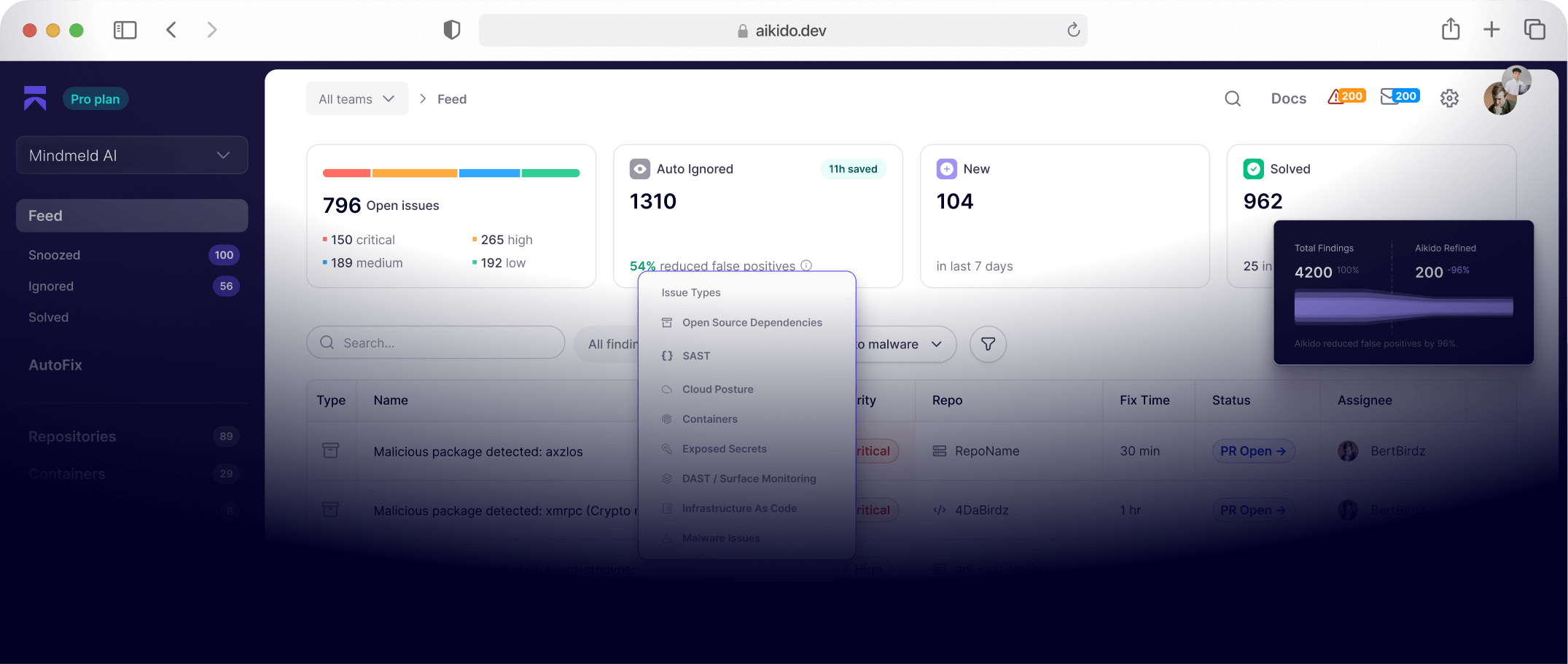
If you’re responsible for your organization’s AppSec or CloudSec, you’ve probably evaluated Snyk and Wiz, or at least debated which one your team actually needs. Both platforms are widely adopted and are often considered when organizations look to strengthen their security posture.
While they’re frequently mentioned in the same conversations, choosing between them isn’t always easy. Today’s security teams are expected to protect both applications and cloud environments, all while supporting fast-moving development workflows.
According to Aikido Security’s 2026 State of AI in Security & Development report, 93% of teams struggle to integrate application security with cloud security, often resulting in fragmented tooling and security blind spots.
In this article, we’ll compare Snyk and Wiz side by side, highlight where they overlap, and help you understand which tool aligns best with your security and development goals.
TL;DR
Aikido Security combines the core strengths organizations seek in tools like Snyk and Wiz, without the complexity of using both. It brings together Snyk’s coverage of code, dependencies, and containers with Wiz’s cloud visibility and risk insights, while addressing blind spots, tool sprawl, and noisy alerts.
The result? Accelerated onboarding, better risk management, and broader visibility.
For both startups and enterprises, Aikido Security’s pilots consistently stand out thanks to its end-to-end coverage, AI-powered risk prioritization, and its ability to replace multiple tools within a single, security-centered, and developer-friendly workflow.
Quick Feature Comparison: Snyk vs Wiz vs Aikido Security
What is Wiz?
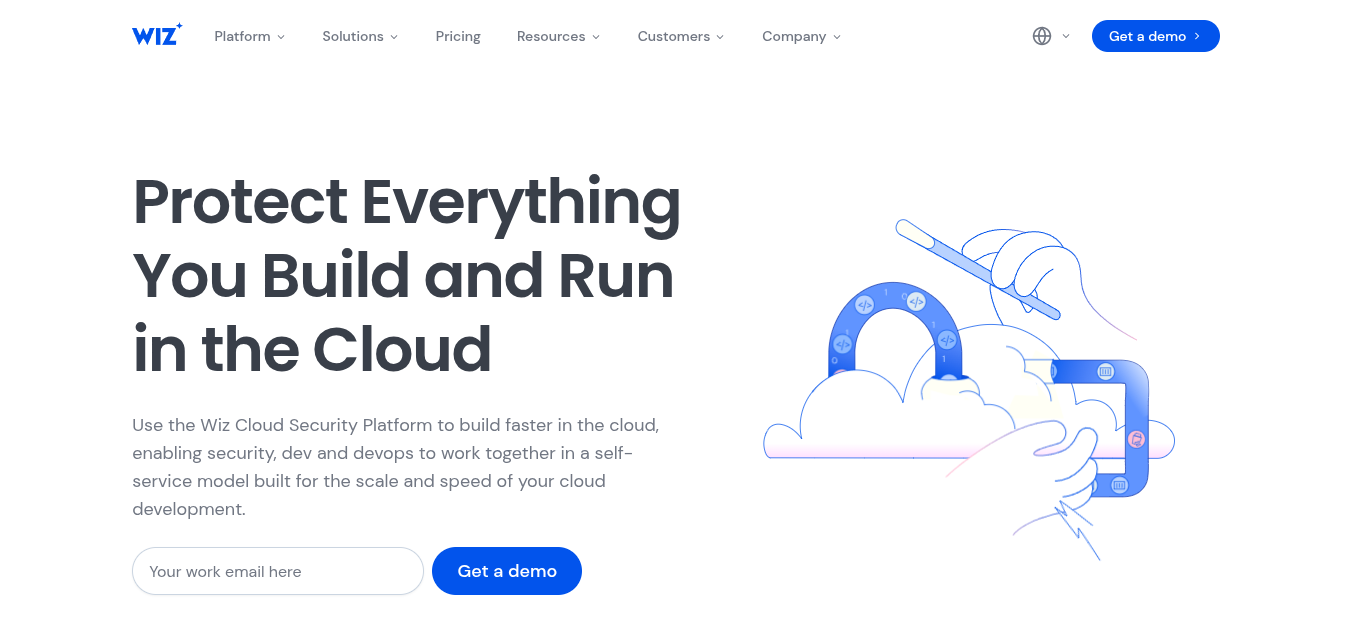
Wiz is a cloud-native security platform known for its focus on cloud infrastructure. It scans cloud environments (AWS, Azure, GCP) for misconfigurations, vulnerabilities, and secrets across workloads and services. And uses its proprietary "Security Graph" to connect application-layer risks in code to their potential impact on the runtime and cloud infrastructure.
Pros:
- Wiz provides broad visibility into cloud infrastructure
- It connects via cloud APIs.
- It prioritizes risks by exploitability
- Built for complex environments and supports all major cloud providers.
Cons:
- It is primarily enterprise focused
- Lacks native DAST capabilities
- It is designed for security teams.
- Limited integration with development workflows (IDEs, PR checks).
- Steep learning curve
- Users have reported its UI and query interface as non-intuitive or complex.
- High alert volume
- May require complementary tools for full AppSec coverage
- Users have reported issues integrating with hybrid/legacy systems
What is Snyk?
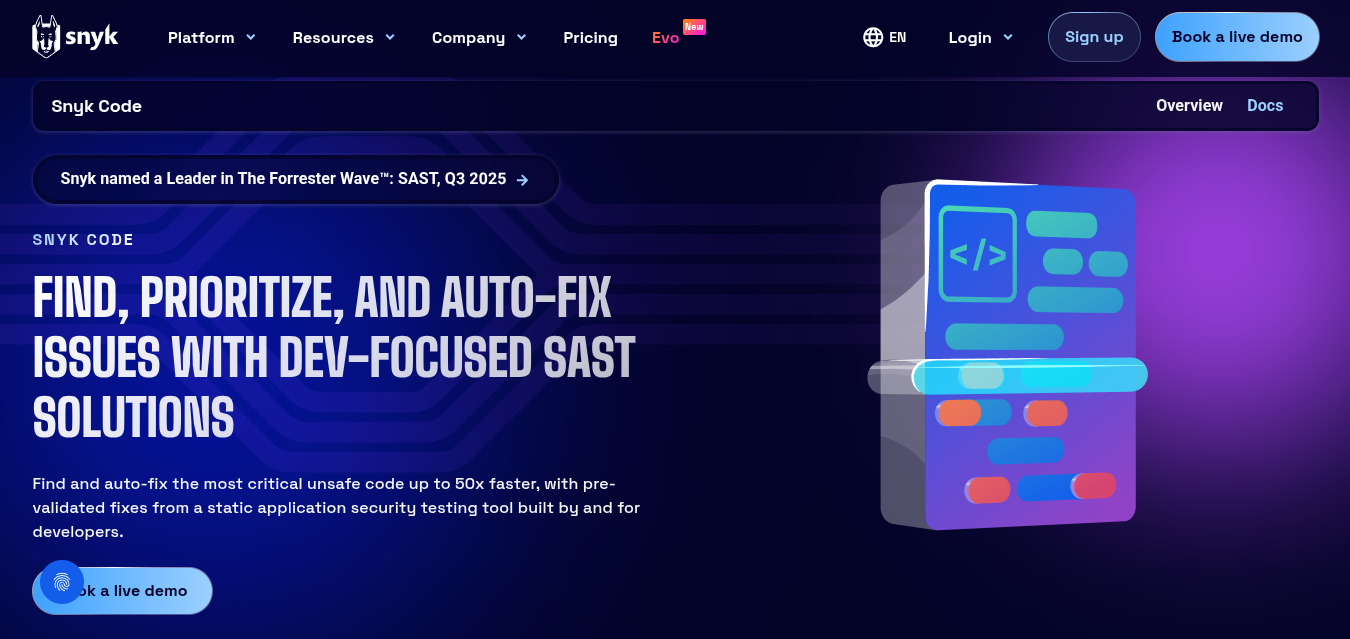
Snyk is an application security platform. It initially made its name by scanning open-source dependencies for known vulnerabilities (SCA), and later expanded into scanning proprietary code (SAST), containers, and IaC templates. It integrates directly into development environments (IDEs) and CI/CD platforms (GitHub, GitLab) so developers get security feedback early, shifting security left.
Pros:
- Snyk integrates into IDEs, Git repositories and CI/CD pipelines.
- It has a robust vulnerability database.
- Offers actionable remediation (fix suggestions, pull requests).
- Monitors and alerts teams of new vulnerabilities.
Cons:
- Steep learning curve for new users.
- Scan times can be slow on large repositories.
- False positives.
- Snyk’s modules aren’t fully unified, and achieving full coverage requires enterprise add-ons.
- It is known to overwhelm developers with low-priority alerts
- Fix suggestions may feel generic and not fully tailored to the code.
- It can struggle with proprietary or highly specialized codebases.
- Its static analysis has a 1 MB file size limit.
- Pricing can be expensive.
Feature-by-Feature Comparison
Security Scanning Capabilities
Snyk: Snyk covers a broad range of AppSec types: SAST (static code analysis for vulnerabilities in source code), SCA (open source dependency scanning), container image scanning, and IaC checks. This broad coverage means Snyk can find insecure coding patterns in applications, vulnerable npm libraries, or misconfigured Terraform scripts, all within one platform.
Wiz: Wiz, on the other hand, specializes in cloud and infrastructure scanning. It uses its built-in Cloud Security Posture Management (CSPM) platform to identify misconfigurations and risky setups in cloud services and workloads. It recently added source code scanning ( SAST) via Wiz Code, but it does not have a native DAST engine.
In summary Snyk is stronger in code-level scanning, whereas Wiz covers the cloud and infrastructure angle more deeply.
Integration and DevOps Workflow
For a security tool to succeed, it must integrate seamlessly into your team's workflow .
Snyk: Snyk integrates seamlessly with developer tools, from IDE plugins to GitHub/GitLab pull request checks and CI pipeline hooks. Developers get real-time alerts as they code as well as one-click fixes This developer-centric approach means Snyk can be adopted by engineering teams with minimal friction.
Wiz: Wiz, on the other hand, is geared towards cloud and security engineers. It connects to your cloud accounts (using read-only roles or APIs) and continuously monitors resources. It has limited developer integrations, and requires developers to log into the Wiz console to investigate issues..
In summary, Snyk fits naturally into DevOps pipelines, whereas Wiz ,is more suitable to SecOps workflows.
Accuracy and False Positives
One major complaint about security scanners is noise, whether from false positives or high alert volumes..
Snyk: Snyk, with its developer-first approach, has invested in reducing noise ( using its DeepCode AI) to improve static analysis. However, users still report that Snyk tends to overwhelm teams with low-priority findings or false positives, especially with certain languages. Tuning is often needed to filter out the “noise”. .
Wiz: By focusing on cloud context, Wiz prioritizes findings based on real risk. It correlates vulnerabilities against the affected resource to determine if it is actually exposed or critical.That said, Wiz’s new code scanning capabilities haven’t been battle-tested for noise, and pulling in results from external SAST tools could introduce some duplication or false positives if not managed well.
In general, Wiz generates fewer false positives on cloud configuration issues, while Snyk flags more potential issues in code. Both tools however still require tuning...
Coverage and Scope
Snyk: Snyk supports a wide range of programming languages and frameworks (for SAST and SCA), including Java, JavaScript/Node.js, Python, .NET, Ruby, Go, and more. It also supports container registries and IaC formats (like Terraform, CloudFormation, and Kubernetes manifests). However, it does not cover live cloud environments or networks.
Wiz: Wiz offers broad cloud infrastructure coverage: it can scan virtual machines, Kubernetes clusters, serverless functions, databases, and more across AWS, Azure, and GCP. Wiz’s new repository scanning capabilities extends its reach to code and IaC in version control, but for dynamic code analysis (DAST) it needs to be integrated with third-party tools.
If your stack is heavily cloud-centric (microservices, multi-cloud deployments), Wiz ensures you have visibility into that layer. Conversely, if you need to thoroughly check code and dependencies pre-deployment, Snyk has the edge there.It’s worth noting that neither tool provides end-to-end coverage. With many organizations ending up using platforms like Aikido Security that offer end-to-end coverage from their source to cloud configurations. .
Developer Experience
Snyk: Snyk was built with developers in mind t. Its User Interface (UI) and integrations present findings in a developer-friendly way, for example, showing the exact line of code or dependency that introduced a vulnerability, with clear guidance to fix it. It can also open automatic fix pull requests (PRs). However, users have reported the platform as clunky with multiple modules (Snyk Code, Snyk Open Source) having overlapping features, and some capabilities only available on higher-tier plans.
Wiz: Wiz’s platform is geared toward security teams, offering a unified cloud security dashboard with graph-based visualization of assets and issues. For developers who want to fix bugs in codes, the Wiz console can feel overwhelming or not directly relevant,with some users describing Wiz’s interface as confusing and not intuitive.
In general, developers find Snyk more approachable and easy to navigate, whereas Wiz is typically operated by SecOps or cloud teams who then communicate their findings directly to developers..
Pricing and Maintenance
Snyk: Snyk is a SaaS offering with a per-developer pricing model. It has a free tier for open-source projects, but as you scale up you’ll likely need paid plans which can increase significantly as more modules are added .For many advanced features (advanced reporting, on-prem scanning, custom roles), Snyk requires higher-tier plans.
From a maintenance point its cloud-based architecture means its setup is straightforward and it requires no infrastructure maintenance .
Wiz: Wiz, in contrast, targets enterprises and is usually priced based on the size of your cloud environment (e.g. number of cloud assets or workloads). There’s no free tier; you go through sales for a custom quote. Wiz is delivered as a SaaS, with optional sensors for on-premise deployment, so its operational maintenance is light, but more time will be invested in onboarding cloud accounts and tuning policies..
Overall, Snyk might seem cheaper initially but can quickly become expensive when scaling, while Wiz is a heavyweight investment from the get-go.
Aikido offers a simpler, more transparent pricing model – flat and predictable – and is significantly more affordable at scale than either Snyk or Wiz.
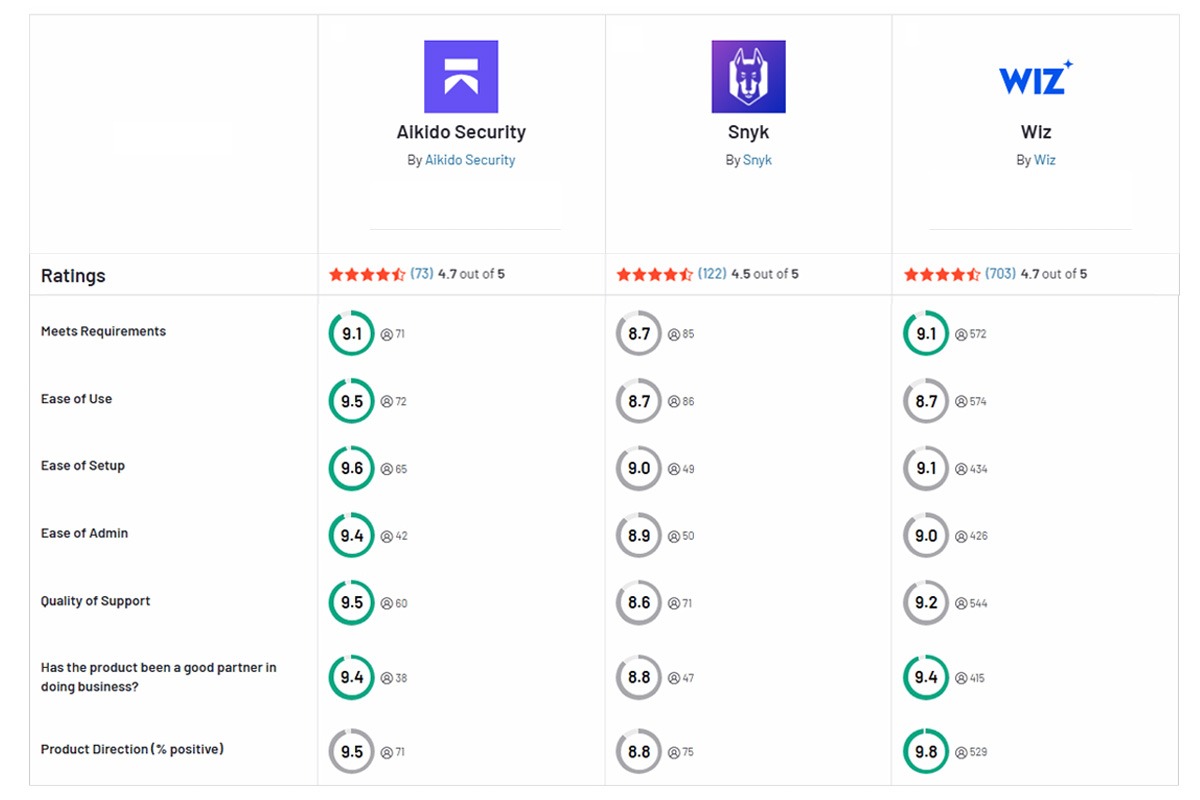
To help you compare the features of both tools, the table below summarizes it for you.
Aikido Security: The Better Alternative
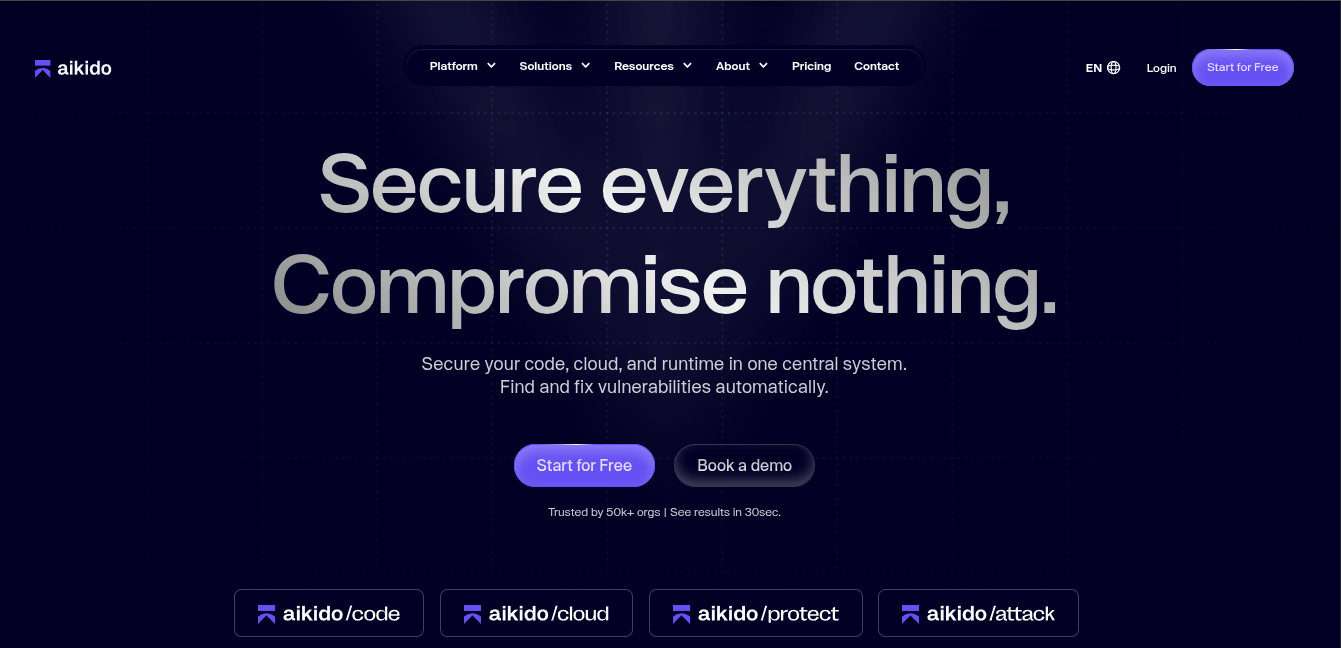
Aikido Security is an AI-driven security platform built for teams that want strong application and cloud security without sacrificing developer experience. It goes beyond Snyk’s scanning across code, dependencies, containers, and IaC and combines it with Wiz’s cloud context and risk visibility, all within a single workflow.
Its AI engine correlates findings across application and cloud layers and performs reachability analysis to surface vulnerabilities that are truly exploitable, reducing noise and time spent triaging alerts. Aikido Security also provides automated remediation features such as, automated fix pull requests and one-click fixes for identified vulnerabilities.
Teams can start with any module, SAST, SCA, IaC scanning, DAST, runtime security, container scanning, secrets detection, or code quality, and enable additional modules as they grow.
With flat pricing and a free forever tier, Aikido Security delivers end-to-end AppSec and CloudSec without the complexity or costof running both Snyk and Wiz.
Want to improve your application and cloud security? Start your free trial or book a demo with Aikido Security today.
FAQ
How do Snyk and Wiz integrate with popular CI/CD pipelines?
Snyk integrates directly with platforms like GitHub Actions, GitLab CI, Jenkins, and Bitbucket, allowing automated scans of code, dependencies, and containers during builds and pull requests. While Wiz connects to CI/CD pipelines through APIs and cloud connectors, with a focus on cloud workload security.
How do cloud security platforms like Snyk and Wiz protect organizations?
Snyk helps secure applications by scanning code, open-source dependencies, containers, and IaC configurations for vulnerabilities. Wiz on the other hand, protects cloud workloads and runtime environments by detecting misconfigurations, risky permissions, and compliance gaps. Platforms like Aikido Security combine these capabilities, providing end-to-end security coverage across code, dependencies, containers, and cloud infrastructure.
How does Snyk compare to Wiz in terms of vulnerability detection?
Snyk is strong at detecting vulnerabilities in code, open-source libraries, and container images.While Wiz specializes in identifying cloud misconfigurations, runtime risks, and CSPM issues. Tools like Aikido Security correlate vulnerabilities across multiple layers, reducing noise and providing developers with actionable guidance.
How do Snyk and Wiz handle container security differently?
Snyk scans container images before deployment to detect insecure packages or misconfigurations. Wiz focuses on runtime monitoring of containers and cloud workloads to identify risks in production. Platforms like Aikido Security combine both approaches, linking container scanning with code and IaC context to secure both development and runtime environments.
Why is choosing the right cloud security tool important for enterprises?
Selecting the right cloud security tool ensures that all parts of your environment, code, dependencies, containers, and cloud infrastructure, are properly protected without slowing down development. The wrong tool can leave blind spots, generate too many false alerts, or complicate workflows. Platforms like Aikido Security provide a developer-friendly solution that balances coverage, accuracy, and actionable guidance.
You Might Also Like: