

.avif)


SAST should be focused, fast and easy. Enter, Aikido.
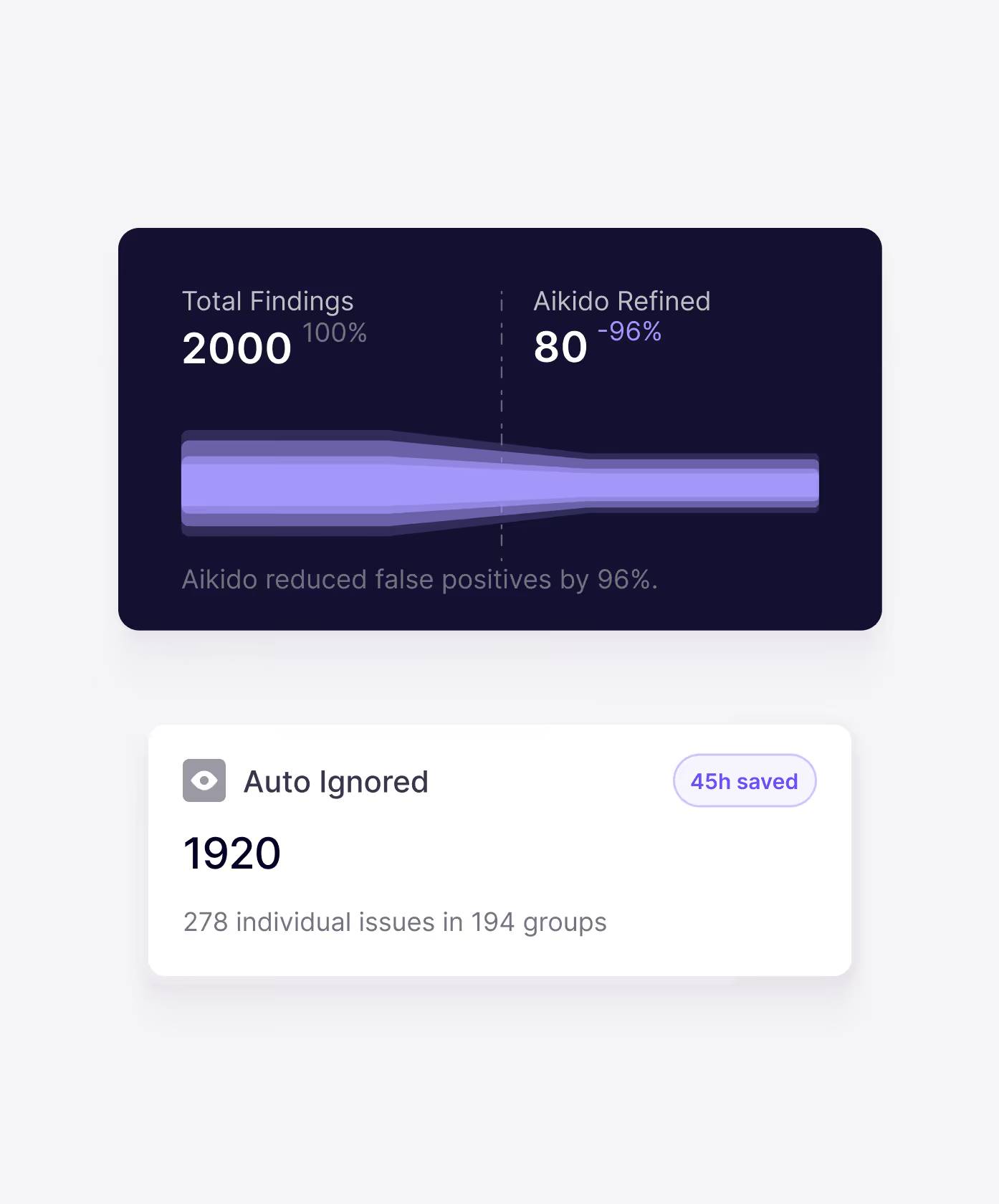
Static analysis, without noise
Aikido’s SAST rule-set is optimised to reduce false-positives by 90%. We triage unreachable vulnerabilities and let you fine-tune rules for your codebase.
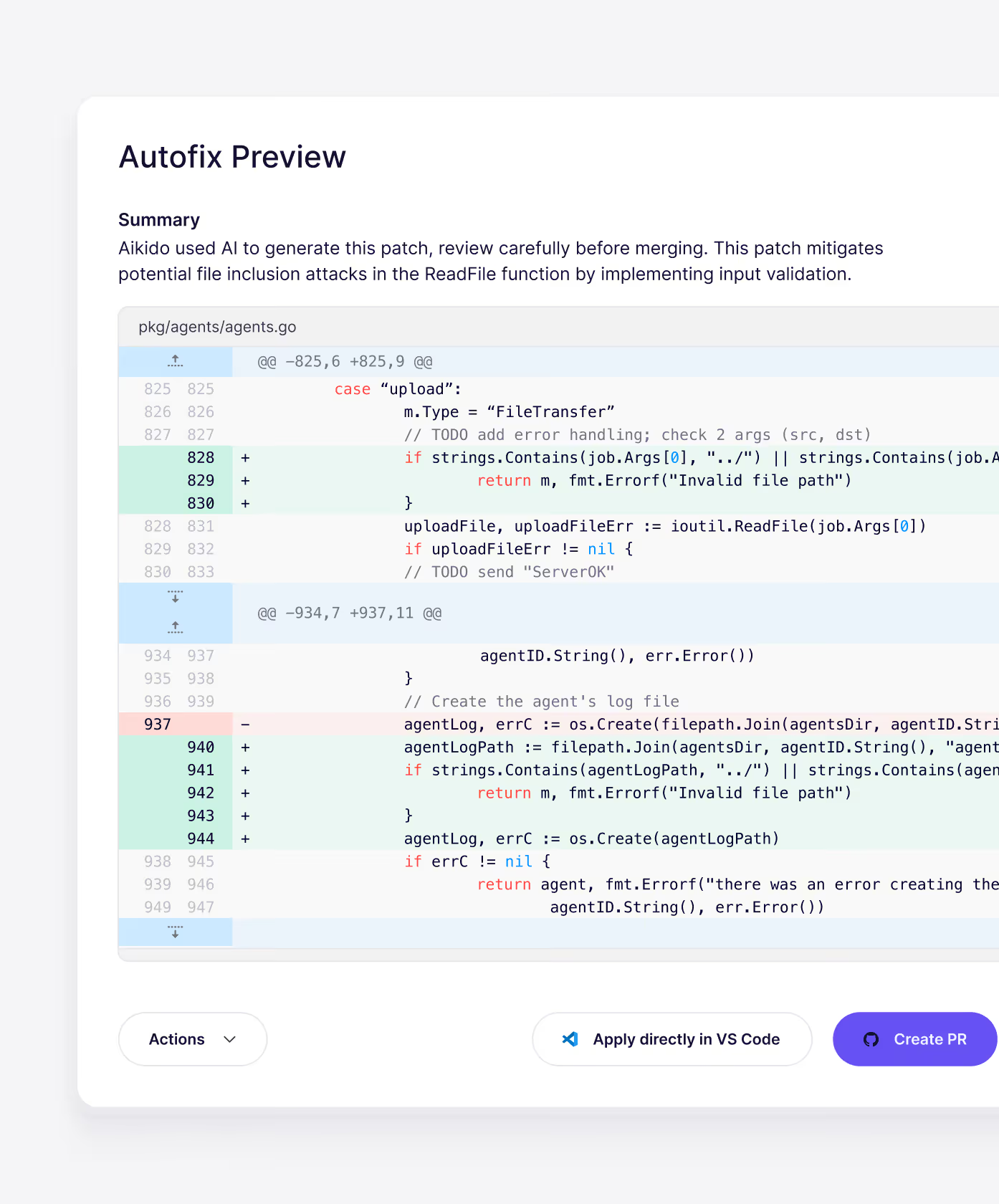
One click auto-fixes
Get instant code-fix suggestions (with confidence levels). Some fixes use deterministic workflows while tougher fixes are handled by an agentic AI.
.avif)
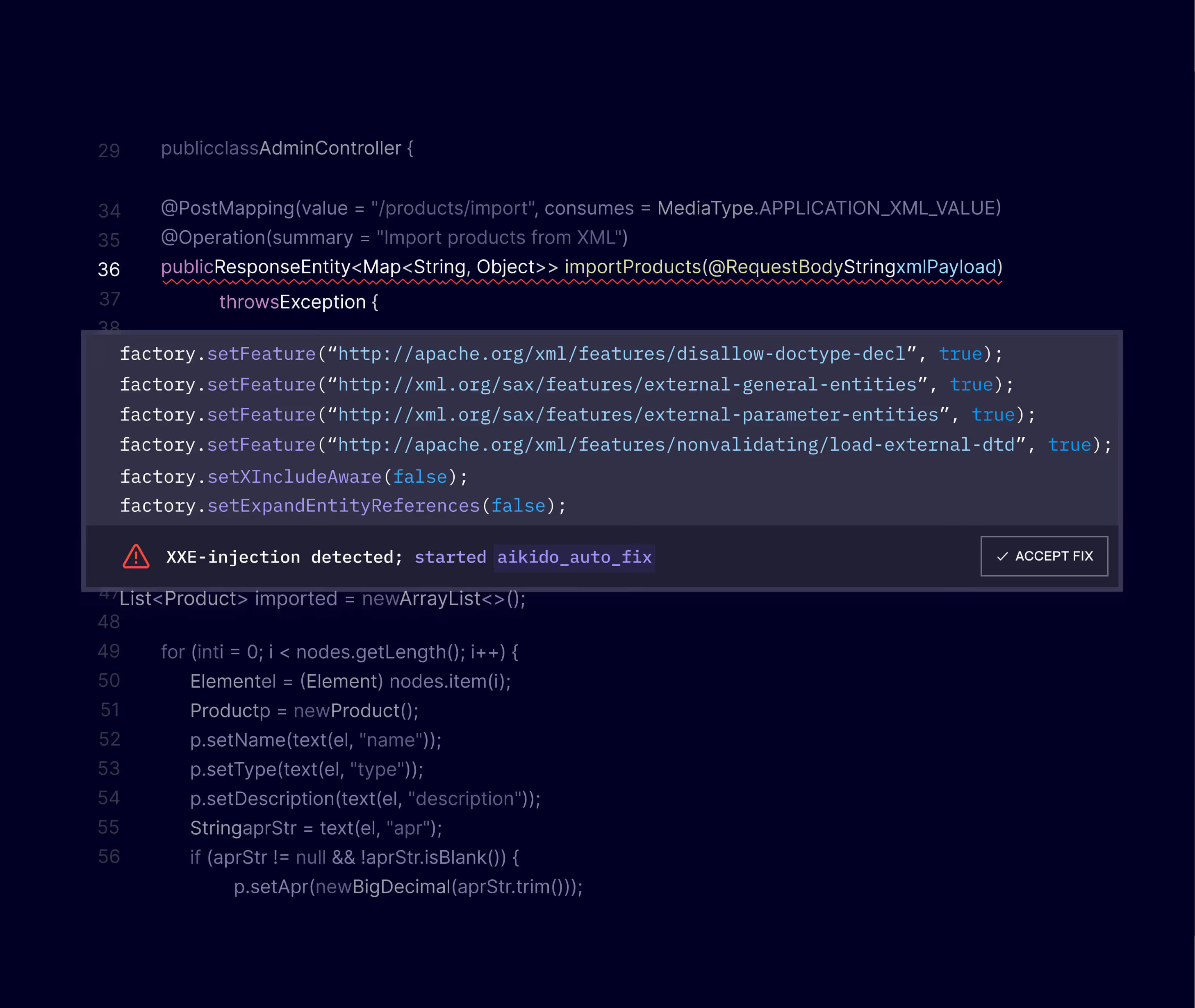
Aikido SAST runs inside your IDE

“Best value for money. Coming from Snyk, it was too expensive and Aikido has better SAST capabilities. The mechanism that prevents false positives is superb”
Konstantin SHead of Information Security at OSOME Pte. Ltd.


Supports all major languages & version control systems
Language support


Version control systems


Next-gen SAST with AI-native code quality
.avif)
.avif)

“With 92% noise reduction, we got used to it quickly. Now I wish it was even quieter! It’s a massive productivity and sanity boost.”
CorneliusVP Engineering at N8N

The 92% noise reduction is a game changer—it lets us focus on the 8% that matter.
Cornelius S.VP Engineering
.avif)
.avif)
Start a free scan in 2min
Secure your code, cloud, and runtime in one central system.
Find and fix vulnerabilities fast automatically.


FAQs about SAST

Static Application Security Testing (SAST) is static code analysis focused on security vulnerabilities. It examines your source code (without executing it) to find weaknesses that could lead to security issues.
The "best" SAST tool depends on your needs - the ideal solution is one that finds real vulnerabilities with minimal noise and fits into your development workflow. Key factors include broad language support, CI/CD integration, scan speed, and low false-positive rates. Many teams evaluate SAST tools like Checkmarx, Snyk, Veracode, or Aikido's own SAST solution based on these criteria. (We're obviously biased, but Aikido's SAST is built with those developer-friendly goals in mind.)
SAST is just one layer of application security; you'll want to pair it with other scanners for full coverage. Dynamic Application Security Testing (DAST) finds vulnerabilities in a running application (simulating external attacks) that static code analysis might miss. You should also use Software Composition Analysis (SCA) to scan for known vulnerabilities in third-party libraries and dependencies. Many teams add secrets scanners, container image scanners, or even IAST for runtime insights - no single scanner catches everything, so a defense-in-depth approach is best.
SAST vs DAST: SAST analyzes source code without running it, whereas DAST tests the live application from the outside (like a black-box attack).SAST vs SCA: SCA (Software Composition Analysis) doesn't examine your code's logic at all - it scans the open-source libraries and components your software uses, checking for known vulnerabilities in those dependencies.SAST vs IAST: IAST (Interactive Application Security Testing) is a hybrid approach that instruments a running application to find vulnerabilities from the inside in real time. In short, SAST finds issues in your own code before runtime, DAST finds issues during runtime externally, SCA checks the components your app is made of, and IAST monitors the app internally during execution for a more interactive analysis.
SAST tools typically catch code vulnerabilities, such as SQL injection and cross-site scripting (XSS) vulnerabilities. They can also detect issues like buffer overflows, command or path injection, insecure deserialization, and hard-coded secrets or credentials. Essentially, if it's a code-level security flaw (think OWASP Top 10 issues like injection flaws, XSS, etc.), a SAST scan can probably flag it.
Aikido’s SAST supports all major programming languages out of the box. This includes JavaScript/TypeScript, Python, Java, C#/.NET, C/C++, PHP, Ruby, Go, Kotlin, Swift, Rust, and many others. The platform isn’t picky about language versions either – whatever language you’re coding in, Aikido’s static analysis probably has you covered.
By design, Aikido’s SAST focuses on real security issues and filters out the noise. It uses a combination of fine-tuned rules and AI-powered triaging to weed out non-security alerts and “cry-wolf” warnings. In fact, through rigorous rule testing and an AI reachability engine, Aikido cuts false positives by up to ~95%. The result: you get high-confidence findings (actual vulnerabilities) rather than a flood of pointless alerts.
Yes – Aikido’s SAST plugs directly into your CI/CD pipeline. It supports integrations with popular CI/CD systems like GitHub Actions, GitLab CI, Jenkins, CircleCI, Azure DevOps, and others. This means your code is automatically scanned for security issues on each commit or pull request, catching vulnerabilities early without disrupting your normal DevOps workflow.
It can. Aikido's SAST comes with an AI AutoFix feature that suggests and even generates code fixes for certain vulnerabilities. In practice, when a flaw is found, the platform can automatically open a pull request with the proposed fix (or show you the patch), so you can review and merge the solution with a click. This turns remediation from a manual chore into a quick, assisted step.
Aikido’s SAST takes a more developer-centric and intelligent approach compared to older tools like Snyk or Checkmarx. Legacy SAST scanners often overwhelm developers with noisy results and false positives, and they leave all the fix-up work to you. Aikido, on the other hand, prioritizes real issues (cutting out ~95% of the noise) and even provides one-click AI-generated fixes to speed up remediation. It also integrates deeply with your dev workflow (CI/CD, IDEs) and allows custom rules – so it feels like a helpful coding assistant rather than a tedious security gatekeeper.
For in-depth guides on setup, language support, CI/CD integration, and advanced features, visit the Aikido SAST documentation on our website. The documentation and knowledge base provide technical details, examples, and best practices to help you get the most out of Aikido’s SAST. (Our main product page and blog are also great resources for additional tips and use-cases.)