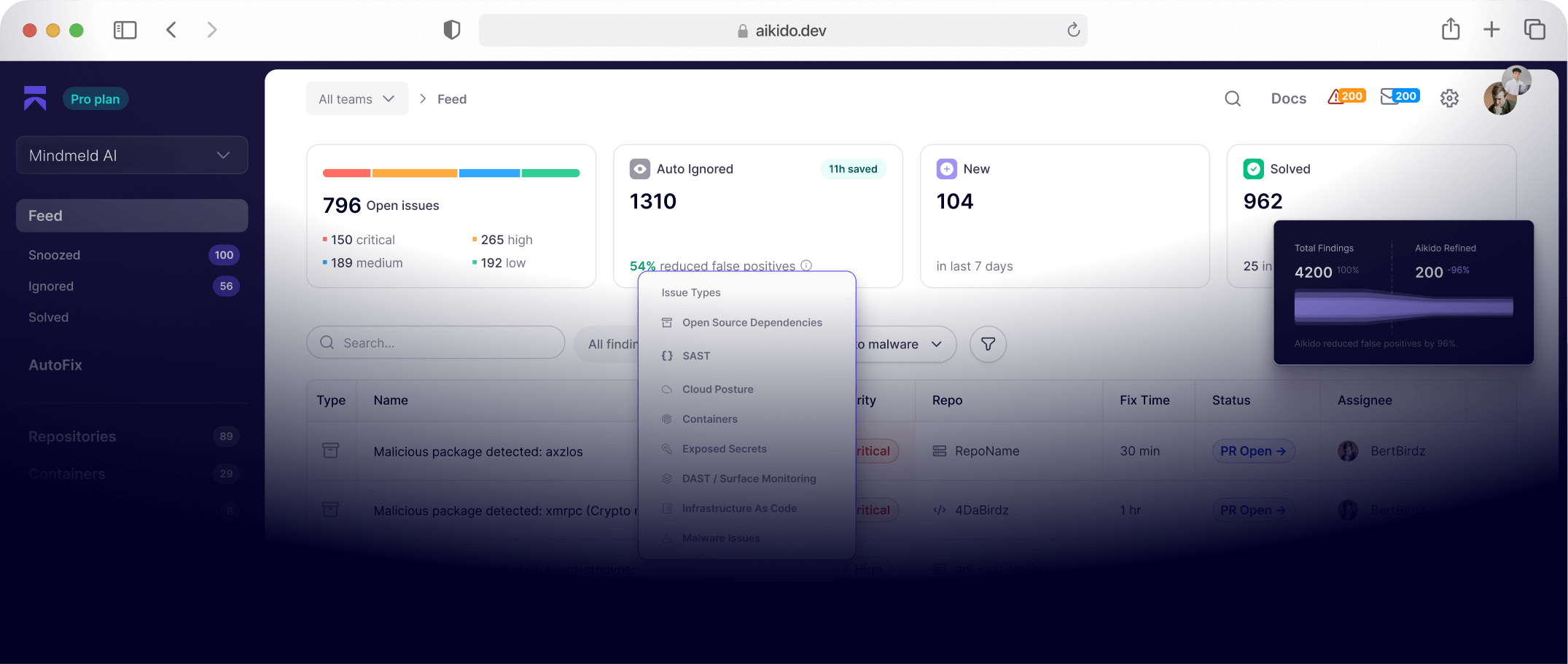
Aikido's MCP integration brings its findings into the AI coding tools developers already work in. Instead of switching between their agent, their editor and a separate security tool, a developer sees the issues Aikido has flagged for that repo right where they are. They can ask their agent to explain a finding, then have it fix the code, without breaking flow. For Remote's AppSec team, that makes their job a lot easier.
Remote also gets effortless visibility from code to cloud to runtime thanks to Aikido's consolidated Feed view, that pulls together all issue types, from open-source dependencies, SAST and IaC to cloud configs and end-of-life runtimes. Aikido AutoTriage keeps that feed manageable, cutting it down to the findings that actually matter, without the noise. It does that by reasoning about exploitability and severity based on the code and its context.
"Aikido's AutoTriage reasons about what's actually exploitable, so my team isn't drowning in findings that don't matter."
When a new CVE or malware surfaces, Remote turns to Aikido's malware, CVE and SBOM reports to check whether they're exposed. Because their whole footprint is monitored in Aikido, they run that investigation from one place rather than across separate tools.
"When a new CVE or malware drops, Aikido gives us one tool and a clear picture. Repos, container images, cloud accounts, clusters, all in one place."