

Cloud security that traces risk back
to your code
Aikido maps every cloud account you connect in one view and links cloud findings to the code and IaC templates that created them. You get it all for one fixed price, set by your team size.





Built for your budget, your developers and your auditors
Autoscaling doesn’t change your price
Upwind bills every VM and host. Aikido prices by team size, so new instances in an autoscaling group don’t add to the bill.
Fixes your team can review and merge
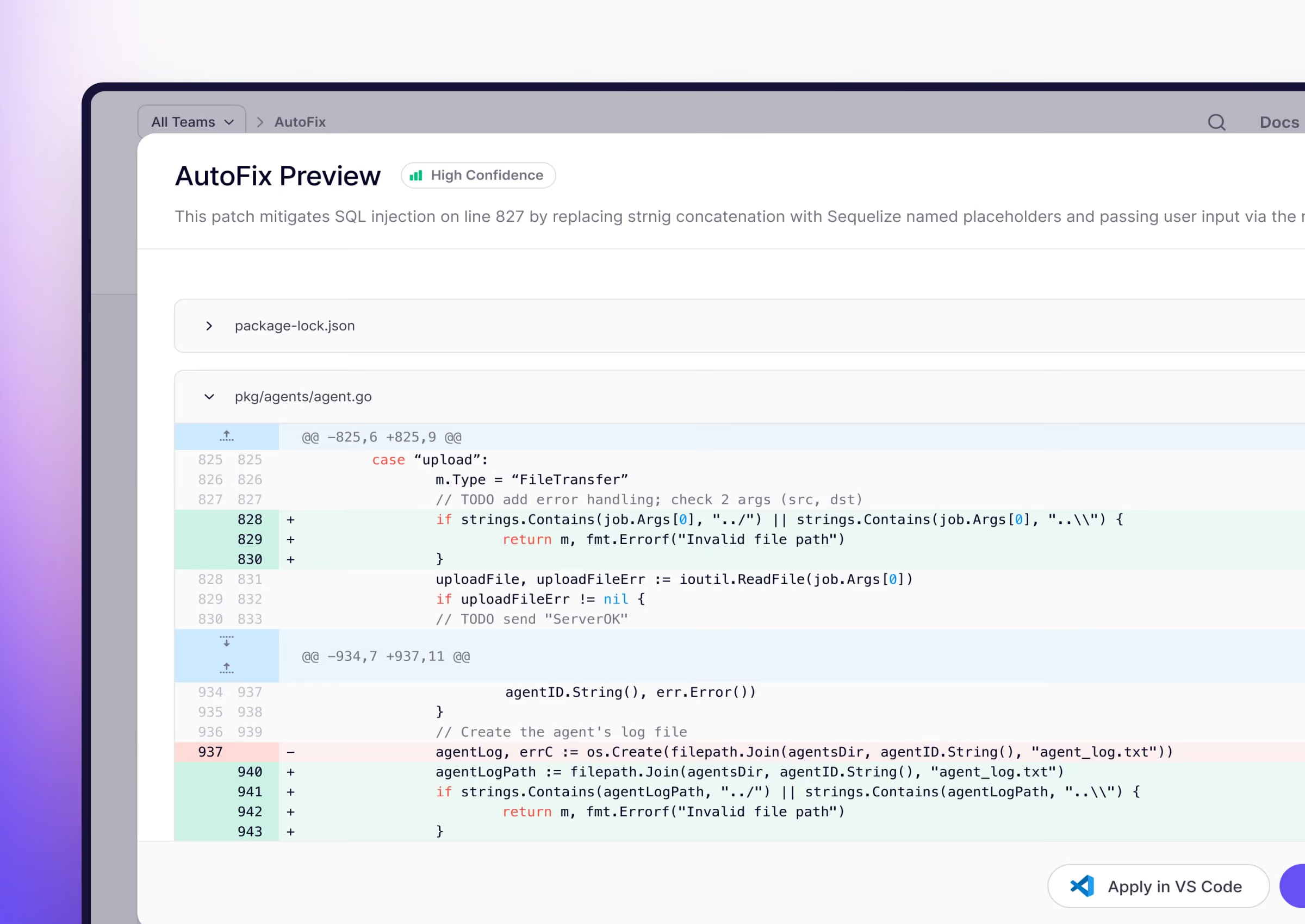
Upwind Code comments on pull requests. Aikido traces cloud findings back to the IaC or Dockerfile behind them, and AutoFix opens the pull request.
Take DAST a step further
Upwind's DAST tests apps while they run. Aikido adds logged-in DAST and AI pentests, with CREST-accredited reports for SOC 2 and ISO 27001.

If you’re still patching manually, chasing people down to fix issues, and worrying about image upgrades, you’re doing it wrong. There’s a better, more automated way.
Ross HosmanCISO at b.well Connected Health


Aikido vs Upwind


Fix cloud risks attackers can reach
One view of everything you run, with each reachable risk traced to the code that can fix it.
See everything you run
Connect AWS, Azure or GCP in minutes and see every account, workload and image in one searchable view.
Focus on what's reachable
Reachability maps each path from the internet to your workloads. CVEs with no network path get downgraded, so exposed workloads come first.
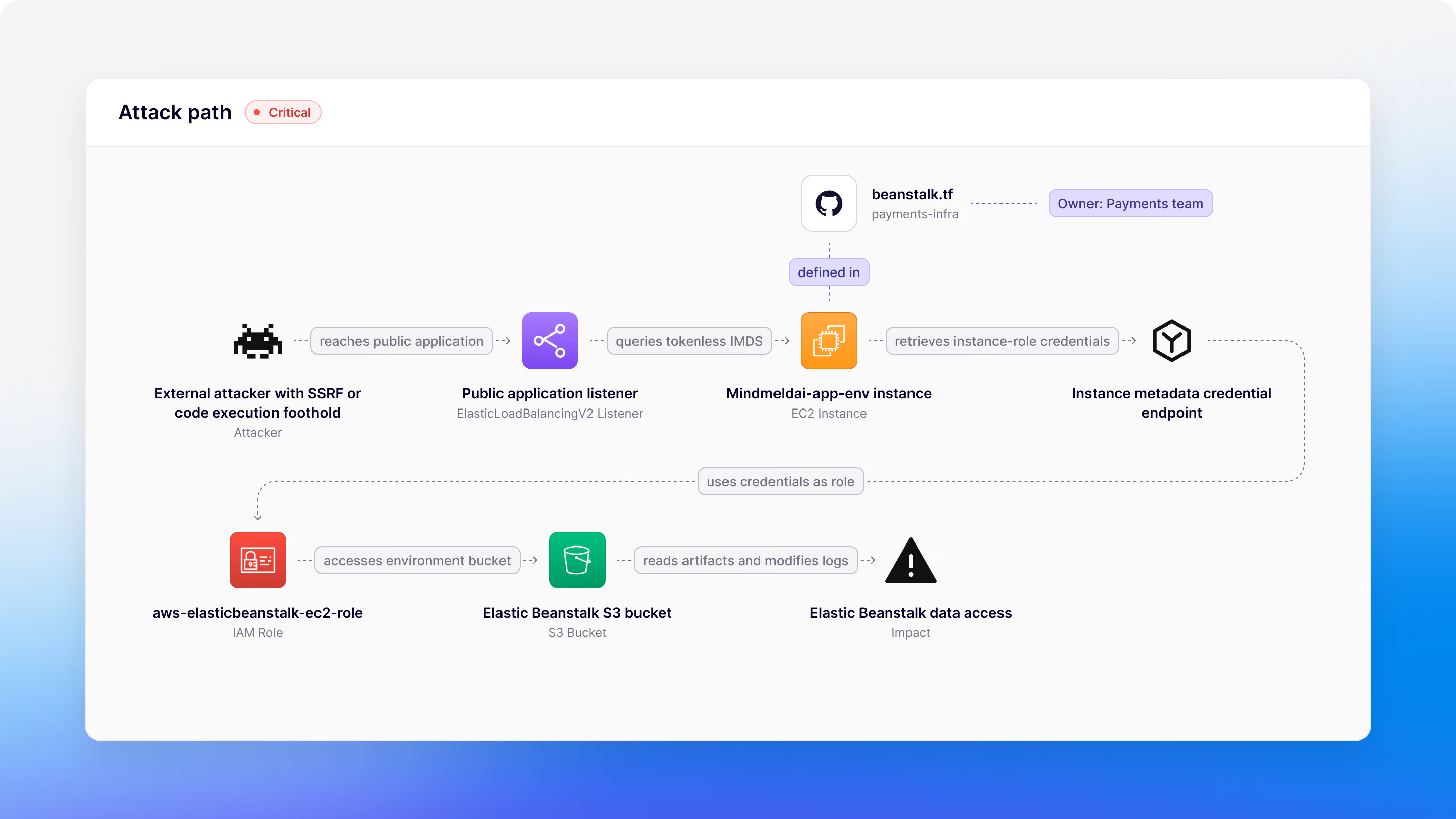
Trace cloud risk back to your code
Aikido links each image to its repo and Dockerfile, and each cloud setting to the IaC template that created it.
Catch attacks in real time
Runtime Sensors flag container escapes and unexpected binaries on Kubernetes and Linux VMs. Zen blocks attacks inside the app.
Secure your cloud, today
Connect AWS, Azure or GCP in minutes and see what Aikido finds.


FAQs about Aikido vs Upwind

Yes. Both use eBPF sensors. Aikido's Runtime Sensors flag container escapes and unexpected binaries on Kubernetes and Linux VMs, and Zen adds an in-app firewall that blocks malicious requests inside the application.
By cloud account and VM scaling group, as limits on each plan. An autoscaling group counts once, however many instances it runs.
Yes. Aikido covers SAST, SCA, secrets, IaC and container images, with IDE plugins and AutoFix pull requests.
Yes. Aikido holds SOC 2 Type II, ISO 27001:2022 and ISO 42001 certifications, and FedRAMP Moderate is available through Aikido for Government. Teams sign in with SAML SSO, with access scoped by team, and you choose where data is hosted: the US, EU, Middle East or APAC. Ignoring a finding can require approval, and each exception records who requested and approved it, with the reason. Cloud findings map to SOC 2, ISO 27001, PCI DSS v4.0, HIPAA, NIS2 and DORA, and local scanners in CI keep code inside your network.
Not for cloud accounts or VM scanning. Aikido connects read-only and scans VMs without an agent. Kubernetes uses a lightweight, read-only agent, and Runtime Sensors go only where you want runtime detection.
Upwind's DAST tests apps and APIs while they run. Aikido runs authenticated DAST that logs in as your users, plus AI pentests across web apps, APIs, mobile apps, external networks and AI Capabilities. You get audit-ready reports for SOC 2 and ISO 27001, and CREST-accredited pentests when you need them.
Upwind Code covers SCA, IaC, container images and SAST, and comments on pull requests with new and resolved issues. Aikido covers SAST, SCA, secrets, IaC and container images too, and adds IDE plugins and AutoFix pull requests with a working patch. AutoTriage cuts noise by about 95%.
Upwind starts at runtime, with a sensor on your workloads that detects and responds to attacks. Aikido maps your whole cloud from a read-only connection, traces each risk back to the code that created it, and adds DAST and pentesting. Upwind counts every VM and host in its price, while Aikido is one fixed price per plan.