

Multi-cloud architectures have quickly become the go-to standard for many organizations. Leveraging multiple cloud providers helps teams avoid vendor lock-in and build resilience.
However, this approach introduces a new challenge, complexity: each cloud has its own services, configurations, and security model, making it challenging to monitor and maintain a consistent security posture across all providers using native tools alone.
According to IBM’s 2025 Cost of a Data Breach report, breaches affecting data across multiple environments took the longest to identify and contain, averaging 276 days, compared to breaches in isolated public and private clouds. To manage this complexity effectively, organizations need a tool that provides a single, unified view across all cloud environments.
In this guide, we’ll cut through the marketing hype and explore the top multi-cloud security tools teams are using today. We will examine their features, strengths, and ideal use cases to help you decide which tool best fits your multi-cloud strategy.
TL;DR
Aikido Security is the top pick because it helps teams understand real cloud risk without adding operational complexity.
Many multi-cloud security tools are powerful, but they assume a trained cloud security team, years of experience, and significant customization to make sense of the output. They surface thousands of findings that are difficult to prioritize and often disconnected from how applications actually run.
Aikido takes a different approach. It connects cloud assets, identity permissions, containers, and application context, then prioritizes findings based on reachability, exposure, and environment. Severity is automatically adjusted, such as between production and development, so teams can focus on issues that matter in practice.
In addition to cloud security, Aikido also covers code scanning, runtime protection, and penetration testing, giving teams a single platform across the full security lifecycle.
What is Multi-Cloud Security?
Multi-cloud security refers to the strategies, tools, and practices used to protect two or more Cloud Service Providers (CSPs) simultaneously. It goes beyond simply supporting AWS, Azure, or Google Cloud; it also involves securing the various layers within them, including:
- Compute: Virtual machines, containers, kubernetes, and serverless functions
- Data: Object storage buckets, managed databases, queues, and messaging services
- Identity and Access Management: Users, service accounts, roles, permissions, and single sign-on (SSO) systems
A true multi-cloud security solution provides visibility and context across all of these layers, rather than focusing on a single provider or service type. It ensures consistent policies, compliance, and threat protection regardless of where resources are deployed and their type.
CSPM vs CNAPP vs CIEM: How Cloud Security Evolved
Multi-cloud security emerged as organizations adopted multi-cloud architectures and realized that relying on individual tools like CIEM, CSPM, or CWP was no longer enough. Today’s applications are tightly coupled with their cloud workloads, and gaps in security coverage have larger implications.
Before multi-cloud security became standard, teams relied on:
- CWP (Cloud Workload Protection): Secured workloads such as virtual machines using agents, but offered limited visibility into configurations or cloud-native services.
- CSPM (Cloud Security Posture Management): Addressed configuration risks and compliance, but lacked runtime or identity-aware visibility.
- CIEM (Cloud Infrastructure Entitlement Management): Managed identities and permissions to reduce excessive privileges, but did not cover workloads or application-level risks.
Using any one of these tools individually often left gaps, such as misconfigured workloads, privilege escalation risks, or blind spots in runtime behavior. This led to the development of CNAPP (Cloud-Native Application Protection Platform), which connects code, cloud resources, identities, and runtime behavior into a single, unified model. CNAPP integrates CSPM, CIEM, and workload protection features to provide end-to-end visibility and context across multi-cloud environments.
Curious about the top CNAPP tools teams are using today? Check out our article on the Top 9 Cloud-Native Application Protection Platforms (CNAPP) in 2026
How to Choose a Top Multi-Cloud Security Tool
- Breadth of Coverage: Which cloud platforms does it support? Does it provide consistent security coverage across major cloud providers (AWS, Azure, GCP).
- Depth of Visibility: Does it provide full stack coverage, from cloud misconfigurations (CSPM) to identity to workload vulnerabilities (CWPP) and code security? Does it treat Kubernetes as an afterthought?
- Deployment: Is it agentless? or does it require installation agents for comprehensive coverage?
- Accuracy: How well does it filter out false positives? Does it provide clear, actionable steps for remediation? Platforms like Aikido Security use AI to filter out over 90% of false positives
- Ease of Use: Does it offer an intuitive interface for both development and security teams?
- Scalability: Does it fit your team's scaling needs)? How many cloud resources or microservices can it manage without dropping performance?
- Ease of Integration: How seamlessly does the tool fit into developer workflows and existing CI/CD pipelines?
- Total Cost of Ownership (TCO): Beyond the price tag, what is the operational cost in terms of deployment, management, and personnel?
- Automation: Does it offer automated remediation features such as guided steps, one-click fixes , automated PRs, inline suggestions?
- Compliance Support: Does it provide native support for industry compliance frameworks (GDPR, HIPAA, PCI-DSS, ISO 27001 and SOC 2)? Does it automate compliance checks?
The 6 Best Multi-Cloud Security Tools
1. Aikido Security
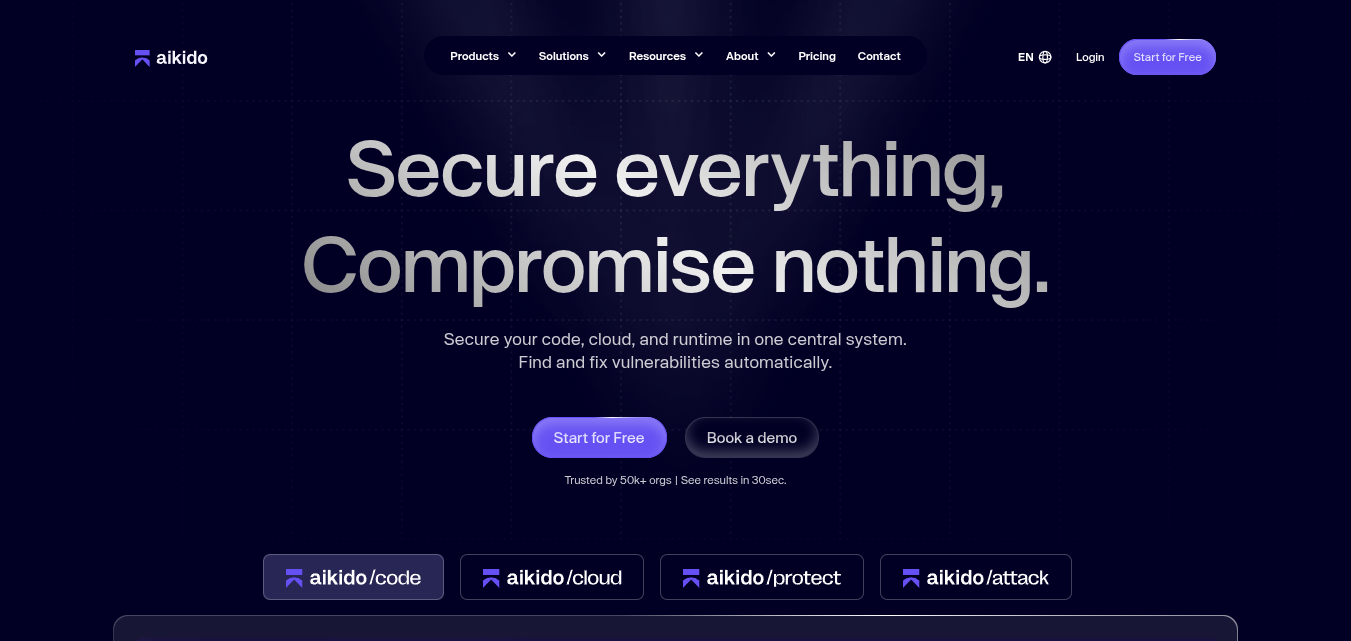
Aikido Security is a multi-cloud security platform built for environments that span AWS, Azure, Google Cloud, and Kubernetes.
Many cloud security platforms are comprehensive but difficult to operate. They rely on large rule sets, produce thousands of findings, and often require dedicated cloud security expertise to interpret and tune. This makes it hard for teams to separate real risk from background noise.
Aikido focuses on clarity. It combines infrastructure as code scanning, container image analysis, cloud asset inventory, and identity configuration into a single view. Findings are contextualized using reachability, permissions, and environment, rather than treated as isolated configuration issues.
Alongside cloud security, Aikido also provides code security, runtime protection, and penetration testing, allowing teams to manage application and cloud risk from development through production.
Teams get everything they need to resolve issues:
- AI-driven risk scoring and reachability-adjusted analysis
- Correlated findings that surface real, actionable threats
- Multi-cloud search for instant visibility across Kubernetes, AWS, Azure, and GCP
- Superset policy rules for consistent security standards across all environments
- Unified asset and inventory management across multi-cloud environments
Aikido Security goes further by offering automated compliance mapping for standards such as HIPAA, SOC 2, ISO 27001 and much more, along with built-in remediation features like one-click fixes. This ensures that your security and compliance remain consistent, regardless of the cloud provider.
Key Features:
- Code-to-Cloud Security: Provides modular scanners for SAST, SCA, Infrastructure-as-Code (IaC), secrets, container, and cloud security (CSPM), and much more in one platform.
- Intelligent Vulnerability Triaging: Automatically identifies and prioritizes vulnerabilities that are actually reachable and pose a real threat.
- AI-Powered Autofixes: Delivers automated code suggestions to fix vulnerabilities directly within developer pull requests, significantly cutting down remediation time and effort.
- Multi-Cloud Search: Aikido Security allows teams to query cloud environments (Azure, GCP, AWS) and kubernetes clusters with natural language or structured queries to find resources, relationships, misconfigurations
- Custom Cloud Alerts: Teams can create custom cloud alerts based on risk severity, asset type, or compliance impact, helping surface issues before they turn into active security incidents
- Seamless Developer Workflow: Integrates natively with GitHub, GitLab, and other developer tools in minutes, embedding security checks directly into the CI/CD pipeline.
- Automated compliance mapping: Maps cloud infrastructure to major frameworks like SOC 2, ISO 27001, PCI DSS, GDPR, and much more.
- Predictable, Flat-Rate Pricing: Offers a simple pricing model that avoids the complex, per-asset billing common with other cloud security tools, making it easy to budget and scale.
- Superset Rules Deployment: Turns findings into deployable rules across all teams..
Pros:
- Supports all major cloud providers (AWS, Azure, GCP)
- Kubernetes cluster and workload security
- AI-powered risk prioritization and severity adjustment by environment
- Clear visibility into exposed workloads and attack paths
- Cross-platform security policies with centralized reporting
- Context-aware remediation guidance
- Developer-friendly UX
- Agentless setup
- Fewer, more contextual findings instead of large checklists
- Automatic severity adjustment by environment
- Cloud, code, runtime, and pentesting in one platform
Pricing:
Aikido Security’s paid plans start at $300/month for 10 users, with special offerings for startups (30% discount) and enterprise teams.
- Developer (Free Forever): For teams of up to 2 users. Supports 10 repositories, 2 container images, 1 domain, and 1 cloud account.
- Basic: Supports 10 repositories, 25 container images, 5 domains, and 3 cloud accounts.
- Pro: Designed for mid-sized teams. Includes 250 repositories, 50 container images, 15 domains, and 20 cloud accounts.
- Advanced: Supports 500 repositories, 100 container images, 20 domains, 20 cloud accounts, and 10 virtual machines.
Target Users:
Aikido Security is ideal n for organizations of all sizes, from startups to enterprises, seeking a developer-friendly platform to secure their multi-cloud infrastructure.
Gartner Rating: 4.9/5.0
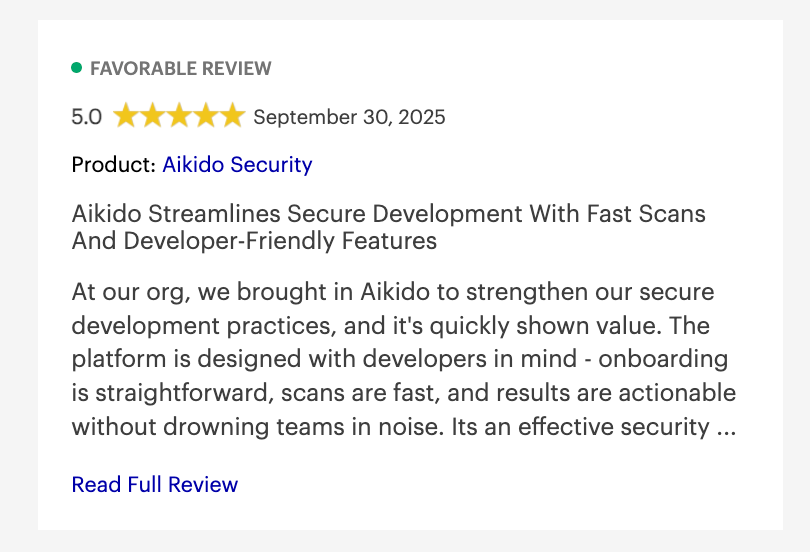
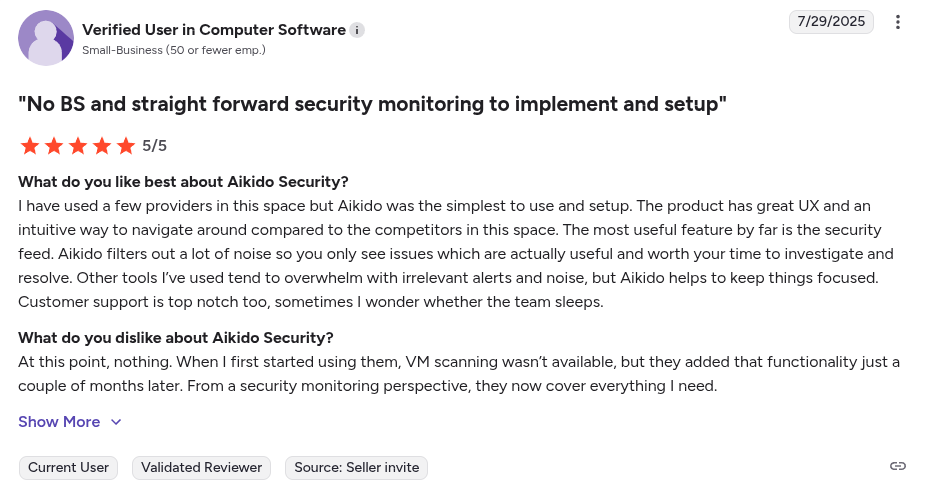
Aikido Security Reviews:
Beyond Gartner, Aikido Security also has a rating of 4.7/5 on Capterra, Getapp and SourceForge
2. Aqua Security
Aqua Security is aCloud Native Application Protection Platform (CNAPP)that provides full lifecycle protection for applications running in multi-cloud and containerized environments. It is primarily known for its Kubernetes security capabilities.
Key Features:
- Full Lifecycle Security: Secures applications from the development pipeline through to production, covering image scanning, runtime protection, and compliance.
- Runtime Protection: Detects and blocks suspicious activity in running containers and workloads, including drift prevention and behavioral monitoring.
Pros:
- Robust container and Kubernetes security controls
- Compliance monitoring and automation
Cons:
- Primarily enterprise focused
- Steep learning curve
- High initial alert volume
- Setup can be complex compared to agentless tools like Aikido Security
- Users have reported its dashboard as “cluttered”
- Limited Role Based Access Controls (RBAC)
- Users have reported lags in documentation for new integrations and cloud providers
- Users have reported its integrations as “fragmented”
Pricing:
Custom pricing
Target Users:
Aqua Security is ideal for enterprises with mature security programs and complex container environments that need deep visibility and control.
Gartner Rating: 4.1/5.0
Aqua Security Reviews:


Curious about container security challenges? Check out our articles on Docker container security vulnerabilities and privilege escalation risks in containers.
3. Orca Security
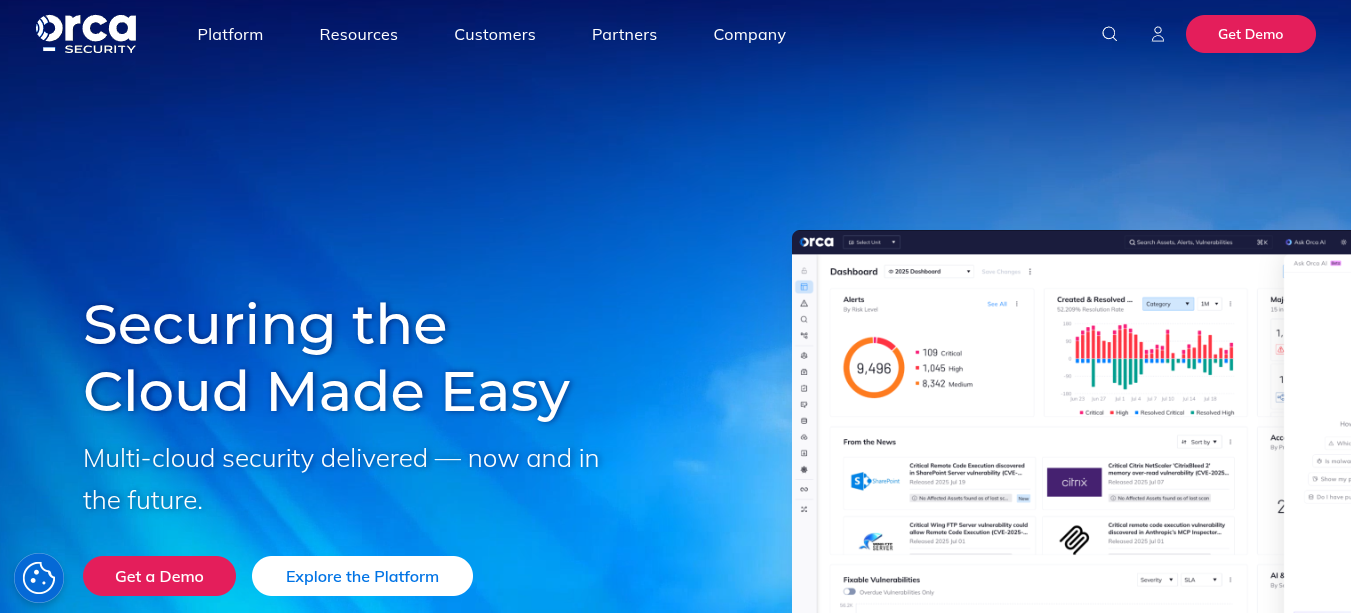
Orca Security is an agentless cloud security platform that gives you visibility into your multi-cloud environments. Its proprietary SideScanning technology reads cloud configurations and workload block storage, allowing it to detect vulnerabilities, malware, and misconfigurations without minimal performance impact.
Key Features:
- Agentless “Side Scanning”: Orca Security can perform scans across AWS, Azure, and GCP for OS vulnerabilities and malware without requiring agents
- Attack Path Analysis: Identifies toxic combinations of risks that could create a viable attack path.
Pros:
- Context-aware risk prioritization
- Agentless deployment
Cons:
- Enterprise focused
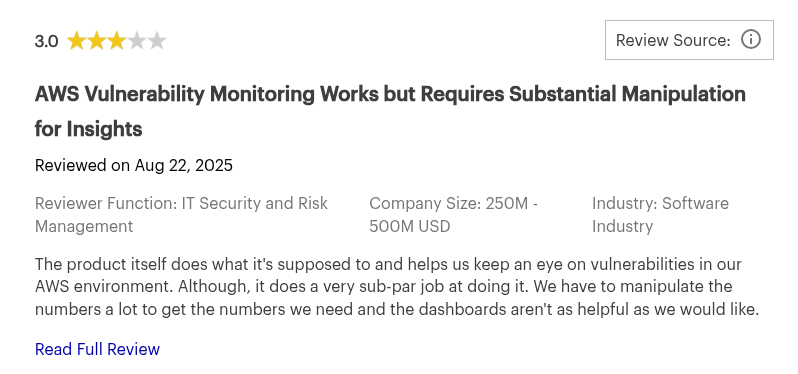
- High alert volume
- It performs periodic scans, rather than continuous scans
- Users have reported that its dashboard can become "clogged" with old alerts
- Users have reported its User Interfaces (UI) as “clunky”
- Limited support for on-premise systems
Pricing:
Custom pricing
Target Users:
Enterprise Security teams that want comprehensive visibility into their multi-cloud security posture without the operational burden of managing agents.
Gartner Rating: 4.6/5.0
Orca Security Reviews:
4. Prisma Cloud by Palo Alto Networks
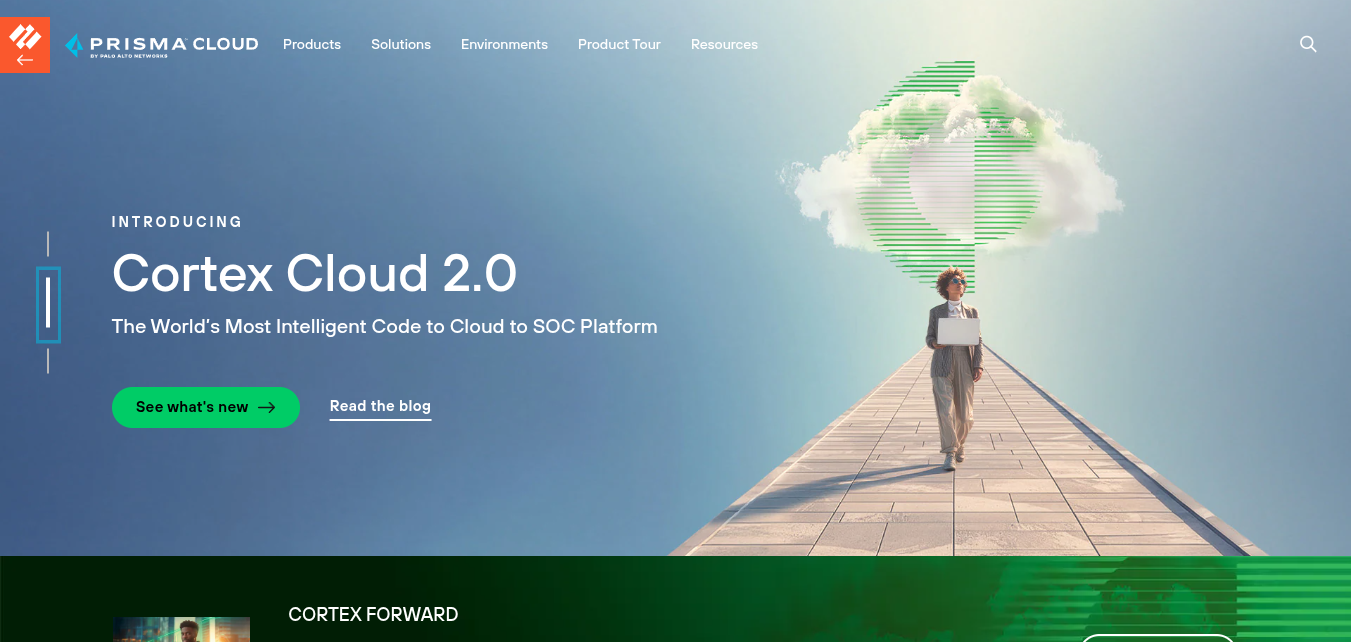
Prisma Cloud is Palo Alto’s AI-poweredCloud-Native Application Protection Platform (CNAPP). It offers broad security coverage for applications, data, and cloud-native technology stacks across all major cloud providers.
Key Features:
- Broad CNAPP Capabilities: Integrates CSPM, CWPP, cloud network security, and CIEM into a single platform.
- Multi-Cloud Integration: Offers visibility and policy enforcement across AWS, Azure, and GCP.
- Palo Alto Network Ecosystem: Leverages Palo Alto’s threat intelligence and security expertise
Pros:
- Extensive compliance library
- Deep vulnerability intel
Cons:
- Primarily enterprise focused
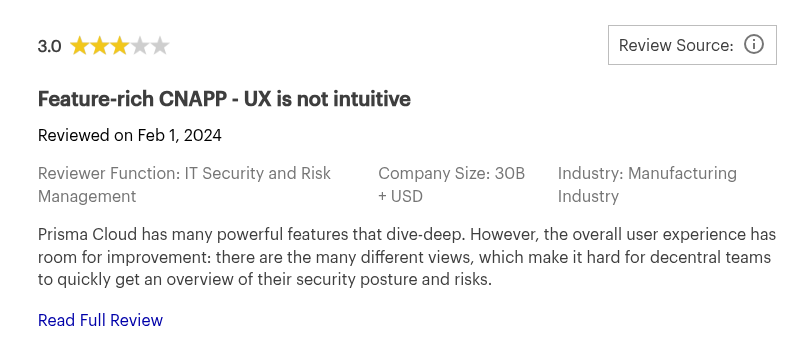
- Steep learning curve
- Its agents are resource intensive
- Initial deployment can be complex and lengthy
- Users have reported its UI as “Outdated”
- Its remediation advice can generic and lacks “step-by-step” guidance
- Users have reported that its technical support can be slow to resolve complex issues, requiring multiple escalations
Pricing:
Custom pricing
Target Users:
Prisma Cloud is designed for large enterprises running complex multi-cloud environments and require a comprehensive solution for their cloud-native applications.
Gartner Rating: 4.5/5.0
Prisma Cloud Reviews:
5. Sysdig Secure
Sysdig Secure is an enterprise cloud-native security platform that provides deep visibility for containers and Kubernetes workloads. Born from the open-source tool Falco, Sysdig's core strength lies in its real-time threat detection and response capabilities at the workload level..
Key Features:
- Real-Time Threat Detection: Built on Falco, the open-source standard for runtime security, Sysdig provides deep, real-time detection of suspicious activity within containers and cloud workloads.
- Deep Forensics and Incident Response: Captures detailed process, file, and network activity.
- Strong Kubernetes Security: Offers advanced security features for securing Kubernetes environments.
Pros:
- Deep forensic visibility
- Strong customer support
- Runtime security
Cons:
- Steep learning curve
- Initial setup requires manual tuning
- Requires deep knowledge of “falcon syntax” to write custom rules
- Manual remediation
- Users have reported that its UI can become "buggy" or cluttered with old alerts
- Users have reported issues integrating with external tools (ticketing systems, SIEMs)
Pricing:
Custom pricing
Target Users:
Sysdig is ideal for organizations with existing security operations centers (SOCs) that prioritize runtime security and need deep visibility into their containerized workloads.
Gartner Rating: 4.8/5.0
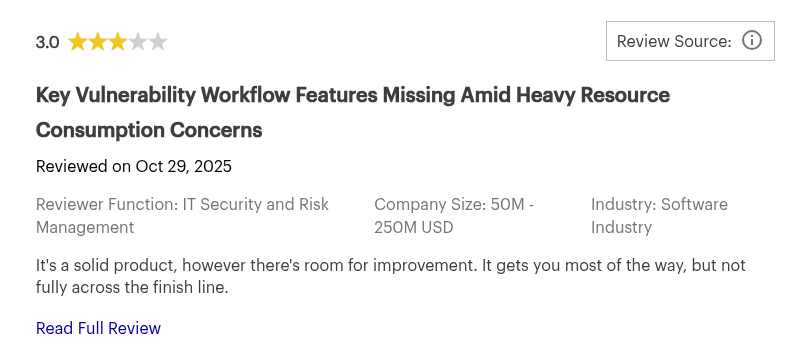
Sysdig Secure Reviews:
6. Wiz
Wiz is an agentless cloud security platform that provides full-stack visibility across multi-cloud environments. It scans your cloud platforms to build a graph of risks, connecting vulnerabilities in code to misconfigurations in the cloud.
Key Features:
- Agentless Deep Scanning: Connects to your cloud environments (AWS, Azure, GCP) and scans workloads without requiring agents
- Security Graph Analysis: Creates a visual graph that maps cloud resources and their relationships to, reveal complex attack paths
Pros:
- Cloud discovery
- Robust compliance support
Cons:
- Primarily enterprise focused
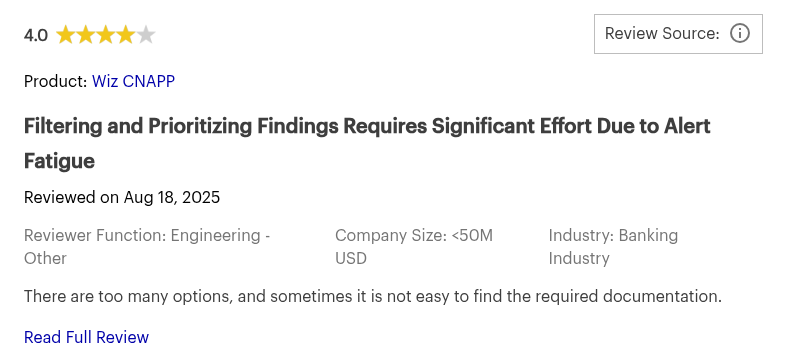
- Steep learning curve
- High alert volume
- Limited legacy/on-premise Support
- It is more security team centric than developer centric
- Policy customization can be complex
- Remediation is mostly manual
- Limited runtime threat detection
Pricing:
Custom pricing
Target Users:
Enterprise security teams that need to secure complex, multi-cloud environments. It is highly valued by security teams, risk managers, and DevOps leaders who need a single source of truth for cloud risk.
Gartner Rating: 4.8/5.0
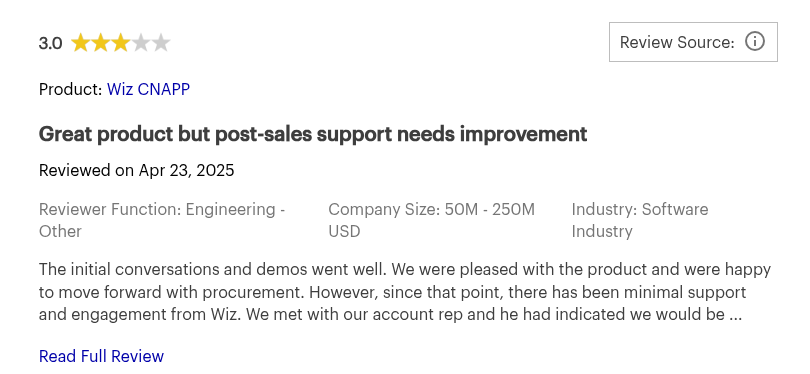
Wiz Reviews:
Comparing the Best 6 Multi Cloud Security Tools
Here is our breakdown of the top tools to help you secure your multi-cloud environment effectively.
Conclusion
Many cloud security tools market themselves as multi-cloud solutions by offering hundreds or even thousands of checks. In practice, this approach often creates noise rather than clarity. Securing a multi-cloud environment requires a platform that cuts through complexity, provides a single, unified view of risk, and embeds directly into the development workflow.
Aikido Security addresses this challenge by unifying security from code to cloud and empowering developers with AI-driven remediation. It reduces noise, removes the friction common with cloud security tools, and delivers the visibility security and development teams need when managing multi-cloud environments.
Want full visibility across your cloud infrastructures? Start your free trial or book a demo with Aikido Security today..
FAQ
What are the common security challenges in a multi-cloud environment?
Multi-cloud environments introduce challenges such as inconsistent security policies across providers, limited visibility into workloads and identities, misconfigurations, overly permissive access controls, and fragmented monitoring. These gaps often make it difficult to understand which risks are truly exploitable across cloud providers. Platforms like Aikido Security help address this by correlating risks across code, cloud configurations, identities, and runtime behavior in a single view.
How do multi-cloud security tools protect my data across different cloud providers?
Multi-cloud security tools protect data by enforcing consistent access controls, monitoring storage configurations, detecting exposed services, and identifying identity-related risks across providers like AWS, Azure, and GCP. By combining posture management with contextual risk analysis, platforms such as Aikido Security help teams understand how data exposure, identities, and workloads intersect across multiple clouds.
How do compliance requirements impact multi-cloud security strategies?
Compliance requirements increase the complexity of multi-cloud security by demanding consistent controls, evidence, and reporting across different cloud providers. Without a unified approach, teams often rely on manual checks and fragmented tools. Aikido Security simplifies compliance by mapping security findings to specific compliance frameworks and controls, helping teams understand how real security risks impact standards such as SOC 2, ISO 27001, or PCI DSS across their cloud environments.
What are best practices for monitoring and responding to security incidents in a multi-cloud environment?
Best practices include centralizing visibility across cloud providers, continuously monitoring configurations, identities, and workloads, and prioritizing incidents based on real exploitability rather than raw alert volume. Effective response also requires clear ownership, automated remediation where possible, and tight integration with existing DevOps and incident response workflows. Platforms like Aikido Security support this approach by correlating signals across the SDLC and cloud environments to surface the most critical risks in one place.
What is the difference between hybrid cloud and multi-cloud?
Hybrid cloud combines private cloud (on-premises) infrastructure with public cloud services, while multi-cloud involves using multiple public cloud providers simultaneously. From a security perspective, multi-cloud environments require consistent policies and visibility across providers, rather than bridging on-prem and cloud controls.
You Might Also Like:
- Best Orca Security Alternatives for Cloud & CNAPP Security
- Top 9 Cloud-Native Application Protection Platforms (CNAPP) in 2026
- From Code to Cloud: Best Tools Like Cycode for End-to-End Security
- Top Cloud Security Posture Management (CSPM) Tools in 2026
- Top Continuous Security Monitoring Tools in 2026
- Top 13 Container Scanning Tools in 2026
- Top Infrastructure as Code (IaC) Scanners in 2026


