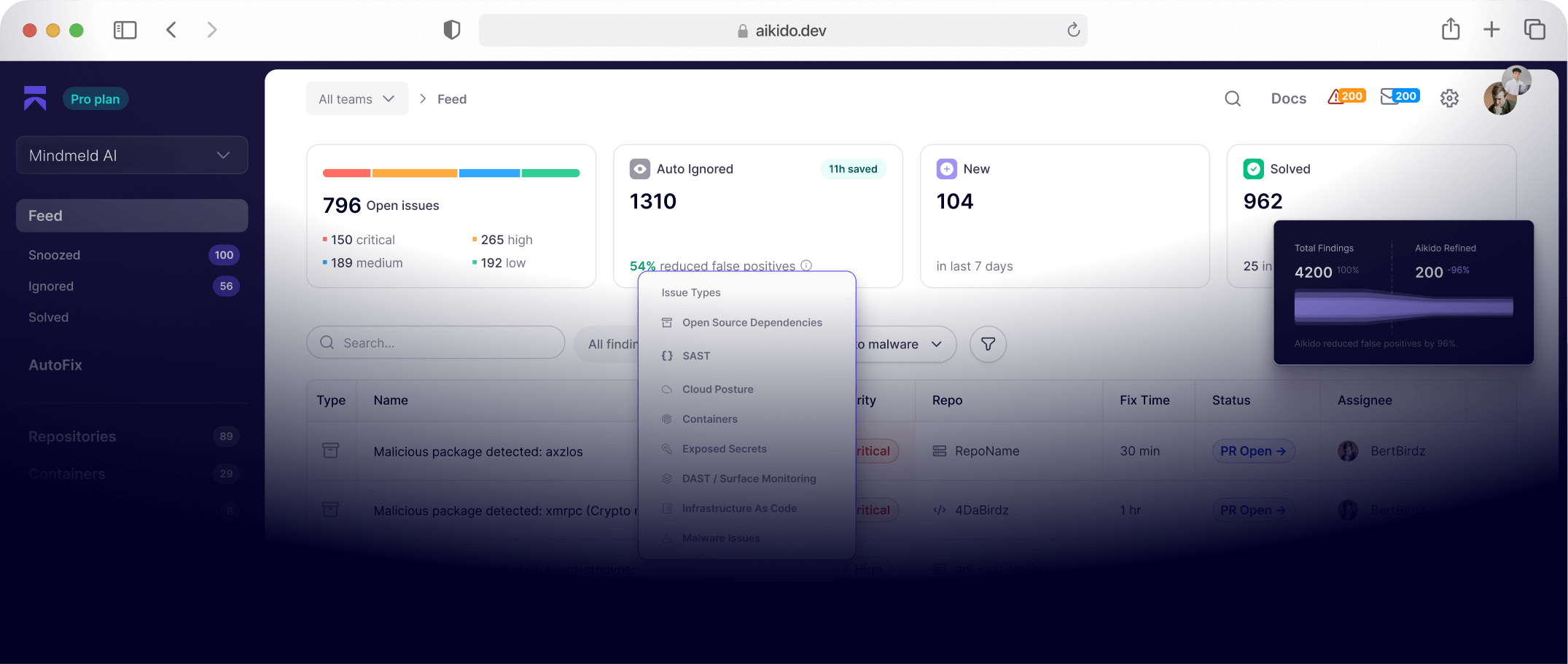
Cloud breaches rarely come from someone outsmarting the cloud provider. They come from a storage bucket left open or an IAM role handed far more power than it needs, the kind of misconfiguration a posture tool is built to catch before an attacker does.
The challenge has grown alongside the infrastructure. Multi-cloud sprawl, rapid DevOps deployments, shifting compliance standards, and AI-generated configurations that nobody fully reviewed have made manual posture management essentially impossible. The attack surface expands faster than any team can audit it by hand.
CSPM tools exist to close that gap. They continuously monitor your cloud environments for misconfigurations, compliance drift, and security risks, replacing periodic audits with real-time visibility. The better ones go further, connecting posture data to workload context, runtime behavior, and remediation workflows so findings actually get fixed rather than accumulating in a backlog.
This guide breaks down the tools worth evaluating in 2026, measured by cloud coverage, signal quality, remediation support, and how well they fit different team types and environments.
TL;DR
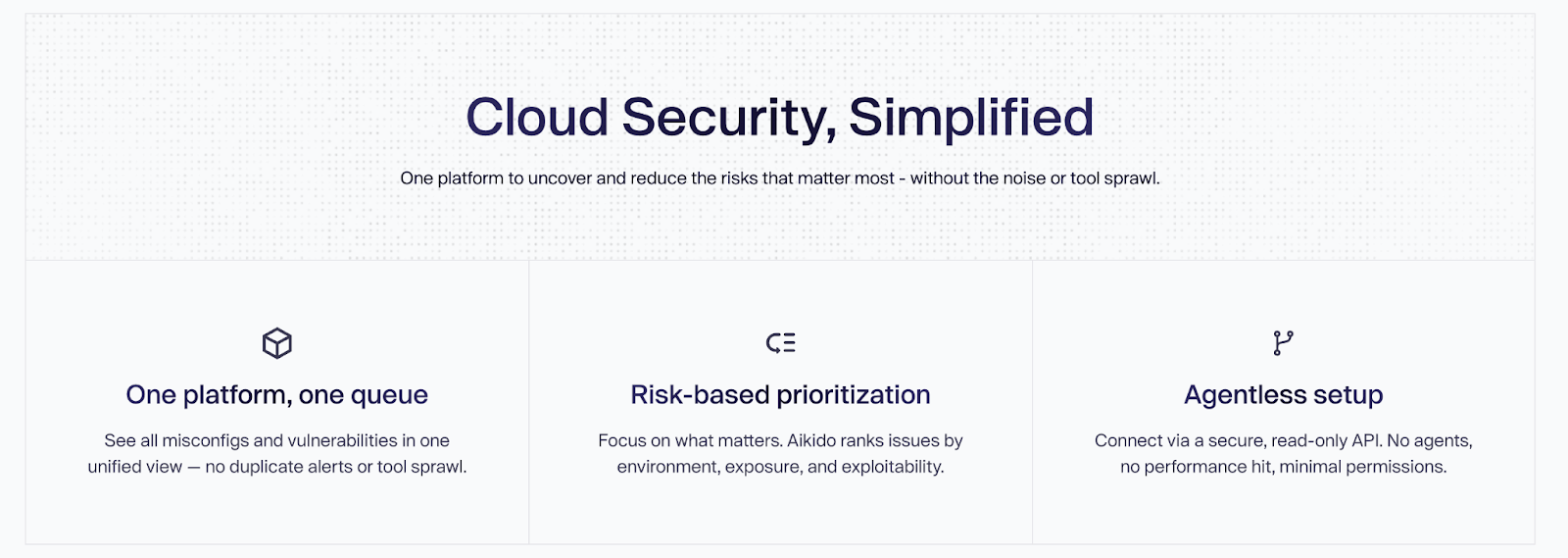
Aikido Security is the strongest starting CSPM choice. It covers cloud misconfiguration detection, Kubernetes posture, VM scanning, and compliance reporting in one platform, and connects those findings to code, containers, and runtime security when you need broader coverage. AI AutoFix means findings come with remediation rather than just alerts. You can start with the CSPM module and expand from there, or use it as a full code-to-cloud suite from day one.
What is Cloud Security Posture Management (CSPM)?
Cloud Security Posture Management (CSPM) refers to a class of security tools that continuously monitor and evaluate your cloud infrastructure for misconfigurations, compliance violations, and security risks. These tools automatically scan across your cloud environments, comparing configurations against industry best practices and frameworks such as CIS Benchmarks, SOC 2, and ISO 27001.
Rather than relying on manual reviews or occasional audits, CSPM tools operate continuously, giving security and DevOps teams real-time visibility and alerts to potential exposures. Many modern CSPMs also include automation for fixing issues, whether through AI-generated remediations or direct integrations with developer pipelines.
Why You Need a CSPM Tool
Deploying cloud infrastructure has never been easier, you spin up a terminal, deploy a VM, and you're done. However, this also means that a lot of default configurations, ports, and settings get deployed along with it. CSPM tools spot these giving you complete visibility into what’s deployed and how secure it is. Here’s a few thing CSPM tools ensure:
- Prevent Misconfigurations: Detect insecure configurations (like open S3 buckets, overly permissive IAM roles, or unencrypted storage) before they become breach vectors.
- Ensure Compliance: Automate alignment with regulatory frameworks like SOC 2, PCI-DSS, NIST, and CIS Benchmarks. Generate audit-ready reports on demand.
- Improve Visibility: Provides a centralized view of cloud assets and misconfigs across providers.
- Automated Remediation: Save engineering time by auto-fixing IaC or runtime issues, or pushing alerts to tools like Jira or Slack.
- Scale Securely: As your infrastructure scales, CSPMs ensure your security controls keep up.
Curious about real-world CSPM incidents? Check out the 2025 Verizon DBIR report as well as the Cloud Security Alliance.
What to Look for When Choosing a CSPM Tool
Picking the right CSPM tool depends on your stack, team structure, and regulatory needs. Here are few key things to look out for:
- Cloud Coverage: Does it support the cloud provider you use;AWS, Azure, GCP, Digital Ocean, Civo and beyond?
- CI/CD & IaC Integration: Can it scan infrastructure-as-code and integrate into your CI/CD pipeline?
- Compliance Support: Are common standards preconfigured (SOC 2, ISO, HIPAA), and can you build your own policies?
- Alert Quality: Does it provide actionable, low-noise alerts?Ideally with context-aware prioritization.
- Scalability & Pricing: Does it fit your team's scaling needs (multi-cloud setups, on-premise (private cloud) etc.)? And is its pricing sustainable when scaling.
Top 17 Cloud Security Posture Management (CSPM) Tools
1. Aikido Security
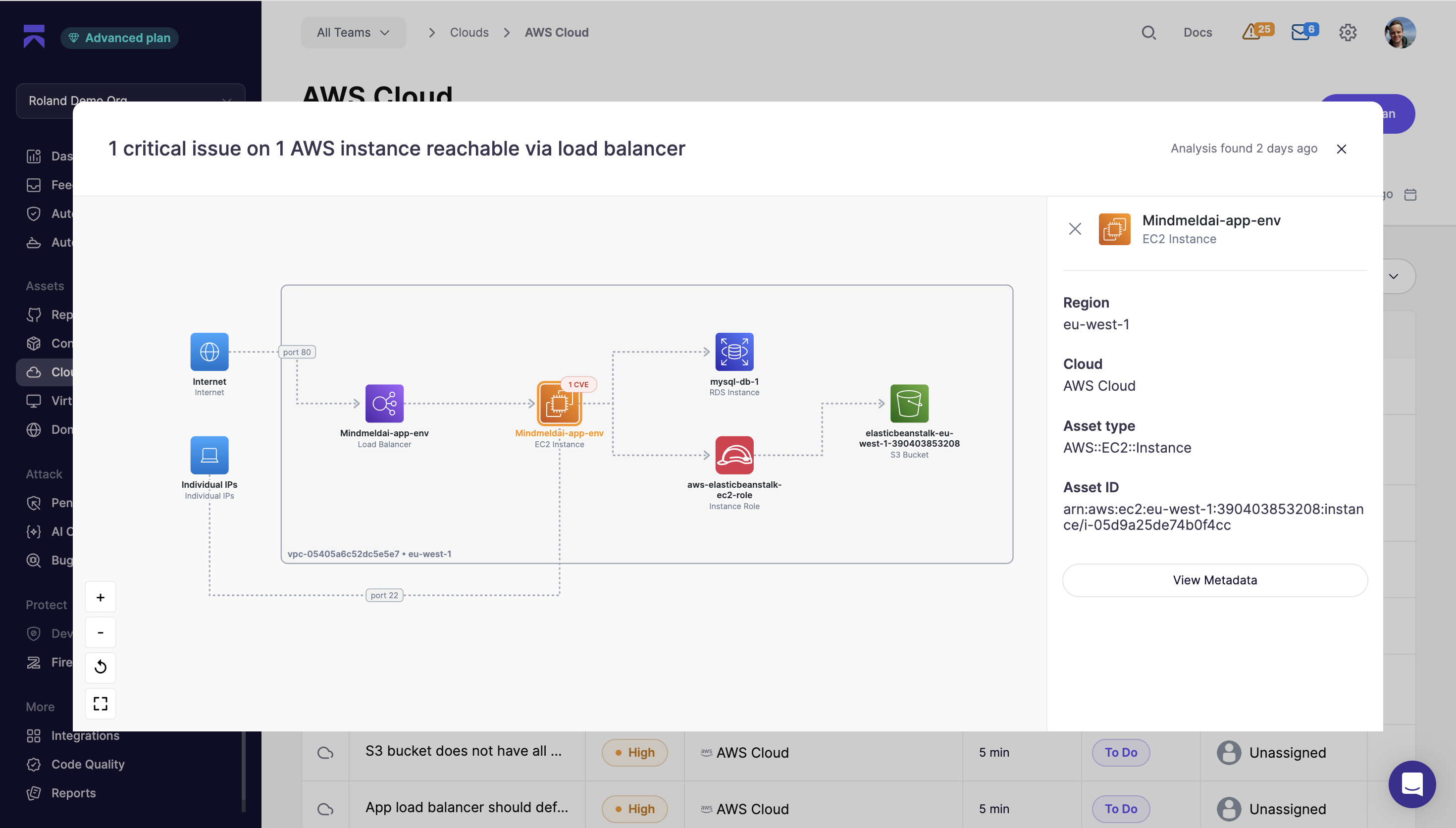
Aikido Security is the a complete security platform with CSPM that covers everything in the cloud and even runtime security. It’s designed for teams that want real protection without the noise. Compared to alternatives, it provides a better developer experience, has superior alert suppression, and can prioritize issues more seamlessly.
In addition, even though other vendors tout code to cloud security, only Aikido covers elements like fully-native SAST, open-source scanning (SCA) and code quality. This means Aikido gives teams a single pane of glass for monitoring their security posture without the usual friction, while giving engineering and security leaders peace of mind.
Aikido Cloud offers the best-in-class scanners to augment its CSPM tool, container scanning, IaC scanning, Virtual Machine Scanning, cloud search and more. Each module can be selected as a standalone solution that can compete with alternatives, or can be integrated to create a complete code to cloud to runtime security platform.
Key Features:
- Agentless/API-Based Setup: Connects to your cloud accounts using read-only APIs–no installation agents required.
- Cloud Asset Search: You can query your cloud environments with natural language or structured queries to find resources, relationships, misconfigurations, etc.
- Developer-Centric Workflow: Instant feedback in PRs and IDEs, plus AI-powered autofix and actionable remediation workflows.
- Context-Aware Risk Scoring: Uses reachability analysis and curated rules to surface what matters. Cutting the false positives by up to 95%.
- Built for Devs: Integrates deeply with GitHub, GitLab, Bitbucket, Jira, Slack, and much more. You can run scans locally, in pull requests, or as part of your release process.
- Connected “code-to-cloud” coverage: Aikido links code, cloud, and runtime in one seamless workflow. You can start with the CSPM module and expand (code scanning, container/IaC scanning, API security, and runtime protection)
- Comprehensive compliance mapping: Supports major frameworks like SOC 2, ISO 27001, ISO 42001, PCI DSS, GDPR, and much more.
Pros:
- Supports multi-cloud monitoring (AWS, Azure, GCP)
- Reduced security risk since permissions are read-only.
- Scales automatically as new resources are added
- No installation agents required
- Centralized reporting and compliance
- IaC scanning and Kubernetes security
- Provides context-aware remediation guidance and risk scoring
Best For:
Any organization looking for an intuitive platform to monitor and secure everything from code-to-cloud.
Pricing:
All paid plans starting from $300/month for 10 users
- Developer (Free Forever): Free for up to 2 users. Supports 10 repos, 2 container images, 1 domain, and 1 cloud account.
- Basic: Supports 10 repos, 25 container images, 5 domains and 3 cloud accounts.
- Pro: Supports 250 repos, 50 container images, 15 domains, and 20 cloud accounts.
- Advanced: Supports 500 repos, 100 container images, 20 domains, 20 cloud accounts, and 10 VMs.
Custom offerings are also available for startups (30% discount) and enterprises
Gartner Rating: 4.9/5.0
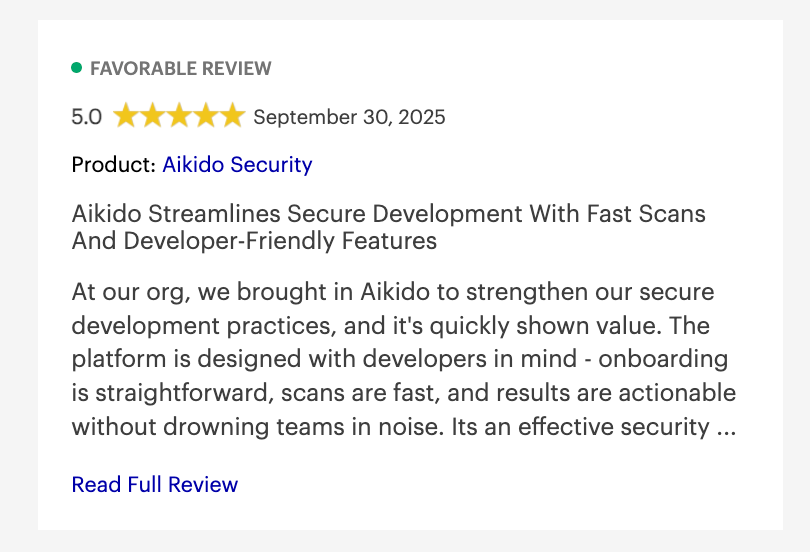
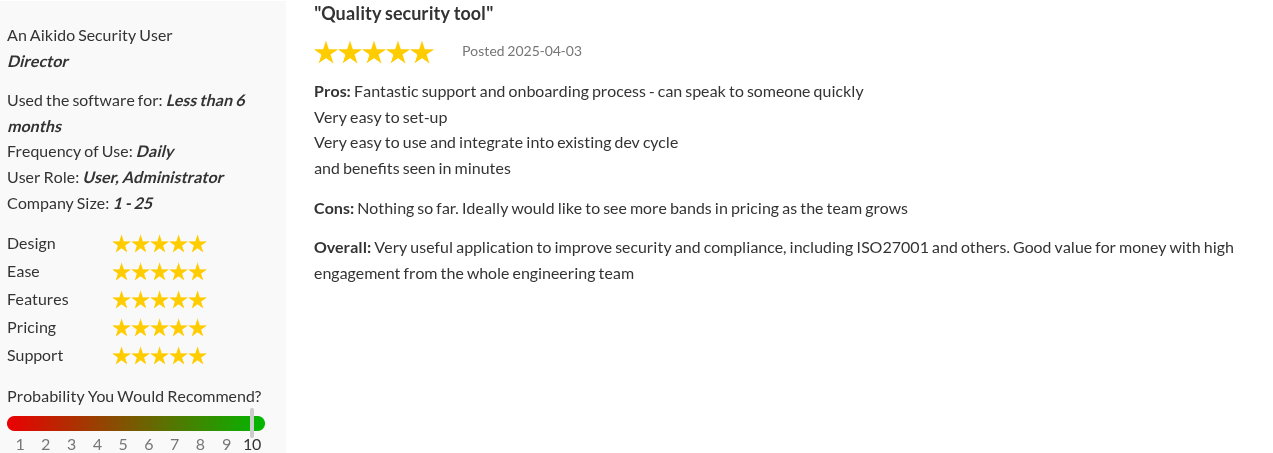
Aikido Security Reviews:
Beyond Gartner, Aikido Security also has a rating of 4.7/5 on Capterra and SourceForge.
2. Aqua Security
Aqua Security combines CSPM with runtime protection across containers, serverless, and cloud VMs. It is backed by open-source tools like Trivy and CloudSploit. .
Key Features:
- Multi-cloud support: Supports workloads across AWS, Azure and Google Cloud.
- Integration: Integrates with common CI/CD pipelines
- Compliance mapping: Aligns scan results with compliance frameworks
Pros:
- Supports a broad range of cloud providers
- CI/CD integration
- Runtime protection
- Established enterprise ecosystem
Cons:
- Primarily enterprise focused
- Setup can be complex compared to agentless tools like Aikido Cloud
- Some features require separate modules and licenses
- Steep learning curve
- Remediation workflows often require manual fixes
Best For:
Teams running cloud-native apps and Kubernetes in production.
Gartner Rating: 4.0/5.0
Aqua Security Reviews:


3. Orca Security
Orca is an agentless cloud-native application protection platform with CSPM built in. Instead of installing agents, it reads workload data from the cloud provider's snapshots and metadata using an approach Orca calls SideScanning, then layers on context so a misconfiguration tied to a reachable, vulnerable workload is ranked ahead of one that sits isolated. It is often described as the main agentless alternative to Wiz.
Key Features
- Agentless deployment that connects through read-only cloud access, so there is nothing to install in workloads.
- Contextual risk prioritization and attack-path analysis across misconfigurations, vulnerabilities, and identities.
- Coverage for AWS, Azure, and Google Cloud, with support for other providers.
- Compliance mapping to common frameworks such as CIS Benchmarks, SOC 2, and PCI DSS.
Pros
- Fast to deploy with no agents to manage.
- Strong contextual prioritization that reduces noise.
- Broad multi-cloud coverage.
Cons
- Enterprise pricing that can be steep for smaller teams.
- Some teams report the volume of findings needs tuning to stay actionable.
Best for cloud-native teams that want quick agentless coverage with contextual prioritization.
Pricing. Custom, quoted per environment.
Gartner Rating. 4.6/5.0
4. AccuKnox
AccuKnox offers CSPM as a standalone product or as part of its Zero Trust CNAPP. It connects to cloud accounts via read-only access and covers misconfiguration detection, drift detection, asset inventory, cloud compliance, Linux and Windows scanning, Kubernetes risk assessment, and serverless and Fargate security across AWS, Azure, GCP, and Oracle. Organisation-level onboarding is supported for AWS and Azure.
Cloud Detection and Response (CDR) is a separate module covering AWS, GCP, and Azure, extending posture management into active threat response. Where AccuKnox differs from standalone CSPM tools is that cloud findings can be correlated directly with KSPM, CWPP workload data, and ASPM application security findings within the same platform, giving security teams context on whether a misconfigured resource is actually reachable from a vulnerable workload or exposed application.
For regulated industries, on-premises deployment is supported, and air-gapped environments are covered, something most CSPM vendors don't offer.
Key Features:
- Agentless misconfiguration and drift detection
- Asset inventory across AWS, Azure, GCP, and Oracle
- AWS and Azure organisation-level onboarding
- CDR module for AWS, GCP, and Azure
- Linux and Windows scanning
- Kubernetes risk assessment and KSPM correlation
- Serverless and Fargate security
- Cloud compliance automation
- AI-powered risk prioritisation
- On-premises and air-gapped deployment support
Best For:
Security teams that want CSPM available standalone or connected to Kubernetes and workload security, particularly in multi-cloud or regulated environments where on-premises deployment matters.
Pros:
- Standalone or CNAPP-integrated
- Multi-cloud coverage including Oracle
- CDR module for active threat response
- Kubernetes and workload correlation
- AI-powered prioritisation
- On-premises and air-gapped support
- Broad compliance coverage
Cons:
- Teams looking for a basic agentless-only CSPM without Kubernetes or workload correlation will find AccuKnox offers more depth than a lightweight posture tool, which is worth factoring into the evaluation
Gartner rating: 4.5/5.0
AccuKnox reviews:


5. Check Point CloudGuard
CloudGuard is Check Point’s CNAPP offering with CSPM built-in. It pairs configuration scanning with threat detection using its ThreatCloud intelligence engine.
Key Features:
- Out-of-the-box Compliance Policies: Provides 50+ predefined compliance policies
- Automated remediation: Used pre-packaged scripts called CloudBots to automatically identify and fix issues.
- Multi-cloud Support: Integrates with the three major cloud providers–AWS, Google Cloud, Azure.
Pros:
- Comprehensive compliance coverage
- Strong automated remediation
- Supports custom policies
- Advanced threat detection
Cons:
- Pricing can become steep when scaling
- Often requires specialist to setup
- Clunky User Interface
Best For:
Enterprises using Check Point firewall/endpoint tools seeking unified cloud and network security.
Gartner Rating: 4.6/5.0
Check Point CloudGuard Reviews:


6. Sysdig Secure
Sysdig is a cloud-native application protection platform that pairs CSPM with cloud detection and response. It is built on Falco, the open-source runtime project Sysdig created, and its strength is runtime coverage for containers and Kubernetes. Sysdig uses signals from what is actually running to prioritize which misconfigurations and vulnerabilities are in live use, which helps teams focus on exposures that matter in production.
Key Features
- CSPM combined with runtime detection for containers and Kubernetes.
- Runtime signals that prioritize in-use vulnerabilities and misconfigurations.
- Coverage across AWS, Azure, and Google Cloud.
- Roots in the open-source Falco project for runtime threat detection.
Pros
- Deep container and Kubernetes runtime coverage.
- Prioritization informed by what is actually running.
- Open-source foundation with an active community.
Cons
- Depth in Kubernetes can be more than teams with light container use need.
- Full runtime coverage takes setup effort.
Best for Kubernetes and container-heavy environments that want posture and runtime in one place.
Pricing. Custom, quoted per environment.
Gartner Rating. 4.8/5.0
7. CrowdStrike Falcon Cloud Security
CrowdStrike Falcon Cloud Security blends CSPM with runtime threat detection powered by CrowdStrike’s EDR and XDR.
Key Features:
- Real-time threat detection with AI: Uses AI and behavioral analytics to detect threats.
- Identity risk analysis (CIEM): Analyzes identities, roles, and permissions to identify exploitation paths.
- Integration with CrowdStrike Falcon platform: Integrates seamlessly with CrowdStrike ecosystem.
Pros:
- Comprehensive security suite
- Threat intelligence
- Supports cloud-native architectures
Cons:
- False positives
- Steep learning curve
- Limited on-premise options
- Complex to configure
- Users report support delays
Best For:
Security teams looking to combine misconfig detection with breach prevention.
Gartner Rating: 4.8/5.0
CrowdStrike Falcon Cloud Security Review:
“Finally, a CSPM with real detection capabilities, not just another checklist.” — Security Analyst on X
8. Snyk Cloud (Formerly Fugue)
Snyk Cloud focuses on policy-as-code and drift detection. It integrates IaC scanning with CSPM for a complete DevSecOps flow.
Key features:
- Policy-as-code enforcement: Compliance requirements are written as code.
- CI/CD integration: Integrates with some CI/CD tools
Pros:
- Fast scans
- Open-source security
- Remediation guidance
Cons:
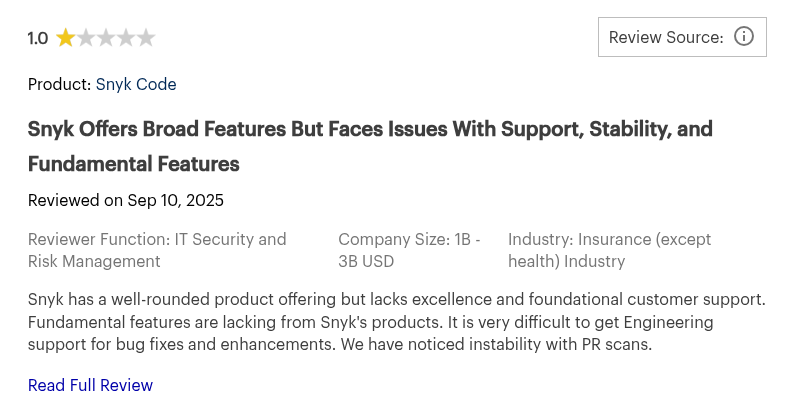
- Pricing is expensive
- False positives
- Poor customer support
- It does not support IAST for runtime security (Aikido Cloud does)
Best for:
Organizations seeking policy-as-code workflows.
Gartner Rating: 4.4/5.0
Snyk Cloud Reviews:
9. JupiterOne
JupiterOne offers its CSPM via a graph-based asset management approach. It builds a knowledge graph of all cloud assets and relationships to identify risks.
Key Features:
- Graph-based query engine (J1QL): Provides graph-style database for querying and analyzing relationships between cloud assets.
- Asset discovery: Automatically discovers and inventories assets from cloud environments.
- Built-in compliance packs: Offers ready-to-use compliance templates.
Pros:
- Free community tier available
- Flexible querying
- Asset relationship graph
Cons:
- Steep learning curve
- Enterprise focused
- Can feel overwhelming for small teams
- Connectors may miss data and require manual reconsciliation
- Pricing can become complex when scaling
Query performance can slow down on large graphs
Best For:
Security teams who want relationship-aware asset graphs and flexible querying across sprawling environments.
Gartner Rating: 4.8/5.0
Jupiter One Reviews:
“JupiterOne made asset visibility click for our team. J1QL is powerful.” — SecOps Lead on G2
10. Lacework
Lacework by Fortinet is a CNAPP platform offering CSPM alongside anomaly detection and workload protection. Its Polygraph Data Platform maps behaviors across your cloud to surface threats and misconfigurations.
Key Features:
- ML-powered anomaly detection:Learns the normal behavior of users, applications, and network, and provides a visual mapping of their connection.
- Agentless workload protection: Uses both API-based (agentless) and agent-based data collection methods to access cloud environments.
- Compliance assessments and automated reports: Users can generate automated compliance reports on demand or at set intervals.
Pros:
- Runtime and behavior anomaly detection
- Reduced alert fatigue
- Seamless integration with Fortinet ecosystem
Cons:
- Complex to setup
- Steep learning curve
- Potential vendor lock-in
- Users have reported a slowdown in feature developments
Best For:
Teams that want a CSPM combined with threat detection and minimal alert fatigue, and have existing fortinet integrations.
Gartner Rating: 4.6/5.0
Lacework Reviews:

11. Microsoft Defender for Cloud
Microsoft Defender for Cloud is Azure’s built-in CSPM, extended with integrations for AWS and GCP. It gives you posture management, compliance checks, and threat detection in one pane.
Key features:
- Cloud Posture Security Score: Highlights the highest-impact issues/vulnerabilities that will effectively reduce the organization's risk profile.
- Multi-Cloud Misconfiguration Detection: It flags misconfigurations that do not align with industry best practices.
- Integration with Microsoft Defender XDR and Sentinel SIEM: It shares threat intelligence and alerts with Microsoft Defender XDR and Microsoft Sentinel.
Pros:
- Mult-cloud support
- Comprehensive cloud workload protection (CWP)
- Native support for Microsoft ecosystem
Cons:
- It can be complex to setup
- Pricing can become expensive when scaling
- Although multi-cloud, it is primarily focused on Microsoft Azure
- Steep learning curve
- Users have reported delayed detection
Best For:
Azure-first organizations looking for seamless, native posture management and threat protection.
Gartner Rating: 4.2/5.0
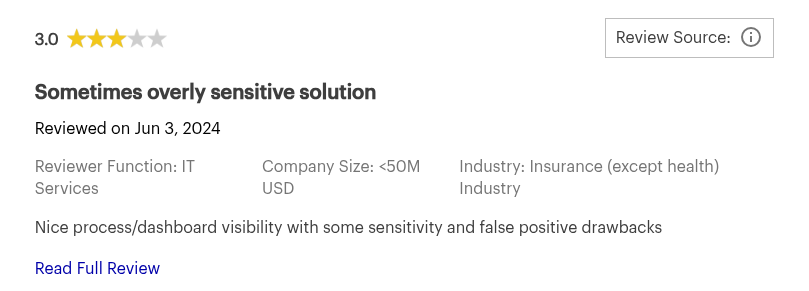
Microsoft Defender for Cloud Reviews:
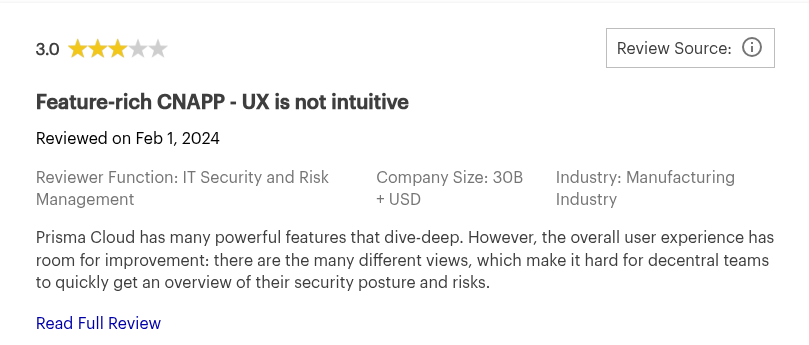
12. Cortex Cloud (Palo Alto Networks)
Cortex Cloud is a comprehensive CNAPP that includes a robust CSPM, IaC scanning, and workload security. It covers the entire lifecycle from code to cloud.
Key features:
- Real-time cloud posture monitoring: Continuously monitors cloud environments and provides historical data in configuration changes.
- Attack path visualization: Provides graph to visualize attack paths.
- Broad compliance and policy packs: Includes over 100 built in security policies.
Pros:
- Strong compliance features
- AI-powered risk prioritization
- Multi-cloud support
Cons:
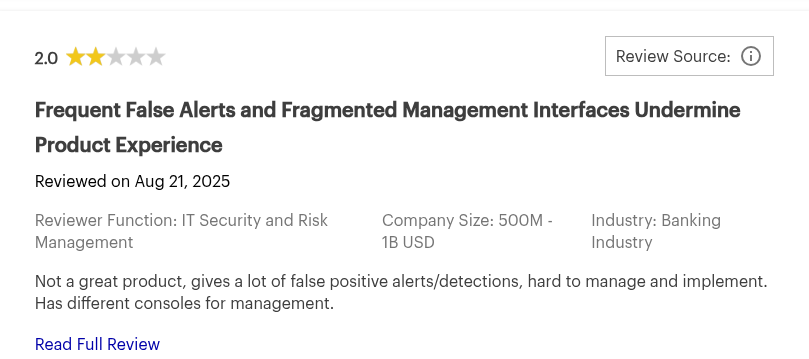
- Steep pricing
- Outdated user interface and console
- Deployment processes in large environments can become complex and length
Steep learning curve
Best For:
Enterprises running complex multi-cloud environments and requiring deep visibility and coverage.
Pricing:
Custom pricing
Gartner Rating: 4.2/5.0
Cortex Cloud Reviews:
13. Prowler
Prowler is an open-source security auditing tool focused primarily on AWS. It checks your infrastructure against best practices and regulatory frameworks.
Key Features:
- Automated Compliance: Prowler includes dozens of pre-built controls that map directly to industry-standard frameworks.
- Basic Multi-cloud Support : The multi-cloud features are actively being developed by the open-source community.
- CI/CD Pipeline Integration: Supports common CI/CD pipelines.
Pros:
- Open-source
- Community-driven
- Remediation support
Cons:
- Remediation is primarily manual
- Lack of vendor support
- No historical data and trend analysis
- Adds operational overhead when self-hosting
Best For:
AWS-heavy organizations seeking customizable, open-source scanning.
Prowler Reviews:

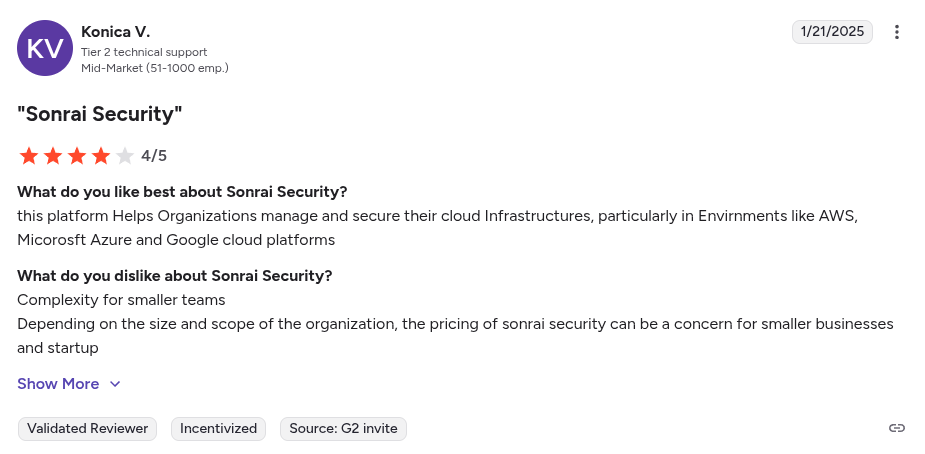
14. Sonrai Security
Sonrai Security combines CSPM with CIEM and data security, emphasizing cloud identity governance and sensitive data exposure prevention.
Key Features:
- Identity relationship and privilege risk analysis: It identifies risky privilege escalation paths and "toxic combinations" of permissions.
- CSPM and compliance auditing: Continuously monitors cloud environments for misconfigurations and posture drift.
- Automation for least-privilege enforcement: Its Cloud Permissions Firewall can automatically disable unused services, identities, and remove unused sensitive permissions.
Pros:
- Just-in-Time (JIT) access:
- Intelligent risk prioritization
Cons:
- Primarily enterprise focused
- Limited customization options
- Reports of performance issues with advanced queries
- Integration can be complex
- License can be difficult to predict
Best For:
Enterprises focused on identity governance, compliance, and protecting cloud-resident sensitive data.
Gartner Rating: 4.0/5.0
Sonrai Security Reviews:
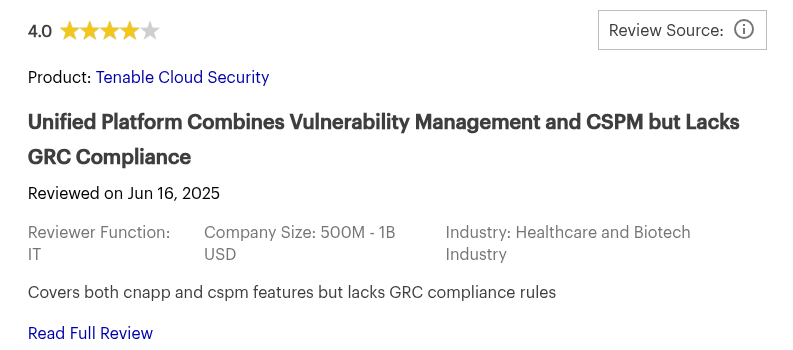
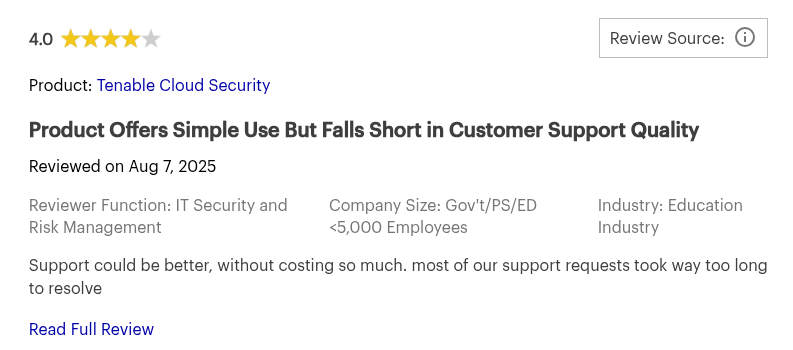
15. Tenable Cloud Security ( Formerly Accurics)
Tenable Cloud Security (formerly Accurics) focuses on IaC scanning, drift detection, and posture management. It fits well into GitOps and DevSecOps pipelines.
Key Features:
- Policy enforcement: Policies can be custom or based on industry benchmarks.
- Misconfiguration detection: Continuously scans your cloud resources against industry standards and regulations.
- Integration with Tenable.io: Combines insights from your cloud environments with Tenable's broader vulnerability intelligence.
Pros:
- Comprehensive security controls
- Automated compliance management
- Risk-based prioritization
Cons:
- Pricing is expensive
- Complex setup
- Users have reported slow performance and inefficiency when dealing with large, complex cloud environments
- False Positives
- Limited feature depth
Best For:
DevOps teams needing pre-deployment and runtime posture checks tied to IaC.
Pricing:
Part of Tenable platform; usage-based pricing.
Gartner Rating: 4.7/5.0
Tenable Cloud Security Reviews:
16. Zscaler Posture Control
Zscaler Posture Control brings CSPM to Zscaler’s Zero Trust Exchange. It blends posture, identity, and vulnerability context to highlight real risks.
Key Features:
- Unified CSPM and CIEM: Provides a single platform to manage both CSPM and CIEM.
- Threat Correlation: It correlates findings from multiple security engines to identify the most critical and exploitable attack paths.
- Multi-cloud coverage: Supports all major cloud providers.
- Integrated with Zscaler’s broader Zero Trust ecosystem: Native part of the Zscaler Zero Trust Exchange platform
Pros:
- Part of a Zero Trust ecosystem
- Agentless deployment
- Policy enforcement
Cons:
- Steep learning curve
- Pricing can be expensive
May require external professionals when deploying due to complexity
Best For:
Zscaler customers seeking native posture insights aligned to Zero Trust strategies.
Gartner Rating: 4.0/5.0
Zscaler Posture Control Reviews:
17. Wiz
Wiz is an agentless cloud-native application protection platform with CSPM at its core. It connects to cloud accounts through read-only API access and builds a security graph that ties misconfigurations, vulnerabilities, identities, and network exposure together, so teams review attack paths rather than isolated alerts. Google completed its acquisition of Wiz in March 2026; Wiz keeps its brand and continues to support all major clouds. It is one of the most frequently cited tools in current CSPM and CNAPP comparisons and carries one of the larger review bases on Gartner Peer Insights.
Key Features
- Agentless setup through read-only cloud access, with nothing to install in workloads.
- A security graph that correlates misconfigurations, vulnerabilities, identities, and exposure into attack paths.
- Coverage across AWS, Azure, GCP, and Oracle Cloud.
- Compliance mapping to frameworks such as CIS Benchmarks, SOC 2, ISO 27001, and PCI DSS.
Pros
- Attack-path prioritization that cuts through isolated findings.
- Fast agentless onboarding.
- Broad multi-cloud coverage.
- Large user base and active roadmap.
Cons
- Enterprise pricing that can be high for smaller teams.
- Breadth can exceed what a team that only needs posture management requires.
Best for organizations that want a broad agentless CNAPP with attack-path prioritization across several clouds.
Pricing. Custom, quoted per environment.
Gartner Rating. 4.7/5.0
Best 4 CSPM Tools for Developers
Key Criteria When Choosing CSPM Tools For Developers:
- Infrastructure as Code (IaC) scanning
- Developer-friendly UI and APIs
- GitOps and CI/CD compatibility
- Autofix or actionable remediation guidance
- Clear ownership and minimal false positives
Here are the top 4 CSPM tools tailored for developers:
- Aikido Cloud: Easy setup, AI-based autofix, and built for developers. Integrates directly with CI and GitHub.
- Snyk Cloud (Formerly Fugue): Policy-as-code with Regula; ideal for teams using Terraform and GitOps.
- Cortex Cloud: Full code-to-cloud scanning and IDE integration.
- Prowler: Simple CLI tool that devs can run locally or in pipelines.
Best 5 CSPM Tools for Enterprise
Key Criteria For Choosing a CSPM Tool For Your Enterprise:
- Multi-account, multi-cloud support
- Built-in compliance frameworks
- Role-based access control (RBAC)
- SIEM/ITSM integrations
- Scalable pricing and vendor support
Here are the top 5 CSPM tools tailored for enterprises:
- Aikido Cloud: Comprehensive CSP coverage, compliance reporting, affordable enterprise pricing
- Cortex Cloud: Covers posture, runtime, and compliance at scale.
- Check Point CloudGuard: Multi-cloud governance and deep policy enforcement.
- Microsoft Defender for Cloud: Native Azure coverage plus AWS/GCP.
- Tenable Cloud Security: CIEM, CSPM, and IaC scanning for large hybrid environments (now includes the former Ermetic identity capabilities).
Best 3 CSPM Tools for Startups
Key Criteria For Choosing a CSPM Tool for Your Startup:
- Free tier or affordable plans
- Easy onboarding and UX
- SOC 2/ISO readiness out of the box
- Developer-first focus
- Unified platform features
Here are the top 4 CSPM tools tailored for startups:
- Aikido Cloud: Free tier, AI autofix, and dev-centric.
- JupiterOne: Free community tier and simple asset-based risk queries.
- Prowler: CLI-driven, cost-free AWS scanner with compliance support.
Best 5 CSPM Tools for Multi-Cloud Environments
Key Criteria When Choosing a CSPM Tool For Multi-Cloud Environments:
- Full support for AWS, Azure, GCP (and more)
- Unified dashboards
- Normalized compliance reporting
- Multi-account and multi-region visibility
- Consistent alerting across clouds
Here are the top 5 CSPM tools tailored for multi-cloud environments:
- Aikido Cloud: Cloud-agnostic with support for all three major cloud providers and more.
- Cortex Cloud: Truly cloud-agnostic with deep features.
- JupiterOne: Graph-based visibility across clouds and services.
- Check Point CloudGuard: One policy engine for all clouds.
- Wiz: Enterprise platform for multi-cloud teams
Best 5 CSPM Tools for Cloud Protection
Key Criteria When Choosing a CSPM Tool For Cloud Protection:
- Threat detection (beyond config scanning)
- Runtime workload visibility
- Cloud network traffic insights
- Alert correlation and prioritization
- Automated remediation or blocking
Here are the top 5 CSPM tools tailored for cloud protection:
- Aikido Cloud: Provides coverage from code-to-cloud and everything in between, as well as Kubernetes environments.
- CrowdStrike Falcon Cloud Security: CNAPP with best-in-class threat intel.
- Lacework: Polygraph engine detects misconfigs and anomalies together.
- Microsoft Defender for Cloud: Runtime + config threat visibility in Azure.
- Check Point CloudGuard: Combines posture with active threat prevention.
Best 5 CSPM Tools for AWS
Key Criteria When Choosing a CSPM Tool for AWS:
- Deep AWS API integration
- Support for AWS CIS/NIST frameworks
- Multi-account support
- Compatibility with native services (e.g., GuardDuty, Config)
- Low-latency misconfig detection
Here are the top 5 CSPM tools tailored for AWS:
- Aikido Cloud: Comprehensive AWS support, broad compliance coverage, and dev-centric.
- Prowler: Lightweight, CLI-first, and AWS-native.
- Wiz: Agentless AWS posture with attack paths
- Aqua Security: Extended AWS support + containers.
- Orca Security: Agentless AWS deployment
Best 5 CSPM Tools for Azure
Key Criteria When Choosing a CSPM Tool for Azure:
- Native integration with Azure ecosystem
- Secure Score and Azure Security Benchmark support
- Coverage of Azure RBAC and Identity
- Automated remediation and alerts
- Compatibility with Sentinel and Defender XDR
Here are the top 5 CSPM tools tailored for Azure:
- Microsoft Defender for Cloud: First-party coverage with free tier.
- Aikido Cloud: Azure-ready CSPM platform with agentless scanning, real-time misconfiguration alerts, and AI-based remediation.
- Wiz: Agentless Azure coverage with strong identity and attack-path analysis.
- Check Point CloudGuard: Multi-cloud visibility including Azure.
- Tenable Cloud Security: IaC and runtime scanning for Azure with drift detection.
Conclusion
Cloud Security Posture Management isn’t just a checkbox for audits, it’s the difference between a secure, scalable cloud and one that leaks sensitive data.
Whether you’re a startup founder looking for a free tool to harden your AWS account or a security lead at an enterprise managing multi-cloud environments, the right CSPM tool can make your job a whole lot easier.
Aikido Cloud caters to both startups and enterprises with a dev-first CSPM solution that delivers complete code-to-cloud coverage at an affordable price. No more context switching between tools, hours of manual configuration, or inflated budgets — just posture management done right.
Want less noise and more real protection? Start your free trial or book a demo with Aikido Cloud today.
FAQ
Does Aikido Cloud require agents or runtime sensors?
No. Aikido Cloud is completely agentless, it connects to your cloud environments using read-only APIs, so there’s nothing to install, no resource overhead, and no impact on workloads.
What compliance standards does it support out-of-the-box?
Aikido Cloud maps findings to SOC 2, ISO 27001, CIS Benchmarks, GDPR, NIST 800-53, and other frameworks. Reports can be exported for audits or integrated into compliance workflows.
Can Aikido Cloud detect IAM privilege escalation risks?
Yes. It can identify over-permissive IAM roles, unused privileges, and “toxic combinations” that could allow privilege escalation or lateral movement.
How does Aikido Cloud handle multi-cloud and multi-account environments?
You can connect multiple AWS, Azure, and GCP accounts under a single workspace. Aikido automatically normalizes data and provides unified visibility, posture scoring, and compliance tracking across all of them
How does Aikido Cloud handle sensitive data?
Aikido Cloud uses read-only access, does not modify configurations, and complies with strict data-handling and encryption policies, ensuring no customer data or secrets are stored or exposed.
You might also like: