
Find data exposure risks from your code. Keep your data to yourself.
Aikido's code-first DSPM reads your code, schemas, and infrastructure config to understand how sensitive data flows through your application, how it’s secured, and where it's stored. All without accessing your actual data.





Most DSPM tools need access to your sensitive data in order to protect it
Cyera, Orca, Sentra & other DSPM tools work by scanning the contents of your production databases and buckets. That means giving a vendor read access to your most sensitive data. Aikido never sees your data. It understands how your data is handled and secured by reading your code.
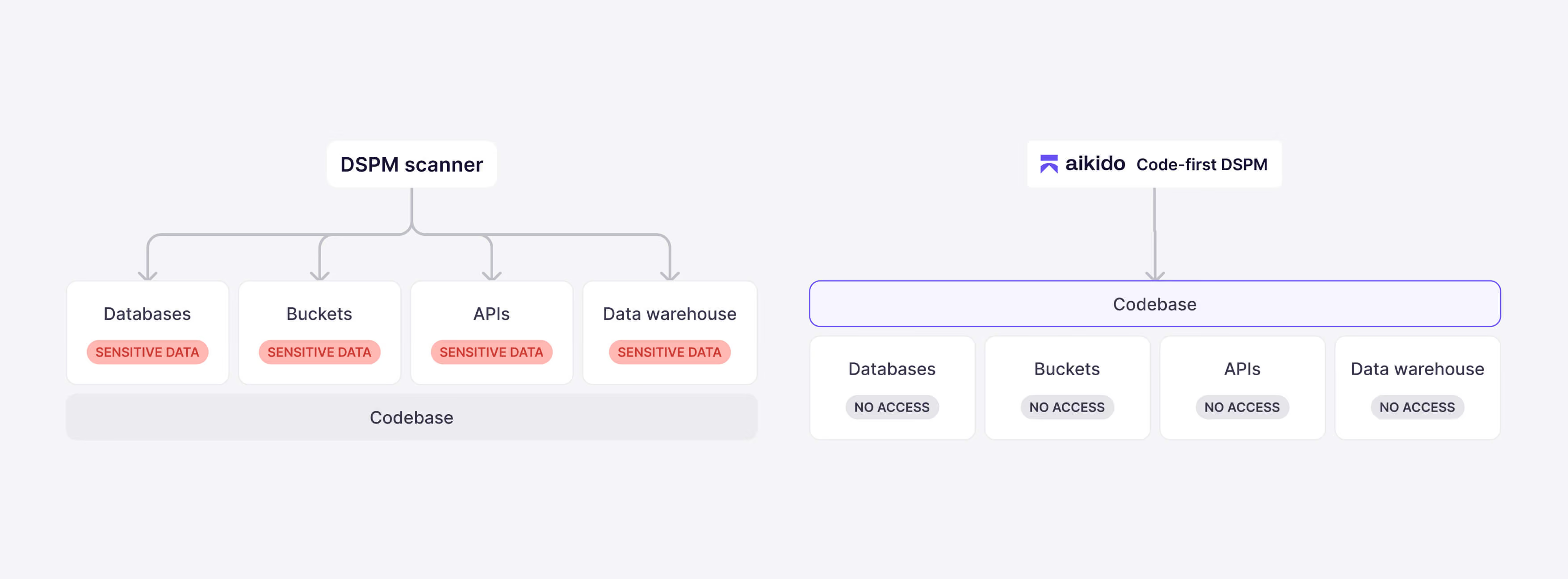
Aikido finds exposure risks directly in code. We never access your sensitive data.
.avif)
Reads your code, not the data
Your schemas, ORM models and storage calls already describe what data you store and where it goes. If a column is called ssn, Aikido knows social security numbers live there.
.avif)
Aikido follows the data through your app
It traces sensitive fields from the moment they enter your application to every place they end up. So you see the full path data flows, not just where it ends up.
.avif)
Traditional DSPM vs Code-first DSPM
Traditional DSPM


“Most data security events are detected only after they occur. Aikido's code-first approach to DSPM allows teams to stop costly misconfigurations before they happen.”
James BerthotyFounder & Lead Analyst

“The fastest time we fixed a vulnerability was just 5 seconds after detection. That is efficiency.”
Aufar SukmajayaBack End Developer


How Aikido code-first DSPM works, explained in 4 min.
Know where your data goes,without handing it over
Every finding comes with the code change that fixes it.
See Aikido in action
Enter your work email to view the video
.avif)
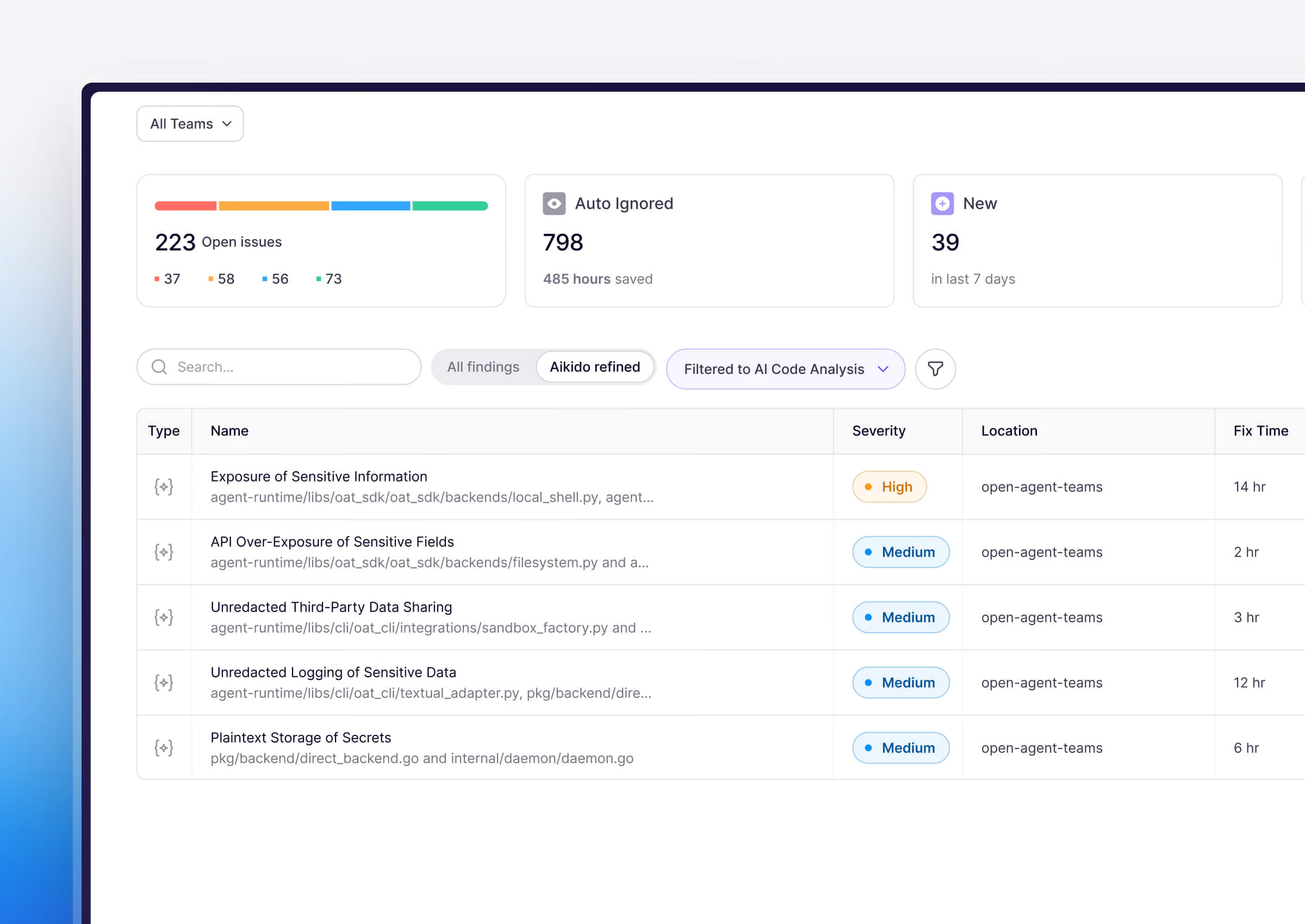
What Aikido DSPM finds
Know where your data goes,
without handing it over
Every finding comes with the code change that fixes it.
No credit card required | Scan results in 32secs.
Trusted by 50k+ orgs | Loved by 100k+ devs

FAQs about DSPM

DSPM stands for Data Security Posture Management. DSPM tools find out where an organization stores sensitive data, what type of data it is, and whether it is at risk, for example because it is not encrypted or too many people can access it. Most DSPM tools do this by connecting to your databases and cloud storage and scanning what is inside.
Instead of scanning your data stores, Aikido analyzes the application that handles the data: your code, ORM models, API definitions, infrastructure as code, and CI/CD pipelines. From those it works out where sensitive data is created, stored, exposed, and leaked, and which code change fixes each problem.
Your repos already contain the information other tools try to find by scanning data. Schemas and ORM models describe what you store. Storage calls and infrastructure config describe where it goes. Encryption logic describes how it is protected. Aikido reads all of this with the same read-only access as its other scanners.
Tools that scan data contents have to guess what a piece of data is based on how it looks, and wrong guesses become false positives. Aikido reads your field names and schemas instead, so it knows what the data is without guessing.
Aikido's DSPM maps what your applications do with data. If an old bucket exists but no code references it, this scan will not see it. That is a cloud configuration problem, and Aikido's CSPM covers it from the same platform.
CSPM answers "is my cloud configured safely?". Traditional DSPM answers "where is my sensitive data and who can access it?". Aikido's code-first DSPM answers "how does my application create, move, and expose sensitive data, and how do I fix it?". They complement each other, and Aikido covers all three in one platform.
No. Aikido analyzes your source code, never your data stores. There is nothing to download, sample, or keep.
All major languages, plus common ORMs (Prisma, SQLAlchemy, Hibernate, ActiveRecord and others), API definitions, and infrastructure as code formats.
Those tools connect to your data stores and scan the contents. That means giving them access to your data, waiting for long scans, and dealing with false positives from pattern matching. They also stop at telling you where sensitive data landed, so fixing it becomes tickets. Aikido works from code: you give no access to production data, scans finish in minutes, and every finding comes with the cause and a pull request that fixes it.