

Only fix the images that are actually exploitable
Echo ships AI-built clean base images. Aikido secures your entire developer workflow, from code and dependencies to containers and cloud, and hardens the images you already run.




Where Aikido goes further than Echo
Echo wants to own your base image.
Adopt Echo and your foundation becomes their lineage, on their cadence. Aikido leaves your base in place and hardens it there.
Echo's patches start in a comment thread.
Echo's agents pull fixes from GitHub comments and blogs, then open a PR. Aikido's remediation is deterministic, so you know exactly what changed.
A clean scan is step one, not the finish.
A clean base image says nothing about the risk in your code, your config, or your cloud. Aikido shows you what's actually exploitable, then fixes it.
Aikido Hardened images explained in under 5 minutes.
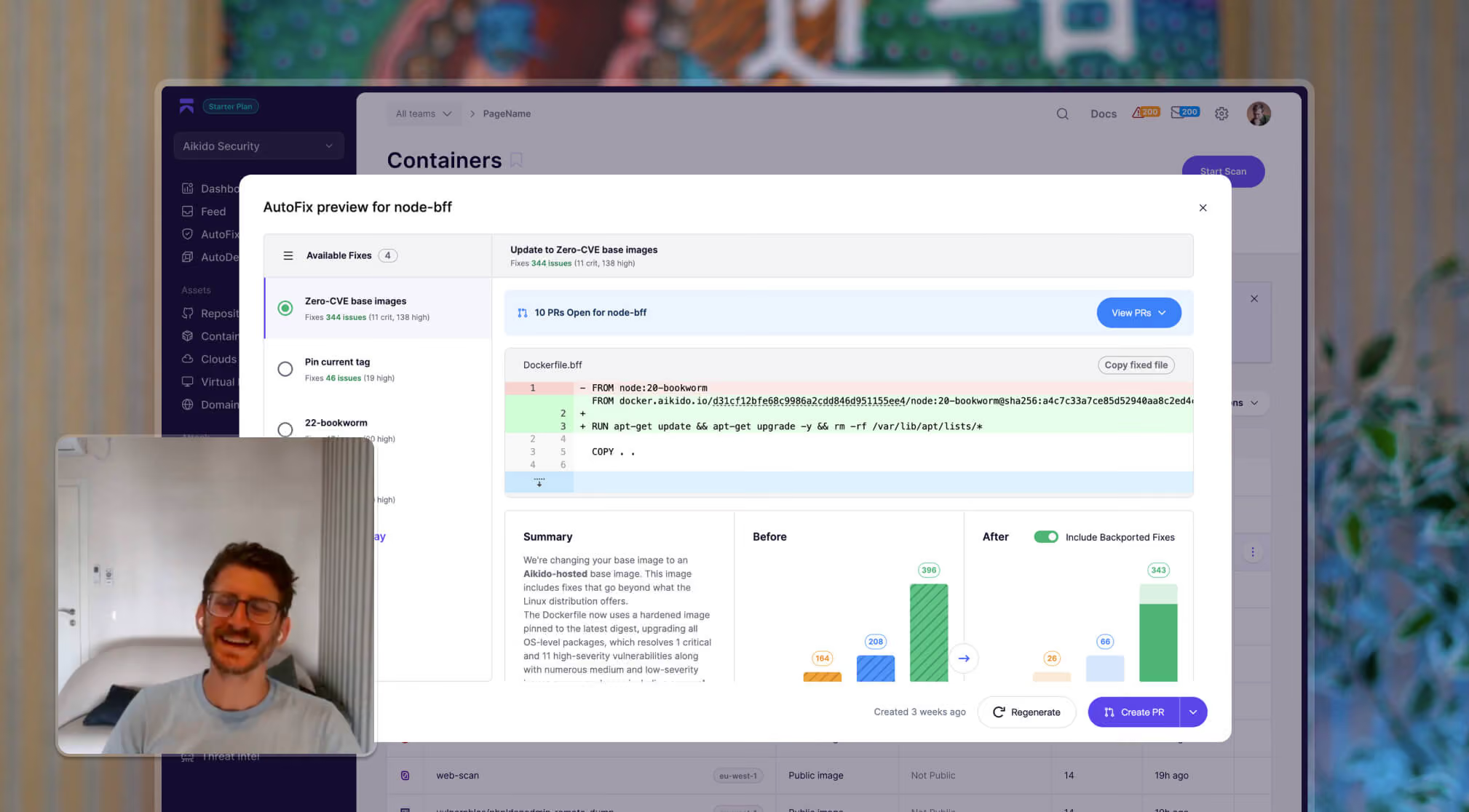
Aikido creates CVE-free container images at an unprecedented pace, enabling you to fix vulnerabilities for all projects without risking any breakage
Secure your images, today
Aikido creates CVE-free container images at an unprecedented pace,
enabling you to fix vulnerabilities for all projects without risking any breakage.
See Aikido in action
Enter your work email to view the video
Aikido vs Echo


- Base image and distro
- Re-platform required
- Version handling
- Upgrade cadence
- Image variant coverage
- Works with your existing base images,
no proprietary distro - No
- Keep your pinned versions, fixes backported
- On your schedule, no forced upgrades
- The images you already run, plus a hardened catalog
- Distroless variant: optimized for the smallest attack surface Default variant: includes build tools, packages and shells
- Yes
- Echo-maintained versions
- 24h average remediation
- ~600 images
- Dependency language coverage
- Dependency fix model
- Broad: npm, PyPI, Maven, Gradle, Go, NuGet, RubyGems, ...
- Fix the vulnerable dependency, with AI Autofix
- Limited, via Echo libraries
- Replace with an Echo library
- Static Code Analysis (SAST)
- SCA
- DAST & AI Pentesting
- Secrets scanning
- IaC scanning
- CSPM
- Runtime protection
- No
- No
- No
- No
- No
- No
- No
- Finds what is broken in your stack
- AI Autofix
- Yes, across code, dependencies, containers, and cloud
- Yes, unlimited
- No, provides clean images
- No
- Provenance and compliance
- Scanner and workflow fit
- SBOM, SOC 2 and ISO tracking, FedRAMP in progress*
- Connect repos, scan in 32s, no migration
- SBOM, FIPS and STIG hardened
- One-line Dockerfile swap

"Aikido’s pentest delivered human level, comprehensive findings at lightning speed and passed a rigorous compliance review with no issues."
Dan SherwoodManaging Director at Khaos Control Solutions
“We no longer have to look at multiple cloud environments separately for security. It’s all in one place.”
Brooks LoweSr Product Security Engineer
Where the cracks show if you only use Echo
One platform, start for free
0 migrations required
Aikido hardens the images you already run. No base image swap or lineage lock-in.
32s to first scan results
Connect a repo and get prioritized findings.
Free to start.
12+ security engines in one platform
SAST, SCA, secrets, IaC, DAST, AI Pentests, containers, cloud and runtime. Minimus only covers images.
See the difference in 5 min
Connect your repos, get prioritized findings, and see why 100k+ teams chose Aikido. No credit card required.

