
.png)


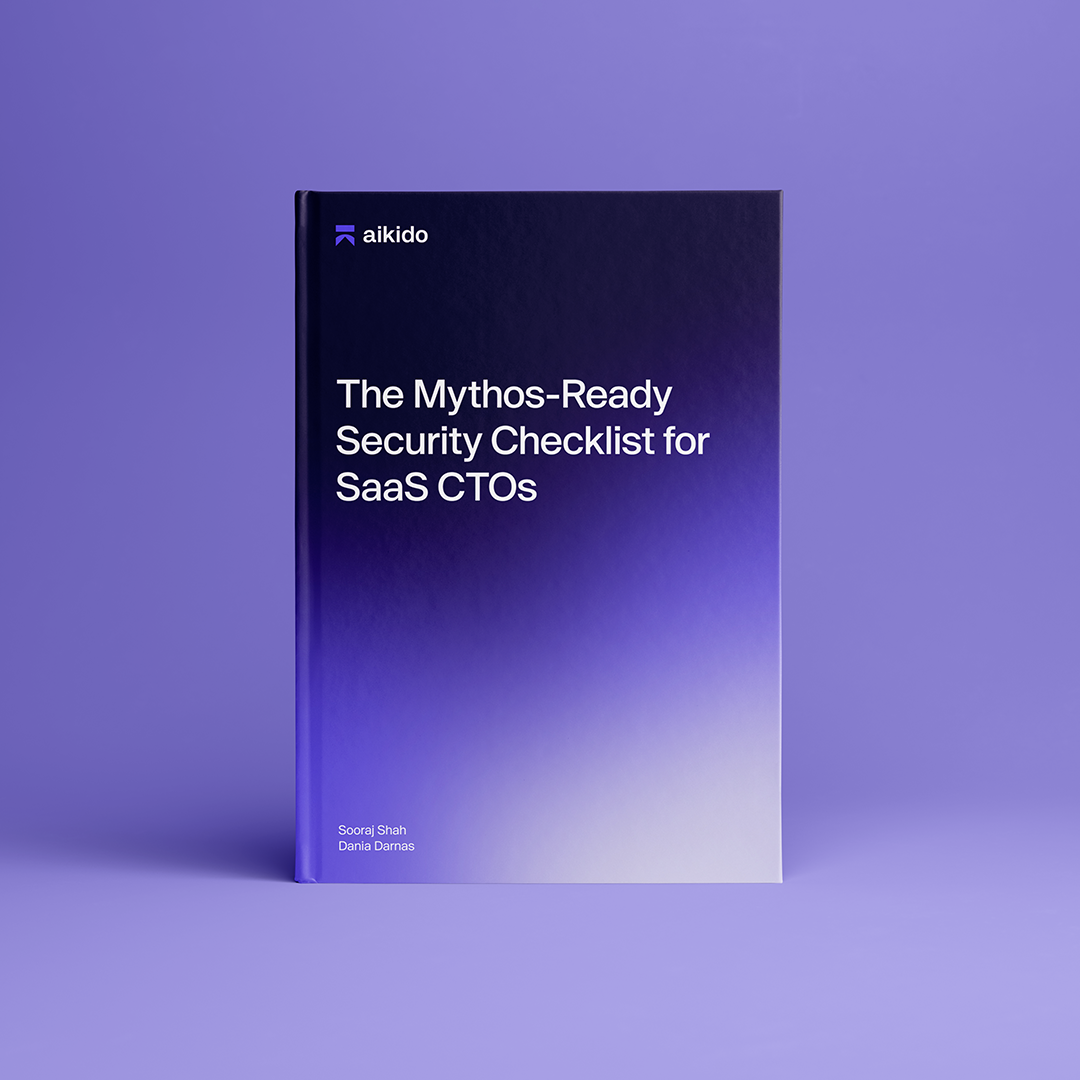
Mythos-Ready Security Checklist
A practical checklist for SaaS CTOs navigating the agentic AI threat environment. Built around the defender's advantage: you have context attackers have to work to get. Covers the controls, practices, and operational habits that determine whether your team finds and fixes issues before someone else does.

Dania Durnas is a Developer Content Writer at Aikido Security. She started her career as a backend software engineer, working for Microsoft, Google, and startups. She then pivoted to content writing in the tech industry, writing blogs and educational material for startups such as Firecrawl, Kubecost, and Bugcrowd.
Key Findings
Design for more findings than people can manually process
Assume vulnerability volume will exceed manual triage. Raw findings are filtered, validated, and deduplicated before they reach engineering. Otherwise, the team gets flooded, engineers lose trust, and the important issues disappear into the queue.Use the context that attackers lack
Connect code, runtime behavior, dependency data, and exposure, separating a theoretical issue from something that’s truly exploitable in their environment. Without that context, even the strongest tools will feel shallow.Treat patching as an operational capability
A critical fix can’t depend on the next normal release schedule. The team knows who owns the fix, how it gets reviewed, and how it gets shipped. Time from validated issue to production fix is measured and improved.Build real barriers
Controls that rely on attacker effort become weaker as AI reduces that effort. Scoped access, segmentation, egress controls, hardware-key MFA, signed builds, and isolated credentials matter more because they limit what an attacker can actually do.
Summary
Attackers with access to frontier AI move faster, but defenders have something attackers don't: context. You have your source code, your runtime behavior, your architecture, and your dependency graph. The CTOs who weather this well are the ones who use that context effectively rather than waiting for a scan to tell them something is wrong. This checklist contains actionable advice on how to prepare your applications, processes, and employees for agentic AI threats.
What you’ll learn
How to prepare for Mythos and attacks that come at AI-speed
Dania Durnas is a Developer Content Writer at Aikido Security. She started her career as a backend software engineer, working for Microsoft, Google, and startups. She then pivoted to content writing in the tech industry, writing blogs and educational material for startups such as Firecrawl, Kubecost, and Bugcrowd.